
Introduction
Nooceptin is a caffeine-free nootropic supplement containing seven ingredients marketed for memory, focus, mental clarity, stress management, and overall cognitive performance. Its formula combines citicoline, Panax ginseng, L-theanine, Rhodiola rosea, Bacopa monnieri, lion’s mane mushroom, and Ginkgo biloba.
The formula is interesting because several ingredients have been studied independently in human trials. However, that does not automatically prove that Nooceptin itself produces the same effects. I found no randomized controlled trial testing the complete Nooceptin formula, so the product’s evidence needs to be evaluated ingredient by ingredient.
Quick Summary
| Product | Nooceptin |
|---|---|
| Product Type | Caffeine-free nootropic supplement |
| Primary Use | Memory, focus, mental clarity and cognitive support |
| Daily Serving | 3 capsules |
| Citicoline | 200–250 mg depending on current product page |
| Panax Ginseng | 200 mg |
| L-Theanine | 200 mg |
| Rhodiola Rosea | 150 mg |
| Bacopa Monnieri | 150 mg |
| Lion’s Mane | 400 mg |
| Ginkgo Biloba | 100 mg |
| Caffeine | None |
| Current Listed Price | $67 for one month |
| Product-Specific Clinical Trial | Not identified |
Important label note: Nooceptin’s current homepage lists 200 mg of citicoline, while its separate product page lists 250 mg. Because the manufacturer currently displays both amounts, this discrepancy should be disclosed rather than assuming one dose is correct.
What Is Nooceptin?
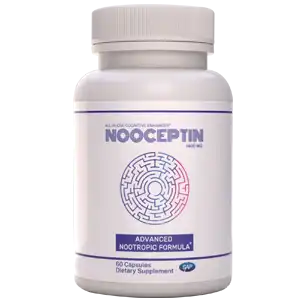 Nooceptin is a multi-ingredient dietary supplement from SAP Nutrition. The manufacturer markets it as an all-in-one cognitive enhancer and says its ingredients support neurotransmitters and biological processes involved in learning, focus, memory, and information processing.
The product is marketed as caffeine-free and vegan-friendly. The manufacturer’s current product page also identifies it as gluten-free, dairy-free, soy-free, sugar-free, and free from synthetic additives.
The recommended serving is three capsules daily, typically taken shortly after breakfast. The manufacturer recommends using the product consistently for at least eight weeks and says the most significant results may occur after 16 weeks. That timing is a manufacturer recommendation, not proof that 16 weeks is a clinically established treatment duration.
How Does Nooceptin Work?
Nooceptin uses several different mechanisms rather than relying on a single stimulant.
Citicoline is involved in phospholipid and acetylcholine-related pathways. Bacopa has been studied for memory, while L-theanine has been investigated for stress and selected cognitive outcomes. Ginkgo, ginseng, Rhodiola, and lion’s mane have also been investigated in different human populations.
The combination sounds comprehensive, but the evidence for each ingredient varies considerably. A 2021 systematic review of dietary supplement ingredients marketed for cognitive performance concluded that the overall certainty of evidence was low and that differences in supplement formulations make consumer recommendations difficult. View the systematic review on PubMed.
Key Ingredients
Citicoline — 200–250 mg
Citicoline is a source of choline and participates in phospholipid metabolism and neurotransmitter-related pathways. Research has investigated citicoline for cognitive impairment and neurological conditions, although the evidence varies by population and formulation. A systematic review and meta-analysis found potential cognitive benefits in people with mild cognitive impairment, Alzheimer’s disease, or post-stroke dementia, but this does not establish the same effect in healthy adults taking Nooceptin. View the citicoline meta-analysis.
Panax Ginseng — 200 mg
Panax ginseng has been studied for memory and cognitive performance. A 2024 meta-analysis of 15 RCTs involving 671 participants found a small positive effect on memory, but not on overall cognition, attention, or executive function. The researchers also called for higher-quality research. View the ginseng meta-analysis.
L-Theanine — 200 mg
L-theanine is an amino acid naturally found in tea. A randomized controlled trial using 200 mg/day for four weeks reported improvements in some stress-related measures and selected cognitive tests. A newer meta-analysis found possible benefits for certain cognitive outcomes but emphasized the small number of trials and inconsistent findings. View the 200 mg RCT.
Rhodiola Rosea — 150 mg
Rhodiola is commonly used as an adaptogenic herb for fatigue and stress. Human research has produced mixed results. One systematic review found contradictory evidence and methodological limitations, while another review reported potential benefits but noted a lack of independent replication. View the Rhodiola systematic review.
Bacopa Monnieri — 150 mg
Bacopa is one of the more extensively studied botanical ingredients in nootropic supplements. A recent network meta-analysis found evidence of cognitive benefits, particularly with higher Bacopa doses, although the results differed by cognitive domain. Nooceptin’s listed 150 mg dose is substantially below the ≥600 mg/day category highlighted in that analysis, so the results cannot simply be transferred to this product. View the Bacopa/Ginkgo meta-analysis.
Lion’s Mane — 400 mg
Lion’s mane mushroom has attracted attention for possible neurocognitive effects. A small double-blind placebo-controlled trial involving 30 people with mild cognitive impairment reported improved cognitive scores during 16 weeks of supplementation. However, the study used a substantially different preparation and dose from Nooceptin, so it provides ingredient-level rather than product-specific evidence. View the lion’s mane clinical trial.
Ginkgo Biloba — 100 mg
Ginkgo is one of the most studied herbal ingredients for cognitive health, but results are inconsistent. NCCIH notes that evidence for improving cognitive performance in healthy people remains uncertain. Ginkgo can also interact with medications, particularly anticoagulants. NCCIH: Ginkgo usefulness and safety.
What Does the Evidence Actually Show?
The ingredient profile gives Nooceptin a reasonable scientific rationale, but it is important not to combine all of the individual findings into a claim that the finished product is clinically proven.
For example, human studies exist for Bacopa, ginseng, L-theanine, Rhodiola, lion’s mane, Ginkgo, and citicoline. But those studies often use different extracts, doses, durations, populations, and outcome measures.
That distinction matters. A supplement containing seven individually studied ingredients does not automatically inherit the clinical evidence of each ingredient.
Editorial assessment: Nooceptin has a research-supported ingredient concept, but the evidence for the complete formula remains unproven.
Potential Benefits
- Memory support: Several ingredients have been investigated for memory-related outcomes.
- Focus and attention: L-theanine, ginseng, and Ginkgo have been studied in cognitive-performance research.
- Stress support: L-theanine and Rhodiola may have relevance to stress or mental fatigue.
- Caffeine-free formulation: Nooceptin does not rely on caffeine as its primary cognitive ingredient.
- Multiple standardized extracts: Several ingredients have disclosed extract standardizations rather than simply listing generic herbs.
Pros & Cons
Pros
- Caffeine-free formula
- Seven cognitive-support ingredients
- Several ingredients have human clinical research
- Includes standardized Bacopa, Rhodiola, and Ginkgo extracts
- Vegan-friendly and free from several common allergens according to the manufacturer
Cons
- No identified clinical trial testing the complete Nooceptin formula
- Current manufacturer pages disagree on citicoline dosage
- Evidence varies substantially between ingredients
- Some ingredients have relatively limited or inconsistent cognitive evidence
- Ginkgo can interact with medications
- More expensive than many single-ingredient options
Nooceptin vs. Single-Ingredient Nootropics
| Factor | Nooceptin | Single-Ingredient Supplement |
|---|---|---|
| Formula | 7 active ingredients | Usually 1 main ingredient |
| Caffeine | None | Depends on product |
| Ingredient Variety | High | Low |
| Dose Evaluation | More difficult because of multiple ingredients | Usually easier |
| Clinical Evidence | Primarily ingredient-level | Depends on ingredient |
| Convenience | High | Lower if multiple supplements are needed |
| Cost | Moderate to high | Often lower per ingredient |
A multi-ingredient formula can be convenient, but it also makes it harder to determine which ingredient is responsible for an effect or side effect.
Customer Reviews
The manufacturer’s current product page displays a 4.6/5 rating based on 845 reviews for the one-month supply. These are customer-reported experiences rather than controlled clinical evidence.
Nooceptin also warns that counterfeit versions are being sold through unauthorized marketplaces and states that the official product is sold directly through its website. This is a manufacturer statement, so consumers should verify the seller before purchasing.
Who May Consider Nooceptin?
Nooceptin may appeal to adults looking for a caffeine-free, multi-ingredient supplement for general cognitive support, particularly those interested in memory, focus, and stress-related mental performance.
It may also suit people who prefer a single combination product rather than purchasing several individual ingredients separately.
However, it should not be viewed as a treatment for dementia, Alzheimer’s disease, ADHD, depression, anxiety, or another medical condition.
Who Should Be Careful?
People taking blood thinners:
Ginkgo may increase bleeding risk when combined with anticoagulant medications such as warfarin. Medication interactions should be reviewed with a healthcare professional.
People taking prescription medications:
Because Nooceptin contains multiple botanical extracts, checking for potential herb-drug interactions is more complicated than with a single-ingredient supplement.
Pregnancy and breastfeeding:
The manufacturer recommends consulting a healthcare provider before starting Nooceptin. Ginkgo in particular has safety concerns during pregnancy.
People with cognitive symptoms:
Persistent memory loss, confusion, concentration problems, or other cognitive changes warrant medical evaluation rather than relying on a supplement.
Side Effects & Safety
Nooceptin’s manufacturer describes the formula as safe when used as directed but also recommends consulting a healthcare provider, particularly when medications or pre-existing health conditions are involved.
Ginkgo may cause headache, dizziness, or gastrointestinal symptoms and can increase bleeding risk with anticoagulants.
Rhodiola has generally produced relatively few adverse events in clinical studies, but the evidence base is not strong enough to establish long-term safety for every population.
L-theanine has generally been well tolerated in clinical trials, including studies using 200 mg/day.
Because Nooceptin combines seven active ingredients, anyone taking multiple medications should review the entire formula with a healthcare professional rather than evaluating each ingredient in isolation.
Pricing & Packages
| Package | Current Listed Price | Approx. Monthly Cost |
|---|---|---|
| 1 Month | $67 | $67 |
| 2 Months | $120 | $60 |
| 3 Months | $160 | $53.33 |
| 4 Bottles | $180 | $45 |
| 6 Months | $414 | $69 |
The manufacturer’s current store lists these package prices, although promotions and availability can change. The product page currently lists the one-month supply at $67.
FAQs
What is Nooceptin?
Nooceptin is a caffeine-free nootropic supplement containing seven ingredients marketed for memory, focus, mental clarity, and cognitive support.
How many capsules of Nooceptin should be taken daily?
The manufacturer’s current directions recommend three capsules daily, generally taken with water shortly after breakfast.
Does Nooceptin contain caffeine?
No. The manufacturer identifies Nooceptin as caffeine-free.
What are the main Nooceptin ingredients?
The formula contains citicoline, Panax ginseng, L-theanine, Rhodiola rosea, Bacopa monnieri, lion’s mane mushroom, and Ginkgo biloba.
Does Nooceptin improve memory?
Several ingredients have been studied for memory, but there is no clear clinical trial demonstrating that the complete Nooceptin formula improves memory.
How long does Nooceptin take to work?
The manufacturer recommends at least eight weeks and says optimal results may occur after 16 weeks. These are company recommendations rather than clinically established timelines.
Is Nooceptin clinically proven?
The individual ingredients have varying levels of human research, but I did not identify a randomized controlled trial testing the complete Nooceptin formula.
Can Nooceptin treat Alzheimer’s disease?
No. Nooceptin is a dietary supplement and should not be considered a treatment for Alzheimer’s disease or another neurodegenerative disorder.
Can Nooceptin be taken with medication?
Potential interactions are possible, particularly because the formula contains Ginkgo and several other botanical ingredients. A healthcare professional should review the complete ingredient list when medications are involved.
Where should Nooceptin be purchased?
The manufacturer states that its official product is sold directly through Nooceptin.com and warns consumers about counterfeit products sold through unauthorized marketplaces.
Final Verdict
Nooceptin has a scientifically plausible formula and contains several ingredients that have been investigated in human cognitive research. L-theanine has relatively useful evidence for selected cognitive and stress-related outcomes, while Bacopa, ginseng, citicoline, lion’s mane, Rhodiola, and Ginkgo have varying degrees of supporting research.
The bigger issue is the distinction between ingredient evidence and product evidence. I did not find a clinical trial showing that the complete seven-ingredient Nooceptin formula improves memory, focus, or overall cognition. The available evidence therefore supports evaluating Nooceptin as a combination of researched ingredients rather than calling the finished product clinically proven.
There is also a current formulation detail worth noting: the manufacturer’s homepage lists 200 mg of citicoline while its separate product page lists 250 mg. Until the company provides a consistent current Supplement Facts label, this discrepancy should remain disclosed.
My overall assessment: Nooceptin is a reasonably well-designed caffeine-free nootropic formula with meaningful ingredient-level research, but its marketing claims are stronger than the evidence available for the finished product. It may be considered for general cognitive support, but it should not be presented as a proven treatment for memory disorders or cognitive disease.
Our Top Memory, Focus & Cognitive Products
We evaluated these products based on key factors relevant to their intended use. Our editorial ratings consider ingredient transparency, available scientific evidence, formulation quality, safety considerations, value, and other product-specific factors.
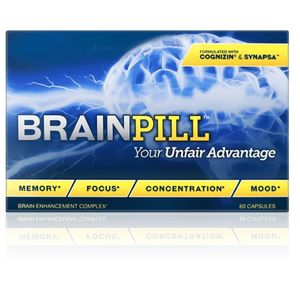
Brainpill
Product Type: Dietary Supplement
Primary Use: Memory, Focus & Cognitive Performance Support
Overall Rating: 4.9/5
Price: $69.95
Key Benefits
- Supports memory and recall
- Supports focus and concentration
- Supports mental performance under pressure
- Supports cognitive energy and productivity
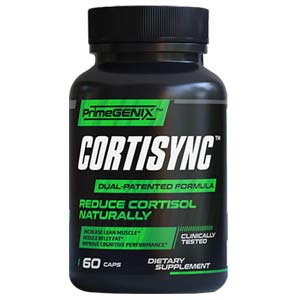
PrimeGENIX CortiSync
Product Type: Male Performance Spray
Primary Use: Cortisol, Stress & Adrenal Support
Overall Rating: 4.8/5
Price: $59.00
Key Benefits
- Supports healthy cortisol levels
- Supports stress management and resilience
- Supports energy and physical performance
- Supports focus and cognitive function
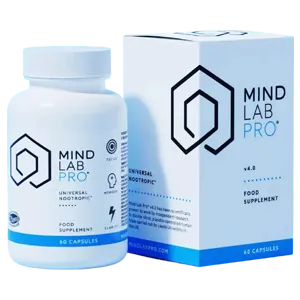
Mind Lab Pro
Product Type: Oil
Primary Use: Cognitive Performance Support
Overall Rating: 4.8/5
Price: $69.00
Key Benefits
- Supports focus and concentration
- Supports memory and recall
- Supports mental clarity and cognitive performance
- Supports mood, motivation and mental energy