
Introduction
Eye health has become an important wellness concern, particularly among adults who spend long hours working on computers, smartphones, and other digital devices. Age-related changes, nutritional deficiencies, and prolonged screen exposure can also affect visual comfort. As a result, supplements containing carotenoids and antioxidants have attracted considerable attention.
**Neurobella is a multi-ingredient dietary supplement marketed for eye health, macular support, and visual comfort.** Its formula combines lutein, zeaxanthin, meso-zeaxanthin, astaxanthin, vitamins, minerals, and botanical extracts.
The formula includes several ingredients studied for their potential roles in retinal health. However, research on individual ingredients does not establish that Neurobella itself improves vision or prevents eye diseases.
This Neurobella review examines its advertised ingredients, available scientific evidence, potential benefits, safety considerations, customer feedback, and purchasing information to determine whether its formula offers meaningful nutritional support.
Quick Summary Box
| Category | Details |
|---|---|
| Product Name | Neurobella |
| Product Type | Eye health dietary supplement |
| Main Purpose | Macular and visual health support |
| Key Ingredients | Lutein, zeaxanthin, meso-zeaxanthin, astaxanthin |
| Additional Ingredients | Vitamins C and E, zinc, copper, omega-3, and botanical extracts |
| Serving Instructions | Website instructions are inconsistent; verify the bottle label |
| Available Format | Capsules |
What Is Neurobella?
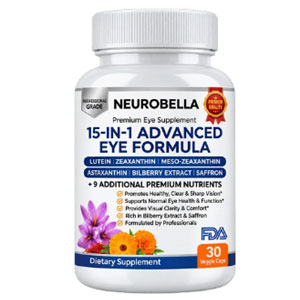 Neurobella is marketed as a 15-in-1 advanced eye formula designed to support macular health and visual function. Its advertised combination includes three macular carotenoids alongside antioxidants, essential minerals, fatty acids, and plant extracts.
The primary ingredients are lutein, zeaxanthin, and meso-zeaxanthin. These carotenoids are naturally present in the macula, the central region of the retina responsible for detailed vision.
The manufacturer also promotes astaxanthin, saffron, and bilberry for their antioxidant properties and potential contributions to visual function.
The product’s website advertises a vegan-friendly formula, non-GMO ingredients, and third-party quality testing. These are manufacturer claims, and independent testing documentation was not available for verification during this review.
How Does Neurobella Work?
Neurobella is designed to provide nutrients involved in maintaining normal retinal function and antioxidant protection.
Its three primary carotenoids contribute to macular pigment. This pigment helps filter certain wavelengths of incoming light and provides antioxidant activity within the retina.
Other ingredients serve complementary nutritional roles. Vitamins C and E contribute antioxidant activity, while zinc and copper participate in normal cellular and enzymatic functions.
Astaxanthin and botanical extracts add further antioxidant compounds to the formula.
However, these mechanisms should not be confused with proven clinical outcomes. There is currently insufficient product-specific evidence to establish that taking Neurobella improves visual acuity, reverses blurry vision, eliminates digital eye strain, or prevents age-related macular degeneration (AMD).
Neurobella Key Ingredients
The manufacturer’s website lists the following ingredients and amounts:
| Ingredient | Advertised Amount | Potential Role |
|---|---|---|
| Lutein | 10 mg | Macular pigment support |
| Zeaxanthin | 2 mg | Retinal antioxidant support |
| Meso-zeaxanthin | 2 mg | Macular carotenoid support |
| Astaxanthin | 4 mg | Antioxidant activity |
| Vitamin C | 75 mg | Antioxidant protection |
| Vitamin E | 30 mg | Antioxidant activity |
| Alpha-lipoic acid | 50 mg | Antioxidant functions |
| Omega-3 (DHA and EPA) | 100 mg | Essential fatty acid support |
| Zinc | 15 mg | Normal retinal function |
| Copper | 2 mg | Normal enzyme function |
| Bilberry extract | 50 mg | Anthocyanin content |
| Saffron extract | 10 mg | Botanical antioxidant support |
| Ginkgo biloba extract | 40 mg | Botanical antioxidant activity |
| Taurine | 75 mg | Retinal nutritional support |
**1. Lutein, Zeaxanthin, and Meso-Zeaxanthin**
These three carotenoids are the central components of Neurobella’s formula. Research suggests that supplementation with macular carotenoids can increase macular pigment levels in certain populations.
A randomized study involving people with early AMD found improvements in macular pigment optical density following supplementation with formulations containing meso-zeaxanthin, lutein, and zeaxanthin.
Study: Supplementation With Three Different Macular Carotenoid Formulations.
The AREDS2 trial also investigated lutein and zeaxanthin in people at risk of advanced AMD. Its findings supported their use as a replacement for beta-carotene in the AREDS formulation, although the primary analysis did not demonstrate a statistically significant additional reduction in progression to advanced AMD.
Study: Age-Related Eye Disease Study 2 (AREDS2).
**2. Astaxanthin**
Astaxanthin is a carotenoid with antioxidant properties. Some clinical research has investigated its potential effects on visual function following prolonged screen exposure.
A randomized, placebo-controlled study involving 60 healthy adults examined 9 mg of astaxanthin daily for six weeks. Certain visual-function findings improved in participants aged 40 and older, but the results do not establish that Neurobella’s advertised 4 mg dose produces the same effects.
Study: Effects of Astaxanthin on Visual Function.
**3. Saffron Extract**
Saffron contains bioactive compounds, including crocin and crocetin, that have attracted interest in retinal health research.
A randomized clinical trial involving adults with mild-to-moderate AMD investigated 20 mg of saffron daily. Researchers reported modest improvements in certain visual-function measurements.
However, Neurobella lists 10 mg of saffron extract, and the extract’s standardization is not disclosed in the available ingredient information.
Study: Saffron Therapy for Mild/Moderate AMD.
**4. Bilberry Extract**
Bilberry contains anthocyanins, plant compounds with antioxidant properties. It is traditionally marketed for night vision and eye circulation.
However, clinical evidence remains limited. The National Center for Complementary and Integrative Health reports that rigorous studies have not established bilberry’s effectiveness for improving night vision in healthy individuals.
Research: Systematic Review of Bilberry and Night Vision.
**5. Vitamins, Minerals, Omega-3, Alpha-Lipoic Acid, Ginkgo, and Taurine**
These additional ingredients provide a broader nutritional profile. Vitamin C and vitamin E contribute antioxidant activity, while zinc and copper support normal physiological functions.
Omega-3 fatty acids are important dietary fats, and taurine is naturally present in retinal tissue. Alpha-lipoic acid participates in cellular energy metabolism and antioxidant processes.
Ginkgo biloba has also been investigated for various biological effects, but evidence does not establish that its inclusion in Neurobella improves eye health.
Overall, the ingredient combination is nutritionally interesting, but the full formula requires direct clinical testing before its advertised benefits can be confirmed.
Neurobella Benefits
Based on its ingredient profile and available research, Neurobella may offer the following potential nutritional benefits:
- Support macular nutrition: Provides lutein, zeaxanthin, and meso-zeaxanthin associated with macular pigment.
- Promote antioxidant activity: Combines carotenoids, vitamins, and botanical compounds.
- Maintain normal retinal function: Supplies zinc, copper, and taurine.
- Complement dietary intake: Offers several eye-health nutrients in one supplement.
- Support nutritional diversity: Combines vitamins, minerals, fatty acids, and plant extracts.
These are potential nutritional roles, not guaranteed improvements in eyesight or treatments for eye conditions.
Neurobella Pros and Cons
**Pros**
- Contains three important macular carotenoids.
- Includes several ingredients investigated in eye-health research.
- Combines vitamins, minerals, and botanical extracts.
- Provides clearly listed ingredient amounts on the brand website.
- Advertises a 90-day money-back guarantee.
**Cons**
- No published clinical trial specifically establishing Neurobella’s effectiveness.
- Dosage instructions on the website are inconsistent.
- The advertised 24 mg carotenoid complex does not match the listed amounts, which total 14 mg.
- Independent third-party testing documentation was not available for verification.
- Some botanical ingredients have limited evidence for improving vision.
- Current Amazon pricing and independent customer feedback could not be verified.
Neurobella Comparison With Alternatives
The following table compares Neurobella with established nutritional approaches and supplement categories rather than suggesting that the products are clinically interchangeable.
| Option | Main Focus | Key Difference |
|---|---|---|
| Neurobella | Broad eye-health nutrition | Multi-ingredient carotenoid and botanical formula |
| AREDS2-formula supplements | Specific AMD nutritional support | Based on the studied AREDS2 nutrient combination |
| Lutein and zeaxanthin supplements | Macular pigment nutrition | More focused carotenoid supplementation |
| Dietary eye-health nutrition | General nutritional maintenance | Provides nutrients through vegetables, fruits, fish, and other foods |
AREDS2 formulations are particularly relevant for individuals diagnosed with intermediate AMD or certain other qualifying stages. They should not be considered necessary for every adult, and an eye-care professional should determine whether they are appropriate.
Customer Reviews
The Neurobella brand website displays positive testimonials and advertises a 4.8/5 rating based on 17,182 reviews. However, these figures are manufacturer-presented information and were not independently verified.
The testimonials describe perceived improvements in visual clarity, reading comfort, and screen-related eye fatigue. Such experiences are subjective and cannot establish clinical effectiveness.
The Amazon listing supplied for this review could not be independently accessed to verify its current customer ratings, review count, or verified-purchase feedback.
Consequently, readers should evaluate customer feedback cautiously and distinguish personal experiences from controlled clinical evidence.
Who Should Use or Avoid Neurobella?
**Who may consider it?**
- Adults interested in additional dietary carotenoids.
- Individuals whose diets provide limited sources of lutein and zeaxanthin.
- Adults discussing nutritional eye-health support with an eye-care professional.
**Who should avoid it or seek medical advice first?**
- People with diagnosed retinal conditions who need medical treatment.
- Individuals taking blood-thinning or antiplatelet medications.
- People using multiple supplements containing overlapping vitamins and minerals.
- Pregnant or breastfeeding individuals.
- Anyone with known allergies or sensitivity to its ingredients.
Side Effects and Safety
Neurobella’s complete formula has not been established as safe through a published product-specific clinical trial.
Some ingredients deserve additional attention. Ginkgo may increase bleeding risk when combined with anticoagulant medications, according to the National Center for Complementary and Integrative Health.
Vitamin E may also interact with anticoagulant and antiplatelet medications. See the NIH Office of Dietary Supplements Vitamin E Fact Sheet.
Individuals taking prescription medication should consult a healthcare professional before using the formula.
The manufacturer also describes its production facility as FDA-registered and GMP-certified. FDA facility registration does not mean that the FDA has approved the supplement or independently verified its effectiveness. The FDA explains its role in dietary supplement regulation.
Neurobella should not replace prescribed eye medication, professional eye examinations, or clinically recommended AMD treatment.
Pricing and Packages
The product is promoted through an Amazon listing, but its current selling price, available package sizes, shipping costs, and subscription terms could not be independently verified.
The brand website advertises a 90-day money-back guarantee. Buyers should review the applicable seller’s return policy and confirm whether the guarantee applies to purchases made through Amazon.
Frequently Asked Questions
1. What is Neurobella used for?
Neurobella is marketed as an eye-health supplement intended to provide carotenoids, antioxidants, vitamins, minerals, and botanical ingredients for macular and visual health support.
2. Does Neurobella improve eyesight?
There is no published product-specific clinical evidence establishing that Neurobella improves eyesight. Some of its ingredients have been studied for their potential effects on macular pigment and visual function.
3. Does Neurobella contain lutein and zeaxanthin?
Yes. Its advertised formula includes 10 mg of lutein, 2 mg of zeaxanthin, and 2 mg of meso-zeaxanthin.
4. Can Neurobella help with digital eye strain?
The manufacturer markets it for digital eye comfort. Astaxanthin has been investigated in small clinical studies, but Neurobella itself has not been established as an effective treatment for digital eye strain.
5. Can Neurobella prevent macular degeneration?
There is insufficient evidence to claim that Neurobella prevents AMD. Specific AREDS2 formulations have evidence for reducing progression risk in eligible individuals, but that evidence cannot automatically be applied to Neurobella.
6. How long does Neurobella take to work?
The manufacturer advertises potential improvements within several weeks. However, these timelines have not been established in controlled clinical trials of Neurobella.
7. Is Neurobella FDA-approved?
No dietary supplement receives FDA approval for safety and effectiveness before marketing in the same way as prescription medications. Facility registration should not be confused with product approval.
8. Does Neurobella have side effects?
Potential concerns include digestive discomfort or ingredient-specific interactions. Ginkgo and vitamin E deserve particular attention among people taking blood-thinning medications.
9. Can Neurobella be taken with other supplements?
Combining it with other supplements may result in overlapping nutrient intake. A healthcare professional should review the complete supplement and medication list before use.
10. Is Neurobella worth buying?
It offers an interesting combination of researched eye-health nutrients. However, the lack of product-specific clinical evidence, inconsistent serving information, and unverified quality claims make careful evaluation important before purchasing.
Final Verdict
Neurobella combines several ingredients associated with eye-health research, particularly lutein, zeaxanthin, meso-zeaxanthin, and astaxanthin. Its broader formula also includes vitamins, minerals, omega-3 fatty acids, and botanical extracts.
The strongest scientific rationale comes from research on macular carotenoids and specific AREDS2 nutritional formulations. Nevertheless, these findings do not prove that Neurobella delivers the same clinical outcomes.
The inconsistencies in its advertised carotenoid total and serving instructions also deserve attention. Buyers should verify the actual Supplement Facts label before making a decision.
**Overall, Neurobella may be considered a nutritional eye-health supplement, but its effectiveness remains unproven as a finished product.** Individuals concerned about blurry vision, persistent eye strain, or age-related visual changes should prioritize an eye examination and evidence-based medical guidance over relying on supplements alone.
Our Top Memory, Focus & Cognitive Products
We evaluated these products based on key factors relevant to their intended use. Our editorial ratings consider ingredient transparency, available scientific evidence, formulation quality, safety considerations, value, and other product-specific factors.
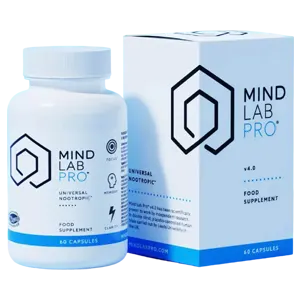
Mind Lab Pro
Product Type: Dietary Supplement
Primary Use: Cognitive Performance Support
Overall Rating: 4.9/5
Price: $69.00
Key Benefits
- Supports focus and concentration
- Supports memory and recall
- Supports mental clarity and cognitive performance
- Supports mood, motivation and mental energy
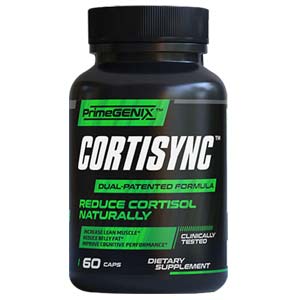
PrimeGENIX CortiSync
Product Type: Dietary Supplement
Primary Use: Cortisol, Stress & Adrenal Support
Overall Rating: 4.8/5
Price: $59.00
Key Benefits
- Supports healthy cortisol levels
- Supports stress management and resilience
- Supports energy and physical performance
- Supports focus and cognitive function
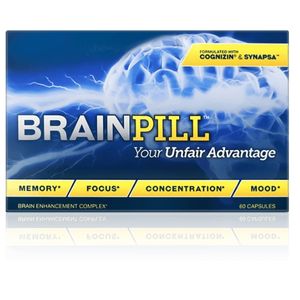
Brainpill
Product Type: Dietary Supplement
Primary Use: Memory, Focus Support
Overall Rating: 4.7/5
Price: $69.95
Key Benefits
- Supports memory and recall
- Supports focus and concentration
- Supports mental performance under pressure
- Supports cognitive energy and productivity