
Introduction
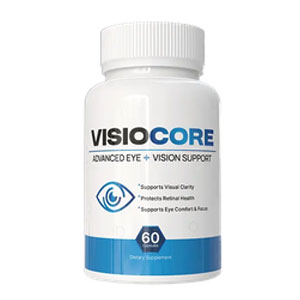
Eye-health supplements often combine carotenoids, vitamins, minerals, and plant extracts to support normal visual function. VisioCore follows this approach with a formula containing lutein, zeaxanthin, bilberry extract, vitamin C, vitamin E, zinc, calcium, and rutin.
The manufacturer markets VisioCore toward adults who want nutritional support for their eyes, particularly people over 40 and those who spend considerable time looking at digital screens. Its sales page highlights macular health, antioxidant protection, retinal circulation, and visual comfort.
Some of these ingredients have been studied individually, including in clinical research involving age-related macular degeneration (AMD). However, research on individual nutrients does not establish that VisioCore itself produces the same outcomes.
One important limitation is the lack of publicly displayed individual ingredient quantities on the official product page. Without those amounts, it is difficult to determine whether the formula provides doses comparable to those used in clinical studies.
Quick Summary Box
| Feature | Details |
|---|---|
| Product | VisioCore |
| Category | Eye Health Supplement |
| Primary Purpose | Supports general eye nutrition and visual health |
| Key Ingredients | Lutein, zeaxanthin, bilberry, vitamins C and E, zinc, calcium, rutin |
| Dosage | Official FAQ recommends one capsule twice daily |
| Supply | 60 capsules per bottle; advertised as a 30-day supply |
| Manufacturing Claims | Made in the USA; FDA-registered facility and GMP-certified manufacturing claimed by the seller |
| Starting Price | $59 for one bottle, according to the current sales page |
| Guarantee | 60-day money-back guarantee |
What Is VisioCore?
VisioCore is a dietary supplement designed to provide nutrients associated with eye health. Its formula combines two macular carotenoids with antioxidant vitamins, a mineral, a botanical extract, and a bioflavonoid.
The official website identifies eight active ingredients:
- Lutein
- Zeaxanthin
- Vitamin C
- Calcium
- Vitamin E
- Bilberry extract
- Zinc
- Rutin
The manufacturer positions the product as a daily nutritional supplement rather than a treatment for an eye condition. It is marketed toward adults interested in maintaining eye health as they age or managing everyday visual demands.
However, the accessible official product information does not provide individual quantities for the eight ingredients or a complete Supplement Facts breakdown. That makes it difficult to assess the formula’s strength and compare its ingredient levels with published research.
How Does VisioCore Work?
VisioCore is designed around three broad nutritional approaches: macular carotenoid support, antioxidant protection, and botanical support.
1. Supports Macular Pigment
Lutein and zeaxanthin are carotenoids that accumulate in the macula, the central part of the retina responsible for detailed vision. They contribute to macular pigment and help protect retinal tissue from oxidative stress.
2. Provides Antioxidant Nutrients
Vitamins C and E help protect cells against oxidative damage. Zinc also contributes to normal visual function and supports several processes involved in retinal health.
3. Adds Botanical Compounds
Bilberry contains anthocyanins, while rutin is a plant-derived bioflavonoid. Researchers have investigated these compounds for possible effects on circulation and other biological processes relevant to eye function.
These mechanisms provide a scientific rationale for studying the ingredients. They do not establish that the finished VisioCore formula improves eyesight, reduces eye strain, or prevents eye disease.
VisioCore Key Ingredients
The following review separates the manufacturer’s ingredient list from the available scientific evidence.
1. Lutein
Lutein is a carotenoid found in leafy green vegetables and other plant foods. The body cannot produce it, so dietary intake supplies this nutrient. It accumulates in the macula, where it contributes to the eye’s natural pigment.
Clinical research has examined lutein supplementation in people with early AMD. One randomized trial involving 108 participants reported improvements in macular pigment optical density after supplementation. However, the study used specified daily doses, and the official VisioCore page does not disclose its lutein quantity.
Research: Effect of lutein and zeaxanthin on macular pigment and visual function in patients with early AMD.
2. Zeaxanthin
Zeaxanthin works alongside lutein in the macula. Both carotenoids contribute to macular pigment, which helps filter certain wavelengths of visible light.
The AREDS2 clinical trial investigated lutein and zeaxanthin in people at risk of AMD progression. Its findings helped establish the role of these carotenoids in AREDS2 nutritional formulations. The trial does not demonstrate that every supplement containing them provides the same benefits.
Research: AREDS2 randomized clinical trial.
3. Vitamin C
Vitamin C is an antioxidant involved in collagen formation and normal tissue maintenance. The eye contains relatively high concentrations of this vitamin.
Research on antioxidant combinations has examined vitamin C alongside vitamin E, zinc, and other nutrients. The original AREDS trial found that a specific high-dose combination helped reduce the risk of advanced AMD progression in certain higher-risk participants. This evidence should not be interpreted as proof that vitamin C alone prevents AMD.
Research: AREDS Report No. 8: Antioxidants and zinc for age-related macular degeneration.
4. Calcium
Calcium is an essential mineral involved in bone health, muscle contraction, nerve signaling, and cellular communication. The official VisioCore website describes it as a supporting nutrient for eye structures and photoreceptor signaling.
However, calcium is not a central ingredient in the established AREDS2 formula, and there is insufficient clinical evidence to conclude that calcium supplementation improves eyesight in otherwise adequately nourished adults.
5. Vitamin E
Vitamin E is a fat-soluble antioxidant that helps protect cell membranes from oxidative damage. Researchers have studied it as part of antioxidant combinations for age-related eye conditions.
The AREDS research investigated vitamin E alongside vitamin C, beta-carotene, zinc, and copper. Those findings apply to the tested combination and population, not automatically to VisioCore.
Research: Long-term effects of vitamins C and E, beta-carotene, and zinc on AMD.
6. Bilberry Extract
Bilberry is a dark-colored berry containing anthocyanins, plant compounds with antioxidant properties. Researchers have investigated standardized bilberry extracts for possible effects on visual function and eye fatigue.
A randomized, double-blind, placebo-controlled study involving 109 adults examined 240 mg of standardized bilberry extract daily for 12 weeks. It reported improvements in certain measurements related to ciliary muscle contraction after visual display tasks.
This is an interesting finding, but the study used a defined extract and dose. VisioCore does not publicly disclose its bilberry quantity, so the results cannot be directly applied to its formula.
Research: Randomized trial of bilberry extract and ciliary muscle contraction.
7. Zinc
Zinc is an essential mineral involved in normal immune function, cellular metabolism, and visual processes. It is also included in established nutritional formulations studied for AMD.
The original AREDS trial found that a particular combination of antioxidants and zinc reduced the risk of progression to advanced AMD in selected higher-risk participants. The amounts used in that trial were specifically defined and should not be assumed to match VisioCore.
Research: AREDS clinical trial on antioxidants and zinc.
8. Rutin
Rutin is a flavonoid found in foods such as buckwheat and certain fruits. Researchers have investigated its antioxidant and vascular-related properties.
Although these biological properties provide a reason for further research, strong human clinical evidence establishing rutin supplementation as a way to improve eyesight or prevent eye disease remains limited.
Research: PubMed research on rutin and eye health.
What the Ingredient Research Actually Shows
Some of VisioCore’s ingredients have meaningful research behind them, particularly lutein, zeaxanthin, vitamin C, vitamin E, and zinc in specific nutritional combinations.
The National Eye Institute explains that AREDS2 formulas are intended for particular people with intermediate AMD or advanced AMD in one eye. They are not general-purpose vision enhancers for everyone.
Reference: National Eye Institute: AREDS and AREDS2 Frequently Asked Questions.
The most important limitation remains the absence of individual ingredient quantities on the accessible VisioCore product page. Without those figures, the formula cannot be reliably matched to the doses used in clinical trials.
VisioCore Benefits
Based on its ingredient profile and the manufacturer’s stated purpose, VisioCore may offer the following nutritional support:
- Supports normal eye function by supplying nutrients involved in visual processes.
- Provides lutein and zeaxanthin, carotenoids associated with macular pigment.
- Contributes antioxidant nutrients that help protect cells from oxidative stress.
- Supplies zinc, an essential mineral involved in normal vision.
- Introduces bilberry extract, which has been investigated in studies involving visual display tasks.
- Complements a balanced diet with several nutrients associated with eye health.
These are potential nutritional benefits, not guaranteed improvements in eyesight. VisioCore has not been established as a treatment for blurry vision, cataracts, glaucoma, AMD, or other eye diseases.
VisioCore Pros & Cons
Pros
- Includes lutein and zeaxanthin, two carotenoids associated with macular health.
- Combines antioxidant vitamins with zinc and botanical ingredients.
- Uses a capsule format for daily supplementation.
- Offers multiple package sizes.
- Advertises a 60-day money-back guarantee.
Cons
- Individual ingredient quantities are not clearly disclosed in the accessible official product information.
- The official page contains inconsistent serving descriptions.
- No published clinical trial specifically establishing the effectiveness of the finished VisioCore formula was identified.
- Bilberry and rutin have more limited evidence for specific eye-health outcomes than the marketing language may suggest.
- The larger packages require a higher upfront payment.
- Seller-hosted testimonials are not independent clinical evidence.
Comparison Table With Alternatives
The following comparison considers VisioCore alongside a related HBA review and established nutritional approaches. These options are not clinically interchangeable.
| Product / Option | Main Focus | Key Difference |
|---|---|---|
| VisioCore | General eye-health nutrition | Eight named ingredients, including lutein, zeaxanthin, and bilberry |
| Neurobella | Eye-health supplement | Separate multi-ingredient eye formula reviewed by HBA |
| AREDS2 Formula | Specific AMD nutritional support | Based on a defined nutrient combination studied in clinical trials |
| Lutein and Zeaxanthin Supplements | Macular carotenoid support | More focused supplementation with two carotenoids |
The National Eye Institute’s AREDS2 information is useful when comparing general eye-health supplements with formulas intended for people who have specific stages of AMD.
Customer Reviews
The VisioCore official website displays several positive customer testimonials. The seller labels these testimonials as verified purchases and includes comments about eye fatigue, night-driving comfort, glare, and reading.
These statements represent customer experiences published by the manufacturer. I could not independently verify the identities of the reviewers, their purchase records, or the reported outcomes.
There is also no substitute for controlled clinical research when evaluating whether a supplement produces consistent results. Individual testimonials cannot establish that VisioCore improves visual acuity or treats an eye condition.
For a balanced assessment, the published ingredient research and the lack of a verified finished-product clinical trial deserve more weight than promotional testimonials.
Who Should Use VisioCore?
VisioCore is marketed toward adults interested in general nutritional support for eye health.
People who may consider discussing this type of supplement with a healthcare professional include:
- Adults interested in adding eye-related nutrients to their daily diet.
- People whose diets contain limited sources of lutein and zeaxanthin.
- Adults looking for a multi-ingredient eye-health supplement.
- People who want to compare a general eye supplement with more established nutritional options.
Who Should Avoid It or Seek Medical Advice First?
- People taking prescription medication: Ask a healthcare professional to check for possible interactions.
- People taking blood thinners: Discuss bilberry-containing supplements with the prescribing clinician before use.
- Pregnant or breastfeeding individuals: Seek medical advice before adding a nonessential supplement.
- People with diagnosed eye conditions: Follow an ophthalmologist’s treatment plan rather than relying on a supplement.
- People preparing for surgery: Inform the surgical team about all supplements being used.
- People already taking multivitamins or eye formulas: Check for overlapping vitamins and minerals to avoid unnecessary intake.
Side Effects & Safety
The official website describes VisioCore as a natural formula and recommends consulting a healthcare professional before use when taking medication or managing an existing health condition.
However, natural ingredients are not automatically risk-free. Vitamins and minerals can cause problems when combined with other supplements or taken in excessive amounts.
A few considerations are worth noting:
- Bilberry: People taking anticoagulants or antiplatelet medication should ask a healthcare professional about possible bleeding-related interactions.
- Zinc: Excessive zinc intake can cause nausea and other adverse effects. Long-term high intake can also interfere with copper status.
- Vitamin E: High supplemental doses may increase bleeding risk, particularly when combined with certain medications.
- Ingredient overlap: Combining VisioCore with another eye formula or multivitamin could increase total nutrient intake.
The accessible product page does not provide individual ingredient quantities, making a complete dose-based safety assessment difficult.
The FDA does not approve dietary supplements for safety and effectiveness before they are marketed. A manufacturer’s statement about an FDA-registered facility should not be interpreted as FDA approval of the finished supplement.
Reference: FDA: Information for Consumers on Using Dietary Supplements.
VisioCore is not intended to diagnose, treat, cure, or prevent any disease. Anyone experiencing new blurry vision, sudden vision loss, flashes, severe eye pain, or other concerning symptoms should seek prompt medical attention rather than relying on supplements.
Pricing & Packages
According to the current VisioCore sales page, the product is available in three package sizes.
| Package | Advertised Total | Price Per Bottle | Shipping |
|---|---|---|---|
| 1 Bottle | $59 | $59 | Additional shipping fee |
| 3 Bottles | $147 | $49 | Free U.S. shipping |
| 6 Bottles | $234 | $39 | Free U.S. shipping |
The manufacturer advertises two free digital bonus guides with the three- and six-bottle packages. These include a vision-related guide and a meal-planning guide focused on eye-health nutrition.
Money-Back Guarantee: The official website advertises a 60-day money-back guarantee. Its refund policy states that customers must contact support within 60 days of the original order date and return the bottles using the instructions provided. Return shipping and original shipping or handling charges are not covered under the published policy.
Prices and promotional offers can change. Confirm the final total, shipping charge, and refund conditions at checkout before ordering.
Frequently Asked Questions
1. What is VisioCore used for?
VisioCore is a dietary supplement marketed to support general eye health and visual nutrition. Its formula contains lutein, zeaxanthin, bilberry extract, vitamins C and E, zinc, calcium, and rutin.
2. What are the main ingredients in VisioCore?
The manufacturer lists eight active ingredients: lutein, zeaxanthin, vitamin C, calcium, vitamin E, bilberry extract, zinc, and rutin. Individual ingredient quantities are not clearly disclosed in the accessible official product information.
3. How do I take VisioCore?
The official FAQ recommends taking one capsule twice daily with an 8-ounce glass of water, 20 to 30 minutes before a meal. The product page also contains a conflicting reference to a single daily capsule, so confirm the directions on the bottle label or with customer support before use.
4. Does VisioCore improve eyesight?
There is no verified clinical evidence establishing that the finished VisioCore formula improves eyesight. Some of its ingredients have been studied for their roles in eye nutrition, but ingredient research does not prove that this particular supplement improves visual acuity.
5. Can VisioCore treat macular degeneration?
No. VisioCore is not an established treatment for AMD. Certain AREDS and AREDS2 formulations may help reduce the risk of progression in people with specific stages of AMD, but an eye specialist should determine whether those formulas are appropriate.
6. How long does VisioCore take to work?
The manufacturer suggests that some users may notice changes within several weeks. However, these are marketing statements, not established clinical results for VisioCore. There is no verified finished-product trial establishing how long it takes to produce an effect.
7. Does VisioCore have side effects?
The official website does not list a comprehensive set of product-specific side effects. Individual ingredients may cause adverse effects or interact with medication. Anyone with a medical condition or taking prescription medication should consult a healthcare professional first.
8. Is VisioCore FDA-approved?
No. Dietary supplements are not approved by the FDA for safety and effectiveness before marketing. The manufacturer’s claim about production in an FDA-registered facility does not mean the product itself is FDA-approved.
9. What is the price of VisioCore?
The current official sales page lists one bottle for $59, three bottles for $147, and six bottles for $234. Shipping is advertised as free for the larger packages within the United States. Prices may change.
10. Does VisioCore offer a money-back guarantee?
Yes. The manufacturer advertises a 60-day money-back guarantee. Customers should review the official refund policy for the return procedure, shipping exclusions, and eligibility requirements.
Final Verdict: Is VisioCore Worth Considering?
VisioCore combines several nutrients associated with eye health, including lutein, zeaxanthin, vitamins C and E, and zinc. Its inclusion of bilberry and rutin adds botanical components that have also attracted scientific interest.
However, the product has important evidence and transparency limitations. The official website does not clearly disclose individual ingredient quantities in the accessible information, its dosage descriptions are inconsistent, and I could not identify a published clinical trial establishing the effectiveness of the finished VisioCore formula.
The research behind lutein, zeaxanthin, and AREDS2 is relevant, but it does not establish that VisioCore provides the same nutrient amounts or clinical outcomes. People with diagnosed eye conditions should not substitute this supplement for ophthalmologist-directed care.
**My assessment:** VisioCore may be considered as a general eye-nutrition supplement, but the missing ingredient quantities and lack of product-specific clinical evidence make it difficult to recommend confidently. Before purchasing, I would want to see a complete Supplement Facts label with exact amounts and confirm the correct daily serving instructions.
A balanced diet, appropriate eye protection, regular comprehensive eye examinations, and professional guidance remain more dependable foundations for long-term eye health.