
Introduction
Kinzeno Gel is a topical massage product designed for areas such as the back, neck, shoulders, knees, hands, wrists, feet, and other areas of everyday tension or discomfort. Unlike oral joint supplements, it is applied directly to the skin and massaged into the target area.
The formula combines MSM, magnesium salts, arnica, frankincense oil, horse chestnut, vitamin E, and B vitamins. The manufacturer describes a cooling, non-greasy “triple-action” massage experience, but the clinical evidence for the finished Kinzeno formula is limited.
Quick Summary
| Product | Kinzeno Gel |
|---|---|
| Category | Topical botanical massage gel |
| Primary Use | Massage and localized comfort |
| Format | Topical gel |
| Size | 75 mL, according to current third-party product listings |
| Main Ingredients | MSM, magnesium, arnica, Boswellia, horse chestnut, vitamin E, B-complex |
| Product-Specific Clinical Trial | None located |
| Application | Massage onto the desired area 2–3 times daily or as needed |
| Return Policy | 60-day satisfaction guarantee |
| Evidence Strength | Ingredient-level evidence; limited finished-product evidence |
What Is Kinzeno Gel?
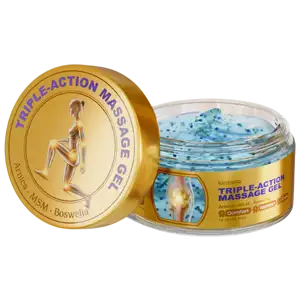 Kinzeno is a blue topical massage gel marketed as a daily wellness product. The manufacturer says it is intended to enhance massage routines and create a cooling sensation without leaving a greasy residue. It is intended for external use only.
The current official ingredient information lists water, propylene glycol, butylene glycol, MSM, menthol, magnesium sulfate, magnesium chloride, arnica flower extract, vitamin E, frankincense oil, B-complex components, and several formulation ingredients.
This is worth noting because some older or third-party descriptions list only the major ingredients. The full ingredient list is considerably longer.
How Does Kinzeno Gel Work?
Kinzeno’s immediate sensation appears to come partly from menthol, which produces a cooling feeling when applied to the skin. Massage itself can also temporarily change the perception of discomfort and improve the sensation of muscle relaxation.
The manufacturer describes the product as a three-phase system involving its blue and green beads and gel base. However, claims about a specialized delivery system should not be confused with clinical proof that the technology improves pain outcomes.
Kinzeno’s support instructions recommend applying a coin-sized amount, massaging it into the affected area, allowing 15–20 minutes before washing or covering the area, and reapplying 2–3 times daily or as needed.
Kinzeno Gel Ingredients
1. MSM
MSM, or methylsulfonylmethane, is an organosulfur compound used in various joint and muscle-support products.
Research on oral MSM has produced some evidence for osteoarthritis symptoms, but the evidence for topical MSM is much less established. NCCIH notes that research on MSM for osteoarthritis is limited, and a meta-analysis of oral MSM studies did not demonstrate a significant reduction in pain.
Therefore, the presence of MSM provides some rationale for the formula, but it does not prove that topical Kinzeno relieves joint pain.
NCCIH: Complementary Approaches for Chronic Pain
2. Arnica Montana
Arnica is one of Kinzeno’s more interesting ingredients because it has actual human research involving topical use.
A randomized, double-blind study involving 204 people with hand osteoarthritis compared an arnica gel with 5% ibuprofen gel. After 21 days, the researchers found no significant differences between the two groups in pain or hand function.
A Cochrane review similarly concluded that one trial provided moderate evidence that topical arnica could produce benefits similar to ibuprofen gel, although the overall evidence for topical herbal treatments remained limited.
The important limitation is that the studied arnica preparation was not Kinzeno. Different concentrations and formulations can behave differently.
Study: Topical Arnica vs. Ibuprofen for Hand Osteoarthritis
Cochrane Review: Topical Herbal Therapies for Osteoarthritis
3. Magnesium Sulfate and Magnesium Chloride
Kinzeno contains both magnesium sulfate and magnesium chloride. The manufacturer presents magnesium as part of its mineral-based massage formula.
The major scientific question is whether magnesium applied to the skin meaningfully penetrates the body.
The evidence is mixed. A small 2017 human pilot study found some changes in magnesium measures after using a magnesium cream, but the results were limited and statistical significance was only demonstrated in a subgroup.
More recent ex-vivo research published in 2026 found minimal magnesium penetration through intact skin from an aqueous magnesium sulfate preparation and concluded that normal transdermal delivery is strongly limited by the skin barrier.
Therefore, I would not describe Kinzeno’s topical magnesium as a proven method for correcting magnesium deficiency or producing systemic magnesium benefits.
2026 Study: Magnesium Permeation Through Skin
Study: Transdermal Magnesium Cream
4. Boswellia Carterii / Frankincense
Boswellia has substantial research as an oral botanical for osteoarthritis, but much of that evidence involves Boswellia serrata extracts taken orally, rather than Boswellia carterii oil applied topically.
A meta-analysis of seven randomized trials involving 545 people found improvements in pain, stiffness, and physical function with Boswellia or Boswellia extracts in osteoarthritis.
A newer 2025 randomized placebo-controlled trial also found benefits from a standardized Boswellia serrata extract in people with mild knee osteoarthritis.
Those results are useful for understanding Boswellia’s potential, but they should not be presented as clinical evidence for Kinzeno’s frankincense oil.
Study: Boswellia and Osteoarthritis
2025 Study: Boswellia Serrata for Knee Osteoarthritis
5. Horse Chestnut
Kinzeno includes horse chestnut and identifies aescin as its relevant active compound. Aescin has been studied primarily for venous insufficiency and related swelling rather than ordinary muscle or joint pain.
That gives the ingredient a plausible anti-inflammatory and vascular rationale, but there is not enough evidence to establish that topical horse chestnut in Kinzeno relieves back, knee, shoulder, or muscle pain.
6. Vitamin E
Kinzeno includes tocopheryl acetate, a form of vitamin E, and places vitamin E within its visible blue beads. The manufacturer describes this as part of its skin-conditioning and antioxidant profile.
Vitamin E has established nutritional and dermatological roles, but there is no good evidence that the vitamin E component makes Kinzeno an effective pain-relief treatment.
7. Vitamin B-Complex
The formula contains multiple B-vitamin-related compounds, including thiamine, riboflavin, niacinamide, pantothenic acid, pyridoxine, folic acid, biotin, and cyanocobalamin.
These vitamins have important biological functions, but their presence in a topical gel does not establish a clinically meaningful effect on joint or muscle pain.
Does Kinzeno Have Clinical Evidence?
This is the main limitation.
I did not find a published randomized controlled trial testing the complete Kinzeno Gel formula.
The evidence available for the product comes primarily from research on individual ingredients. Arnica has the most directly relevant topical human evidence, while Boswellia and MSM have more evidence in other formulations or routes of administration.
That means the correct conclusion is that Kinzeno has a scientifically plausible ingredient profile, not that Kinzeno itself has been clinically proven to treat pain.
Potential Benefits
Based on the formulation and available evidence, Kinzeno may provide:
- Cooling comfort: Menthol can produce an immediate cooling sensation during application.
- Massage-related relaxation: Rubbing the gel into tense areas may temporarily improve comfort.
- Localized botanical support: Arnica has some human evidence for topical musculoskeletal symptoms.
- Skin conditioning: Vitamin E, panthenol, betaine, and other ingredients contribute to the cosmetic formulation.
- Convenient topical application: The gel can be applied directly to a specific area rather than taken orally.
These are potential benefits, not proof that Kinzeno treats arthritis, neuropathy, chronic back pain, or another medical condition.
Pros and Cons
Pros
- Topical and easy to apply.
- Contains several recognizable botanical and mineral ingredients.
- Arnica has some direct topical human research.
- Menthol provides a noticeable cooling sensation.
- Does not rely on an oral NSAID ingredient.
- Official instructions provide clear application guidance.
- 60-day satisfaction guarantee is advertised by the manufacturer.
Cons
- No published clinical trial of the complete Kinzeno formula was located.
- Individual ingredient research does not establish product effectiveness.
- Evidence for topical magnesium remains uncertain.
- Boswellia evidence largely involves oral extracts rather than Kinzeno’s frankincense oil.
- Individual ingredient concentrations are not disclosed in the publicly available ingredient information.
- Evidence for MSM specifically as a topical pain-relief ingredient is limited.
Kinzeno Gel vs. Evidence
| Ingredient/Feature | Evidence Level | Relevance to Kinzeno |
|---|---|---|
| Arnica | Some direct topical human evidence | Most directly relevant ingredient |
| Boswellia | Moderate interest, mainly oral studies | Indirect |
| MSM | Limited evidence, mainly oral | Indirect |
| Magnesium | Topical absorption remains uncertain | Unclear |
| Horse Chestnut | Research mainly concerns venous conditions | Indirect |
| Vitamin E | Established nutritional/skin role | Skin conditioning rather than pain evidence |
| Complete Kinzeno formula | No published RCT located | Insufficient evidence |
Customer Reviews
Kinzeno has customer feedback available on its own website and on third-party review platforms. Trustpilot currently shows hundreds of reviews, with many customers describing the product and ordering experience positively. Some reviewers also report short-lived relief, limited effectiveness, or concerns about checkout and additional offers.
These reports can provide useful information about customer experience, but they should not be treated as clinical evidence. Individual pain experiences are highly variable and can change independently of treatment.
How to Use Kinzeno Gel
The current manufacturer instructions recommend:
- Apply approximately a coin-sized amount to the desired area.
- Massage gently in circular motions over areas of tension or discomfort.
- Allow approximately 15–20 minutes before washing or covering the area.
- Reapply 2–3 times daily or as needed.
Kinzeno is intended for external use only. The manufacturer advises avoiding the eyes and mucous membranes and washing the hands after application.
Kinzeno Gel Side Effects and Safety
Topical products can cause skin irritation, redness, itching, or allergic reactions, particularly in people sensitive to botanical extracts or fragrances.
Arnica can cause contact dermatitis in susceptible individuals. In the clinical research summarized by Cochrane, adverse events occurred in both the arnica and ibuprofen groups, although the overall evidence was limited.
Kinzeno also contains menthol and several botanical ingredients, so a small patch test may be reasonable for people with sensitive skin.
Do not apply it to broken, irritated, or infected skin unless a healthcare professional recommends doing so.
Who Might Consider Kinzeno?
Kinzeno may be reasonable for adults who want a topical massage product for temporary everyday comfort and prefer a botanical formulation.
It may be particularly appealing to someone who enjoys massage and wants a gel that provides a cooling sensation while being worked into the skin.
Who Should Avoid or Use Caution?
Extra caution is appropriate for people who:
- Have known allergies to arnica, horse chestnut, frankincense, or other botanical ingredients.
- Have very sensitive or damaged skin.
- Have unexplained persistent pain.
- Have significant swelling, weakness, numbness, or loss of mobility.
- Are pregnant or breastfeeding and have concerns about topical botanical products.
- Are using other topical medications on the same area.
Persistent or severe pain should not be managed solely with a massage gel. A healthcare professional should evaluate symptoms that are worsening, unexplained, or associated with neurological or systemic symptoms.
Kinzeno Gel Pricing
A current third-party product listing reports Kinzeno Gel at approximately $59.99 for a 75 mL container.
I would verify the price directly at checkout because the official pages currently emphasize ordering and the 60-day satisfaction guarantee rather than providing a consistently indexed public price. The manufacturer states that unused product can be returned within 60 days for a refund, with return shipping paid by the purchaser.
10 Frequently Asked Questions
1. What is Kinzeno Gel?
Kinzeno is a topical botanical massage gel designed for external application during massage routines. It is marketed for everyday comfort rather than as a medical treatment.
2. What are the main ingredients in Kinzeno?
The formula includes MSM, magnesium sulfate and chloride, arnica flower extract, frankincense oil, horse chestnut, vitamin E, and B-complex ingredients, along with other formulation ingredients.
3. Does Kinzeno contain menthol?
Yes. Menthol appears in the current full ingredient list and likely contributes to the product’s cooling sensation.
4. Can Kinzeno treat arthritis?
No clinical evidence currently establishes that Kinzeno treats arthritis. Some individual ingredients, particularly topical arnica and oral Boswellia preparations, have been studied for osteoarthritis symptoms.
5. Does topical magnesium work?
The evidence is uncertain. Some small studies suggest limited absorption, while newer research indicates that intact skin strongly restricts magnesium penetration.
6. Does arnica gel have clinical evidence?
Yes. A randomized double-blind study found an arnica gel was not significantly different from 5% ibuprofen gel for hand osteoarthritis pain and function after 21 days.
7. Does Kinzeno contain NSAIDs?
The published ingredient list does not show an NSAID such as diclofenac or ibuprofen. It is marketed as a drug-free massage gel.
8. How often should Kinzeno be applied?
The current manufacturer instructions recommend applying it 2–3 times daily or as needed.
9. Is Kinzeno FDA approved?
Kinzeno is marketed as a topical wellness/massage product rather than an FDA-approved drug. Its own website states that it is not intended to diagnose, treat, cure, or prevent disease.
10. Is Kinzeno clinically proven?
The finished Kinzeno formula has not been supported by a published randomized controlled trial that I could locate. The available evidence primarily concerns individual ingredients.
Final Verdict
Kinzeno Gel has a reasonable concept for a topical massage product. It combines menthol for cooling sensation with ingredients such as arnica, MSM, magnesium, frankincense, horse chestnut, and vitamin E. Of these, arnica has the most directly relevant human evidence for topical musculoskeletal use.
The biggest limitation is that the scientific evidence does not test the complete Kinzeno formula. Research on oral Boswellia or MSM, for example, cannot automatically establish that the topical versions in this gel produce the same results. The evidence for transdermal magnesium is particularly uncertain, with recent research finding that intact skin substantially limits magnesium penetration.
Editorial assessment: Kinzeno is best viewed as a botanical massage gel that may provide temporary cooling and comfort, rather than a clinically proven treatment for arthritis, chronic pain, nerve pain, or other medical conditions. The formula has some ingredient-level scientific rationale, but stronger evidence would require well-designed clinical trials of the finished product itself.
Our Top Joint Health & Bone Strength Products
We evaluated these products based on key factors relevant to their intended use. Our editorial ratings consider ingredient transparency, available scientific evidence, formulation quality, safety considerations, value, and other product-specific factors.
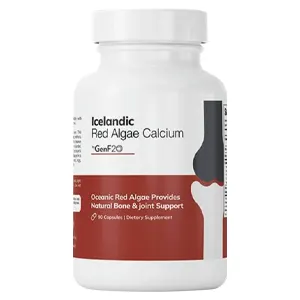
Red Algae Calcium
Product Type: Dietary Supplement
Primary Use: Bone Strength & Joint Mobility Support
Overall Rating: 4.9/5
Price: $59.95
Key Benefits
- Supports bone strength and mineral density
- Supports joint flexibility and mobility
- Provides calcium, magnesium, vitamin D3 and vitamin K2
- Supports healthy inflammatory balance
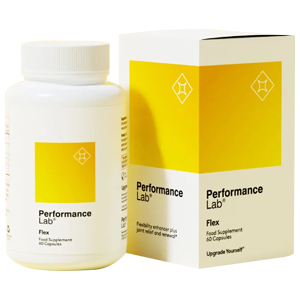
Performancelab Flex
Product Type: Dietary Supplement
Primary Use: Joint Health, Mobility & Flexibility Support
Overall Rating: 4.8/5
Price: $49.00
Key Benefits
- Supports comfortable joint movement
- Supports whole-body flexibility
- Supports healthy cartilage and connective tissues
- Supports joint lubrication and mobility

LeanBliss
Product Type: Dietary Supplement
Primary Use: Healthy Aging, Energy & Vitality Support
Overall Rating: 4.8/5
Price: $49.95
Key Benefits
- Supports energy and vitality
- Supports lean muscle mass
- Supports healthy body composition
- Supports memory and cognitive function