
Introduction
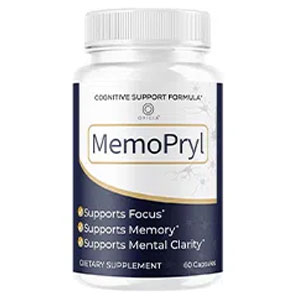
MemoPryl is marketed as a dietary supplement for memory, focus, concentration, mental clarity, and everyday brain health. The product is positioned as a natural cognitive-support formula for adults rather than a prescription treatment for dementia or Alzheimer’s disease.
The short answer is that some MemoPryl ingredients have legitimate cognitive research behind them, but there is not enough product-specific clinical evidence to establish that MemoPryl itself improves memory or prevents cognitive decline.
That distinction matters.
The strongest evidence among the commonly reported ingredients is for Bacopa monnieri, which has been investigated in randomized controlled trials involving adults. Ginkgo biloba also has a substantial research history, although results in healthy adults have been inconsistent. Other ingredients, including phosphatidylserine and N-acetyl-L-carnitine, have been studied for cognitive health, but evidence varies by population, dose, preparation, and outcome.
There is also a transparency issue worth knowing before purchasing. Current MemoPryl-related pages do not consistently display the same ingredient information. Some current brand-associated material identifies six ingredients—phosphatidylserine, Ginkgo biloba, N-acetyl-L-carnitine, St. John’s wort, Bacopa monnieri, and L-glutamine—while other MemoPryl materials and published references identify an eight-ingredient formula that additionally includes Alpha-GPC and Huperzine-A. The accessible official product page does not provide a complete Supplement Facts panel with verified individual amounts.
For that reason, this review evaluates the ingredients that MemoPryl materials associate with the formula without assigning doses that cannot be independently verified.
Quick Summary Box
| Product | MemoPryl |
|---|---|
| Category | Dietary supplement / cognitive support |
| Primary positioning | Memory, focus, concentration, brain energy and productivity |
| Form | Capsules |
| Reported bottle size | 60 capsules |
| Commonly reported ingredients | Bacopa monnieri, Ginkgo biloba, phosphatidylserine, N-acetyl-L-carnitine, St. John’s wort, L-glutamine |
| Other ingredients reported in MemoPryl scientific materials | Alpha-GPC and Huperzine-A |
| Individual ingredient doses | Not consistently published in accessible official materials |
| Product-specific clinical trial | Not identified during this review |
| Current advertised package range | $49–$79 per bottle depending on package |
| Money-back policy | 60 days according to current sales pages |
What Is MemoPryl?
MemoPryl is marketed as a daily brain-health supplement intended to support concentration, brain energy, productivity, memory, and mental clarity.
The supplied official domain, memopryl.com, currently functions primarily as a sales funnel. Its accessible page states that the product is a dietary supplement and includes the standard disclaimer that its statements have not been evaluated by the FDA. It also identifies ClickBank as the retailer and provides a return address in Aurora, Colorado.
Current MemoPryl product materials associate the formula with several cognitive-health ingredients. The six ingredients shown on one current MemoPryl retailer page are:
- Phosphatidylserine
- Ginkgo biloba leaf
- N-acetyl-L-carnitine
- St. John’s wort
- Bacopa monnieri
- L-glutamine
The brand’s scientific-reference page additionally identifies Alpha-GPC and Huperzine-A in its research materials.
This discrepancy is important because ingredient research only becomes clinically meaningful when the exact ingredient, extract, dose, and preparation are known.
How Does MemoPryl Work?
MemoPryl appears to use a multi-pathway cognitive-support approach.
Bacopa monnieri is included for memory-related support. Human trials have investigated Bacopa over several weeks, particularly for memory recall and attention.
Ginkgo biloba is commonly associated with circulation and cognitive function. However, systematic reviews in healthy adults have not consistently found meaningful cognitive enhancement.
Phosphatidylserine is a phospholipid found in cell membranes, including neural tissue. It has been investigated for age-related cognitive concerns and memory.
N-acetyl-L-carnitine is an acetylated form of L-carnitine that has been studied in relation to brain metabolism and cognitive disorders.
Alpha-GPC, when included, supplies choline and has been investigated in cognitive disorders.
Huperzine-A is an alkaloid traditionally obtained from Huperzia species. It inhibits acetylcholinesterase, an enzyme that breaks down acetylcholine, which is involved in memory and learning.
St. John’s wort is primarily studied as a botanical for mood rather than as an established memory enhancer. Its presence is also significant from a safety perspective because it can interact with many medications.
The overall theory is therefore biologically plausible for several ingredients. However, a plausible mechanism is not the same as proof that the complete MemoPryl formula improves cognition.
MemoPryl Key Ingredients
Bacopa Monnieri
Bacopa is probably the most relevant ingredient in the formula from a memory-research perspective.
A systematic review of randomized controlled human trials found some evidence that Bacopa improved memory free recall. The trials generally used standardized extracts over approximately 12 weeks, with studied doses of 300–450 mg per day. The researchers also noted that evidence for other cognitive domains was limited.
A separate meta-analysis of randomized controlled trials found improvements in certain measures of cognition and speed of attention after chronic supplementation.
A newer 2026 network meta-analysis comparing Bacopa and Ginkgo in healthy adults found promising effects for higher-dose Bacopa on working and short-term memory, although the authors noted limitations in the available evidence.
The key limitation for MemoPryl is dose. The current accessible label information does not consistently disclose the amount of Bacopa in the finished product. Therefore, the research cannot be directly transferred to MemoPryl.
Bacopa cognitive systematic review — PubMed
Bacopa randomized-trial meta-analysis — PubMed
2026 Bacopa vs. Ginkgo network meta-analysis — PubMed
Ginkgo Biloba
Ginkgo has a much longer history in cognitive supplements, but its evidence is more complicated than marketing language often suggests.
A meta-analysis specifically examining healthy individuals found no ascertainable positive effects on memory, executive function, or attention. The effect sizes were close to zero.
An earlier systematic review similarly concluded that controlled trials did not demonstrate marked or consistent cognitive benefits in healthy people.
That does not mean Ginkgo has no potential clinical applications. It means that the evidence does not support treating Ginkgo as a reliable cognitive enhancer for healthy adults.
Ginkgo and cognition in healthy adults — PubMed
Phosphatidylserine
Phosphatidylserine is a naturally occurring phospholipid involved in cell membranes and has been investigated for cognitive aging.
MemoPryl’s own references cite research examining phosphatidylserine and memory. However, older positive findings should not automatically be interpreted as proof that modern supplements containing phosphatidylserine prevent cognitive decline.
The effect may depend on the population studied, formulation, and dose.
Phosphatidylserine and cognition research — PubMed
N-Acetyl-L-Carnitine
N-acetyl-L-carnitine has been investigated for neurological and cognitive conditions, particularly in older adults and people with cognitive impairment.
However, evidence from clinical studies does not establish that it enhances memory in healthy adults taking a commercial combination supplement.
N-acetyl-L-carnitine cognitive research — PubMed
Alpha-GPC
Alpha-GPC is a choline-containing compound that can contribute to acetylcholine availability. Because acetylcholine is involved in memory and learning, Alpha-GPC has been investigated for cognitive disorders.
MemoPryl’s published scientific references include Alpha-GPC studies.
However, the presence of Alpha-GPC in research references does not establish that the current MemoPryl bottle contains a clinically effective amount.
Alpha-GPC cognitive research — PubMed
Huperzine-A
Huperzine-A inhibits acetylcholinesterase, which can increase the availability of acetylcholine in the nervous system.
This mechanism has made Huperzine-A an area of research for memory and Alzheimer’s disease. But the evidence base remains limited, and the appropriate dose and long-term safety of Huperzine-A-containing supplements require careful consideration.
Huperzine-A cognitive research — PubMed
St. John’s Wort
St. John’s wort is the ingredient that deserves the most attention from a medication-safety perspective.
It is primarily known for research involving depression rather than memory enhancement. More importantly, it can induce drug-metabolizing enzymes and transport proteins, reducing the concentrations or effects of numerous medicines. Clinical evidence documents interactions involving drugs such as warfarin, cyclosporine, digoxin, some HIV medicines, and oral contraceptives.
This means anyone taking prescription medication should not assume that a “natural” cognitive supplement is automatically low risk.
St. John’s wort drug-interaction review — PubMed
MemoPryl Benefits
Based on the product’s stated positioning and the research surrounding some of its ingredients, MemoPryl is designed to:
- Support everyday concentration and focus.
- Promote memory-related cognitive function.
- Provide nutritional and botanical compounds studied for brain health.
- Complement a healthy lifestyle focused on cognitive wellness.
- Support mental performance and productivity.
These are intended supplement benefits. They should not be interpreted as proof that MemoPryl prevents dementia, treats Alzheimer’s disease, or reverses cognitive impairment.
MemoPryl Pros & Cons
Pros
- Contains several ingredients with published human research.
- Bacopa has a relatively meaningful body of evidence for certain memory outcomes.
- The product is positioned as a daily cognitive-support supplement rather than a prescription medicine.
- The manufacturer publishes a list of scientific references supporting its ingredient rationale.
- Current sales pages offer a 60-day money-back policy.
Cons
- No product-specific randomized controlled trial was identified.
- Current online MemoPryl materials do not consistently show the same ingredient list.
- Individual ingredient doses are not consistently available in accessible official materials.
- Ginkgo evidence in healthy adults is weak or inconsistent.
- St. John’s wort creates significant medication-interaction concerns.
- Customer feedback includes substantial complaints about refunds and product experiences.
Comparison Table With Alternatives
| Option | Main Focus | Evidence Consideration | Important Limitation |
|---|---|---|---|
| MemoPryl | Multi-ingredient memory and focus support | Ingredient-level evidence | No finished-product clinical trial identified; label information varies |
| Bacopa monnieri | Memory and attention | Multiple randomized trials and meta-analyses | Results depend on extract and dose |
| Ginkgo biloba | Cognition and circulation | Extensive research, but inconsistent cognitive findings | Not reliably effective as a cognitive enhancer in healthy adults |
| Phosphatidylserine | Cognitive aging | Clinical research exists | Benefits vary by population and preparation |
| Medical cognitive evaluation | Identifying causes of memory problems | Clinical assessment and diagnostic testing | Requires a healthcare professional |
Customer Reviews
Customer feedback for MemoPryl is mixed, and the source of the reviews matters.
One current retailer-associated MemoPryl page reports a 4.8/5 average from 1,397 written reviews and 6,330 orders. However, the same page explicitly says those figures were supplied by the retailer and have not been independently verified.
A separate Trustpilot profile associated with a MemoPryl site currently shows a much more negative pattern, with 27 reviews and a 1.9/5 TrustScore. Several reviewers describe unsuccessful refund attempts, digestive complaints, or disappointment with cognitive results. These are individual customer reports and should not be treated as independently established facts about every MemoPryl order or bottle.
The conflicting review environments are themselves worth noting. They demonstrate why testimonials should not substitute for controlled clinical evidence.
I also would not repeat claims from online reviews alleging that MemoPryl is a “scam” as an established fact. Such statements represent individual reviewers’ opinions and should remain attributed to those reviewers.
Who Should Use MemoPryl and Who Should Avoid It?
MemoPryl is marketed toward adults who want general support for memory, concentration, focus, and mental performance.
However, people experiencing persistent memory loss, confusion, difficulty performing familiar tasks, or progressive cognitive changes should seek medical evaluation rather than relying on a supplement.
The same applies to anyone who is already being treated for a neurological or psychiatric condition.
Extra caution is appropriate for people who:
- Take prescription medications.
- Use hormonal birth control.
- Take antidepressants.
- Take warfarin or other medicines with a narrow therapeutic range.
- Use transplant medicines such as cyclosporine or tacrolimus.
- Take medications affected by CYP enzymes or P-glycoprotein.
- Have a diagnosed cognitive disorder.
- Are pregnant or breastfeeding.
The presence of St. John’s wort makes a medication review particularly important. Published clinical reviews document potentially significant interactions with numerous medicines.
Side Effects & Safety
The safety of the complete MemoPryl formula has not been established through a large, product-specific clinical trial.
The biggest identifiable concern is St. John’s wort. It can change how the body metabolizes numerous drugs by inducing CYP enzymes and P-glycoprotein. That can reduce the effectiveness of certain medications. It can also interact with serotonergic antidepressants and contribute to serotonin syndrome.
Ginkgo also deserves caution. Ginkgo can affect bleeding risk and may interact with anticoagulant or antiplatelet medicines.
Bacopa may cause gastrointestinal effects in some people, particularly at higher supplemental doses.
Huperzine-A also has pharmacological activity rather than functioning simply as a nutritional ingredient. Combining it with other substances that affect acetylcholine may increase the possibility of unwanted effects.
Because the exact current MemoPryl formulation and individual doses are not consistently published in accessible official materials, a complete ingredient-specific safety assessment is difficult.
Anyone taking medication should show the actual Supplement Facts label to a physician or pharmacist before starting the product.
Pricing & Packages
The current MemoPryl sales pages advertise multiple package options.
| Package | Advertised Price | Advertised Supply |
|---|---|---|
| 2 bottles | $158 total ($79/bottle) | 60 days |
| 3 bottles | $207 total ($69/bottle) | 90 days |
| 6 bottles | $294 total ($49/bottle) | 180 days |
The current sales page advertises free U.S. shipping on the three- and six-bottle packages and a 60-day money-back guarantee. The two-bottle package is shown with an additional shipping charge on the current checkout page.
The official supplied domain also identifies ClickBank as the retailer and provides separate vendor and order-support contacts.
Prices and promotional terms can change, so the checkout page should be treated as the final source for current pricing.
10 Frequently Asked Questions
1. What is MemoPryl?
MemoPryl is a dietary supplement marketed for memory, concentration, focus, mental clarity, and general brain health.
2. Does MemoPryl really improve memory?
There is insufficient product-specific clinical evidence to establish that MemoPryl itself improves memory. Some individual ingredients, especially Bacopa monnieri, have human research supporting certain cognitive outcomes.
3. What ingredients are in MemoPryl?
Current MemoPryl materials associate the product with Bacopa monnieri, Ginkgo biloba, phosphatidylserine, N-acetyl-L-carnitine, St. John’s wort, and L-glutamine. Other MemoPryl scientific materials also identify Alpha-GPC and Huperzine-A. The accessible official information does not consistently provide individual ingredient amounts.
4. How much Bacopa is in MemoPryl?
A current, independently verifiable official Supplement Facts panel with a confirmed Bacopa amount was not available in the accessible materials reviewed. It would therefore be inappropriate to invent or assume a dose.
5. Does Bacopa really help memory?
Some randomized trials and meta-analyses suggest that standardized Bacopa extracts can improve certain memory and attention measures, particularly after chronic supplementation. However, results depend on the extract, dose, and population studied.
6. Does Ginkgo biloba improve memory?
Evidence in healthy adults is inconsistent. A meta-analysis found no ascertainable positive effect on memory, executive function, or attention.
7. Is MemoPryl FDA approved?
No. FDA does not pre-approve dietary supplements for safety and effectiveness in the same way it approves prescription medications.
8. Can MemoPryl interact with medications?
Yes. The presence of St. John’s wort is particularly important because it can alter the effectiveness of numerous prescription and over-the-counter medicines.
9. Can MemoPryl treat Alzheimer’s disease?
No. MemoPryl is a dietary supplement and should not be considered a treatment for Alzheimer’s disease, dementia, or another diagnosed neurological condition.
10. How much does MemoPryl cost?
Current sales pages advertise packages ranging from $158 for two bottles to $294 for six bottles, with the per-bottle price decreasing as package size increases.
Final Verdict
MemoPryl has a recognizable nootropic-style formulation and includes several ingredients that have been investigated for cognitive health. Bacopa monnieri has the most convincing ingredient-level evidence for certain memory outcomes, while phosphatidylserine, N-acetyl-L-carnitine, Alpha-GPC, and Huperzine-A have also attracted scientific interest.
However, those findings should not be confused with clinical proof for MemoPryl itself.
The most important limitation is the lack of a published randomized controlled trial testing the finished MemoPryl formula. Without that evidence, it is not possible to say that the combination produces a clinically meaningful improvement in memory or focus.
There is also an ingredient-transparency problem. Current MemoPryl-related sources do not consistently present the same formula. One current brand-associated page identifies six named ingredients and says the amounts are not published in its files, while MemoPryl’s scientific-reference materials also identify Alpha-GPC and Huperzine-A.
That matters because clinical research depends heavily on the exact dose and preparation. A study showing an effect from a particular Bacopa extract, for example, does not prove that an unspecified amount of Bacopa in MemoPryl will produce the same result.
The safety issue is even more concrete. St. John’s wort has well-documented interactions with many medications, including hormonal contraceptives, anticoagulants, transplant drugs, certain HIV medicines, and some antidepressants.
Customer reviews also do not provide a clear answer. One retailer-associated page reports very positive customer feedback but acknowledges that its figures have not been independently verified, while a separate Trustpilot profile contains predominantly negative reviews concerning product effects, side effects, and refunds.
So, can MemoPryl really improve memory and focus?
The evidence supports a more cautious answer: MemoPryl contains ingredients with some legitimate cognitive research behind them, but there is currently insufficient product-specific evidence to establish that MemoPryl itself reliably improves memory, concentration, or long-term brain health.
For healthy adults interested in general cognitive wellness, the ingredient research is worth understanding, but the lack of verified dosing and finished-product clinical evidence should temper expectations.
For anyone experiencing persistent or worsening memory problems, a medical evaluation is more appropriate than relying on a dietary supplement. Cognitive symptoms can have many causes, and identifying the cause is more useful than assuming a nootropic product is the solution.
Finally, anyone taking prescription medication should review the complete MemoPryl label with a healthcare professional before use, with particular attention to the St. John’s wort issue.
Our Top Memory, Focus & Cognitive Products
We evaluated these products based on key factors relevant to their intended use. Our editorial ratings consider ingredient transparency, available scientific evidence, formulation quality, safety considerations, value, and other product-specific factors.
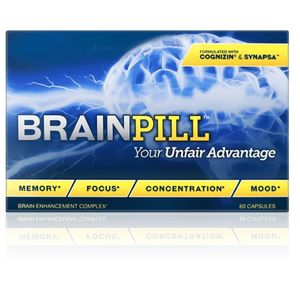
Brainpill
Product Type: Dietary Supplement
Primary Use: Memory, Focus & Cognitive Performance Support
Overall Rating: 4.9/5
Price: $69.95
Key Benefits
- Supports memory and recall
- Supports focus and concentration
- Supports mental performance under pressure
- Supports cognitive energy and productivity
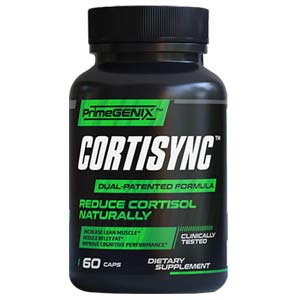
PrimeGENIX CortiSync
Product Type: Male Performance Spray
Primary Use: Cortisol, Stress & Adrenal Support
Overall Rating: 4.8/5
Price: $59.00
Key Benefits
- Supports healthy cortisol levels
- Supports stress management and resilience
- Supports energy and physical performance
- Supports focus and cognitive function
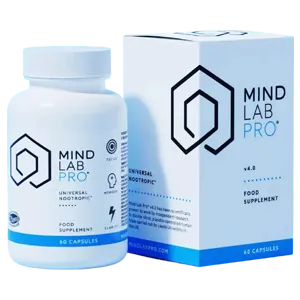
Mind Lab Pro
Product Type: Oil
Primary Use: Cognitive Performance Support
Overall Rating: 4.8/5
Price: $69.00
Key Benefits
- Supports focus and concentration
- Supports memory and recall
- Supports mental clarity and cognitive performance
- Supports mood, motivation and mental energy