
If you are searching for a Meno Moist Review, the key question is whether these vaginal suppositories can genuinely relieve the dryness and discomfort that often occur during menopause.
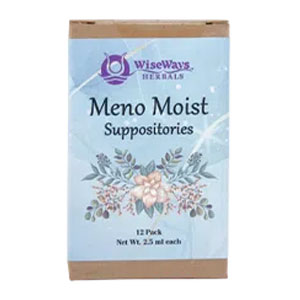
MenoMoist Suppositories are made by WiseWays Herbals and are marketed as a vaginal suppository made from natural oils, butters, herbs, glycerin, essential oils, and flower and gem essences. The manufacturer instructs users to insert one suppository daily, with the option to repeat the treatment for two weeks and then use it every three days. It also specifically states that the product should not be used during pregnancy.
There is a reasonable rationale for using a vaginal moisturizer during menopause. Falling estrogen levels can make vaginal tissue thinner, drier, and more susceptible to irritation, a collection of symptoms now commonly called genitourinary syndrome of menopause (GSM). Major medical organizations recognize vaginal moisturizers and lubricants as nonhormonal options for managing dryness and discomfort.
However, the evidence for Meno Moist specifically is much weaker. I could not identify a randomized controlled trial testing the finished MenoMoist suppository formula. In addition, several of its individual ingredients—including wild yam and St. John’s wort—do not have strong evidence for treating vaginal dryness, while the inclusion of multiple essential oils raises a potential irritation concern for people with sensitive vulvovaginal tissue.
Overall verdict: Meno Moist may provide temporary moisturizing and soothing effects because its oil- and butter-based suppository melts inside the vagina. But it should not be considered a clinically proven treatment for menopausal vaginal dryness or GSM. For persistent symptoms, better-studied nonhormonal moisturizers—particularly hyaluronic-acid products—or medically recommended vaginal estrogen may have stronger evidence.
Meno Moist Review: Quick Verdict
| Review Factor | Assessment |
|---|---|
| Product type | Natural vaginal suppository |
| Primary purpose | Moisturizing and soothing vaginal dryness |
| Form | 12 suppositories |
| Main ingredients | Olive oil, cocoa butter, beeswax, wild yam, St. John’s wort, calendula, glycerin, shatavari, marshmallow root, coconut oil, slippery elm, sea buckthorn, vitamin E, lavender, geranium, fennel, clary sage, and flower/gem essences |
| Clinical evidence for the finished product | No product-specific randomized controlled trial was identified. |
| Evidence for vaginal moisturizers generally | Supported as a nonhormonal option for vaginal dryness, although evidence varies by formulation. |
| Evidence for hyaluronic acid | Moderate and increasingly supportive evidence for postmenopausal vaginal symptoms. |
| Pregnancy | Manufacturer says not to use during pregnancy. |
| Current listed price | $11.95 for 12 suppositories on the manufacturer’s website at the time of review. |
| Overall assessment | Potentially useful as a simple moisturizing product, but evidence is limited and the essential-oil-containing formulation may not suit sensitive tissue. |
What Is Meno Moist?
MenoMoist is a vaginal suppository made by WiseWays Herbals. The manufacturer’s product page describes its suppositories as being made from natural ingredients designed to melt when exposed to body heat. The company recommends refrigeration or freezing to make insertion easier.
Each package contains 12 suppositories, and the manufacturer lists the current price as $11.95 on its website. An applicator is not included.
The manufacturer recommends inserting one suppository once daily. If needed, users are instructed to repeat this for two weeks and then switch to one suppository every three days. The company also warns that leakage may occur as the suppository melts.
This is an important distinction from a vaginal lubricant.
A lubricant is generally used around sexual activity to reduce friction. A vaginal moisturizer is used regularly to help relieve ongoing dryness. Medical sources distinguish between these two uses and note that women with menopause-related dryness may benefit from using a moisturizer regularly and a lubricant during sexual activity when needed.
What Ingredients Are in Meno Moist?
According to WiseWays Herbals, the formula contains:
- Olive oil
- Cocoa butter
- Beeswax
- Wild yam root
- St. John’s wort oil
- Calendula oil
- Glycerin
- Shatavari
- Marshmallow root
- Coconut oil
- Slippery elm bark
- Sea buckthorn oil
- Vitamin E
- Lavender essential oil
- Geranium essential oil
- Fennel essential oil
- Clary sage essential oil
- Flower and gem essences
The manufacturer does not provide individual quantities for these ingredients on the product page.
That makes it difficult to compare the product with clinical studies because the dose of each botanical or oil is unknown.
How Is Meno Moist Supposed to Work?
The most straightforward mechanism is physical moisturization.
The suppository melts after insertion, leaving an oil- and butter-based mixture in contact with vaginal tissue. This may temporarily reduce the sensation of dryness and friction.
That concept is consistent with the general purpose of vaginal moisturizers. ACOG explains that vaginal moisturizers can add moisture inside the vagina and help with dryness associated with menopause.
However, a moisturizer does not necessarily reverse the underlying hormonal changes responsible for GSM.
During menopause, lower estrogen levels can cause the vaginal lining to become thinner, less elastic, and less naturally lubricated. These changes can cause dryness, burning, itching, painful sex, urinary symptoms, and other problems.
Meno Moist therefore should be viewed primarily as a nonhormonal moisturizing product, not as an estrogen replacement or treatment that restores vaginal tissue.
Meno Moist and Vaginal Dryness: What Does the Evidence Say?
There is good reason to consider vaginal moisturizers for menopause-related dryness, but the evidence depends heavily on the formulation.
The Endocrine Society recommends a trial of vaginal moisturizers for postmenopausal women with symptoms of vulvovaginal atrophy and notes that products containing hyaluronic acid, polycarbophil, or pectin may provide a nonhormonal approach. However, it also notes that many studies have been small and relatively short.
A more recent systematic review of GSM interventions found that vaginal moisturizers may improve vulvovaginal dryness compared with placebo, but evidence for effects on painful intercourse and treatment satisfaction remains uncertain.
This supports the general concept of using a vaginal moisturizer, but it does not establish that Meno Moist itself will work.
I could not identify a clinical trial specifically evaluating the WiseWays MenoMoist suppository. That means claims about its effectiveness must remain more cautious than claims supported by trials of a specific moisturizer.
Wild Yam: Does It Really Help Menopause Symptoms?
Wild yam is one of the more recognizable ingredients in Meno Moist and is commonly associated with natural menopause products.
However, its reputation is stronger than its clinical evidence.
A review of complementary and alternative medicine for menopause found that evidence for wild yam is limited and inconsistent. In one double-blind, placebo-controlled crossover study, topical wild yam cream was no better than placebo for menopausal symptoms or estrogen and progesterone levels.
MedlinePlus similarly states that there is no good research supporting wild yam creams for vaginal dryness and notes that wild yam extracts have not been shown to have estrogen- or progesterone-like activity.
Therefore, it would be misleading to describe the wild yam in Meno Moist as a natural form of estrogen or progesterone.
Its presence may be consistent with the product’s herbal philosophy, but there is not strong evidence that it directly treats the hormonal cause of menopausal vaginal dryness.
Shatavari and Menopause Symptoms
Shatavari, or Asparagus racemosus, is another botanical used traditionally for women’s health.
There is some emerging human evidence. A randomized, double-blind, placebo-controlled trial involving 70 women reported improvements in several menopausal symptoms, including vaginal dryness and loss of libido, among participants taking a shatavari formulation.
However, there are several reasons not to transfer those results directly to Meno Moist.
The study involved an oral shatavari formulation, whereas Meno Moist contains shatavari as part of an intravaginal suppository. The dose and formulation are not the same.
Consequently, the study provides evidence that shatavari may have potential in menopause management, but it does not establish that the shatavari in Meno Moist produces the same effect when inserted vaginally.
St. John’s Wort: Potential Benefits and Concerns
Meno Moist contains St. John’s wort oil.
St. John’s wort has been studied primarily as an oral herbal product for depression and has also been investigated for some menopausal symptoms. NCCIH states that small numbers of studies suggest it may help hot flashes, but evidence is insufficient to reach firm conclusions for many other uses.
NICE also warns that St. John’s wort preparations can vary in dosage and potency and can interact seriously with medications, including tamoxifen, anticoagulants, and anticonvulsants.
Those warnings concern St. John’s wort generally and do not establish that the topical oil in Meno Moist causes the same systemic effects.
Nevertheless, because the exact amount of St. John’s wort oil is not disclosed, consumers taking medications should not assume that the ingredient is irrelevant simply because it is included in a vaginal product.
What About the Essential Oils?
The Meno Moist formulation includes lavender, geranium, fennel, and clary sage essential oils.
This is one of the areas where I would exercise particular caution.
The vagina is a sensitive mucosal environment, and people experiencing GSM may already have tissue that is thinner and more easily irritated. ACOG recommends avoiding perfumed products and other potential irritants when managing vulvovaginal problems.
This does not prove that the essential oils in Meno Moist are harmful. However, there is not enough product-specific clinical evidence to establish that this particular combination of essential oils is beneficial or well tolerated in menopausal vaginal tissue.
Someone who has previously reacted to fragranced personal-care products, essential oils, or botanical preparations may therefore prefer a simpler, fragrance-free vaginal moisturizer.
Could Meno Moist Reduce Pain During Sex?
It may help some women indirectly if dryness and friction are contributing to discomfort.
Vaginal moisturizers can improve moisture, while lubricants are specifically designed to reduce friction during sexual activity. ACOG recommends moisturizers for ongoing dryness and lubricants during sexual activity when needed.
However, persistent painful sex can have multiple causes.
GSM may cause pain because estrogen loss changes vaginal tissue, but infection, dermatologic conditions, pelvic-floor problems, vulvodynia, endometriosis, or other medical conditions can also contribute.
For that reason, Meno Moist should not be used to mask persistent or unexplained vaginal pain without appropriate evaluation.
Meno Moist vs. Hyaluronic Acid Vaginal Moisturizers
Hyaluronic acid provides an interesting comparison because it has substantially more clinical research specifically involving vaginal dryness and postmenopausal symptoms.
A 2020 systematic review identified five primary studies involving 335 women and concluded that vaginal hyaluronic acid appeared to be a potentially useful nonhormonal alternative for vaginal atrophy and painful intercourse.
More recently, a 2026 systematic review and meta-analysis of randomized controlled trials evaluated 11 studies of vaginal hyaluronic acid. The researchers reported improvements in vaginal health, dryness-related quality of life, and female sexual function, with moderate-quality evidence for some outcomes. They also emphasized variability between studies and the need for more standardized formulations and longer-term research.
This does not mean hyaluronic acid is automatically superior for every individual. It does mean that the evidence base for vaginal hyaluronic acid is considerably easier to evaluate than the evidence for the specific Meno Moist formula.
How Does Meno Moist Compare With Vaginal Estrogen?
This distinction is particularly important for women with significant GSM.
Nonhormonal moisturizers can relieve symptoms, but they do not restore estrogen-deprived vaginal tissue in the same way that local estrogen therapy can.
The 2025 AUA/SUFU/AUGS guideline on GSM states that local low-dose vaginal estrogen has the most robust evidence base among available treatment options.
The Endocrine Society likewise recommends low-dose vaginal estrogen when symptoms persist despite vaginal moisturizers and lubricants, for women without contraindications.
NICE also recommends vaginal estrogen for genitourinary symptoms associated with menopause and suggests nonhormonal moisturizers or lubricants for people who cannot or do not want to use vaginal estrogen.
Therefore, Meno Moist may be reasonable as a nonhormonal option, but it should not be presented as equivalent to vaginal estrogen.
Meno Moist Safety and Side Effects
The manufacturer specifically states not to use Meno Moist during pregnancy. It also warns that the suppository melts and leakage may occur.
Other potential considerations include:
- Local irritation: The essential oils and multiple botanical ingredients may not be tolerated by people with sensitive tissue.
- Allergic reactions: Individuals with sensitivities to botanicals, fragrances, beeswax, coconut, or other ingredients should review the full formula carefully.
- Medication interactions: St. John’s wort can interact with numerous medications, although the systemic exposure from this specific topical formulation is not established.
- Uncertain dosing: The manufacturer lists the ingredients but does not provide individual amounts on the product page.
- Leakage: The manufacturer specifically warns that the melted suppository may leak after insertion.
If burning, swelling, itching, rash, worsening pain, unusual discharge, or other concerning symptoms occur, stop using the product and seek medical advice if symptoms persist.
People experiencing unexplained bleeding, unusual vaginal discharge, significant burning, or persistent pain should not simply assume that menopause is the cause. Mayo Clinic recommends medical evaluation for symptoms such as unexplained bleeding, unusual discharge, or persistent soreness or burning.
How to Use Meno Moist
According to WiseWays Herbals, the recommended directions are:
- Remove one suppository from its mold.
- Insert one suppository vaginally once daily.
- If necessary, repeat daily use for two weeks.
- After that, use one suppository every three days.
- Store the suppositories in a refrigerator or freezer to make insertion easier.
- Expect possible leakage as the suppository melts.
The manufacturer states that an applicator is not included.
Because this product is oil-based, consumers should also check the instructions for any vaginal or contraceptive products they use concurrently rather than assuming that every vaginal product is compatible with every condom or contraceptive device.
Meno Moist Price and Value
The manufacturer’s current product page lists MenoMoist Suppositories 12 Pack at $11.95.
That makes it relatively inexpensive compared with many specialty vaginal moisturizers.
However, price alone does not establish value.
The more important question is whether the product provides enough symptom relief to justify continued use. Because Meno Moist has not been tested in a product-specific clinical trial that I could verify, there is no strong clinical basis for saying that it provides better value than established nonhormonal vaginal moisturizers.
Its lower price may nevertheless make it appealing to someone who prefers an oil- and botanical-based suppository and understands the limitations of the evidence.
Pros and Cons of Meno Moist
| Pros | Cons |
|---|---|
| Low listed price of $11.95 for 12 suppositories | No verified clinical trial of the complete Meno Moist formula |
| Designed specifically for vaginal use | Individual ingredient amounts are not disclosed |
| Oil- and butter-based formulation may provide moisturizing effects | Contains several essential oils that may irritate sensitive tissue |
| Contains multiple botanical ingredients | Wild yam has weak evidence for vaginal dryness or menopause symptoms |
| Manufacturer provides specific directions | Not recommended during pregnancy |
| Nonhormonal formulation | Not a substitute for evidence-based treatment of significant GSM |
Who Might Consider Meno Moist?
Meno Moist may be worth considering for an adult experiencing mild vaginal dryness who prefers a nonhormonal, oil-based vaginal suppository and is comfortable with a botanical formulation.
It may particularly appeal to someone who:
- Prefers a natural or herbal product.
- Wants a vaginal moisturizer rather than a lubricant used only during sex.
- Does not want a hormone-containing product.
- Understands that product-specific clinical evidence is limited.
- Has no known sensitivity to the listed ingredients.
Who Should Use Caution?
Extra caution is appropriate if you:
- Are pregnant or trying to become pregnant.
- Have a history of sensitivity to essential oils or fragranced products.
- Have recurrent vaginal irritation, yeast infections, or bacterial vaginosis.
- Take medications that can interact with St. John’s wort.
- Have unexplained vaginal bleeding.
- Have persistent vaginal pain, burning, unusual discharge, or urinary symptoms.
- Have significant GSM symptoms that have not improved with nonhormonal products.
People with persistent symptoms should discuss evidence-based treatment options with a gynecologist or other qualified healthcare professional.
Frequently Asked Questions
What is Meno Moist used for?
Meno Moist is a vaginal suppository marketed to moisturize and soothe vaginal tissue. The manufacturer recommends inserting one suppository daily and states that it may be used every three days after an initial two-week period if needed.
Does Meno Moist really help vaginal dryness?
It may provide moisturizing effects, but there is insufficient clinical evidence to say that the Meno Moist formula specifically treats vaginal dryness. Evidence supports vaginal moisturizers generally, but studies of this particular product were not identified.
Is Meno Moist safe during menopause?
The product is specifically marketed as a vaginal suppository and may be considered by some menopausal women, but individual tolerance varies. The formula contains several botanical and essential-oil ingredients that could irritate sensitive tissue. ACOG recommends avoiding potentially irritating fragranced products when managing vulvovaginal problems.
Can Meno Moist treat vaginal atrophy?
It may temporarily moisturize vaginal tissue, but it should not be considered a treatment that reverses the underlying estrogen-related tissue changes of vaginal atrophy or GSM.
Does Meno Moist contain estrogen?
The manufacturer does not list estrogen as an ingredient. It is presented as a nonhormonal herbal suppository.
Does wild yam act like natural progesterone?
There is not good evidence that wild yam products function as progesterone replacement. MedlinePlus notes that wild yam extracts have not been found to have estrogen- or progesterone-like activity.
Can Meno Moist be used during pregnancy?
No. The manufacturer specifically states that Meno Moist suppositories are not for use during pregnancy.
How often should Meno Moist be used?
The manufacturer’s directions recommend one suppository once daily, with daily use for up to two weeks if necessary, followed by use every three days.
Is Meno Moist better than hyaluronic acid vaginal moisturizers?
There is not enough head-to-head evidence to make that claim. However, hyaluronic acid vaginal products have a substantially larger and more directly relevant clinical evidence base, including randomized controlled trials and recent systematic reviews.
Can Meno Moist replace vaginal estrogen?
No. Vaginal estrogen has a stronger evidence base for GSM and directly addresses estrogen-related changes in vaginal tissue. Nonhormonal moisturizers can be useful alternatives for people who cannot or do not want to use estrogen, but they are not equivalent treatments.
Final Verdict: Is Meno Moist Worth Trying?
Meno Moist has a straightforward concept: a vaginal suppository made from oils, butters, herbs, glycerin, and essential oils that melts after insertion and may provide temporary moisture.
That basic approach is consistent with the broader medical use of vaginal moisturizers. Nonhormonal vaginal moisturizers are recognized options for managing menopause-related dryness, and regular use can help some women manage symptoms.
The problem is the evidence specific to Meno Moist. I could not identify a randomized controlled trial testing the complete WiseWays formulation. The individual ingredients also vary considerably in evidence quality. Wild yam has little convincing evidence for vaginal dryness, while shatavari has some emerging evidence for menopausal symptoms but was studied orally rather than as a vaginal suppository.
The essential-oil component is another reason for caution. Menopausal vaginal tissue can become more fragile and sensitive, and major gynecological organizations recommend avoiding potentially irritating or fragranced products when vulvovaginal symptoms are present.
For women looking specifically for a nonhormonal vaginal moisturizer, hyaluronic acid has a stronger evidence base than Meno Moist, with recent randomized-trial evidence supporting improvements in vaginal dryness and related quality-of-life measures.
Bottom line: Meno Moist may be a reasonable low-cost option for someone who prefers an oil-based herbal suppository and has mild dryness, but it should not be considered a clinically proven treatment for menopause-related vaginal atrophy. If symptoms are persistent, severe, or associated with pain, bleeding, unusual discharge, or urinary problems, a healthcare professional can help determine whether a better-studied moisturizer, vaginal estrogen, or another treatment is more appropriate.
Our Top Female Libido, Sexual Arousal & Menopause Support Products
We evaluated these products based on key factors relevant to their intended use. Our editorial ratings consider ingredient transparency, available scientific evidence, formulation quality, safety considerations, value, and other product-specific factors.
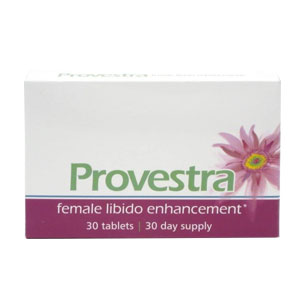
Provestra
Product Type: Dietary Supplement
Primary Use: Female Libido & Menopause Support
Overall Rating: 4.9/5
Price: $59.00
Key Benefits
- Supports sexual desire and libido
- Supports vaginal lubrication
- Supports sexual sensitivity and satisfaction
- Supports menopause symptom management
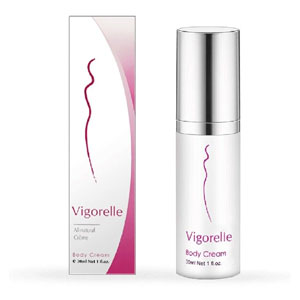
Vigorelle
Product Type: Cream/Gel
Primary Use: Sexual Arousal, Lubrication & Sensitivity Support
Overall Rating: 4.8/5
Price: $59.00
Key Benefits
- Supports natural lubrication
- Supports sexual arousal and sensitivity
- Helps enhance sexual sensation
- Supports moisture and comfort
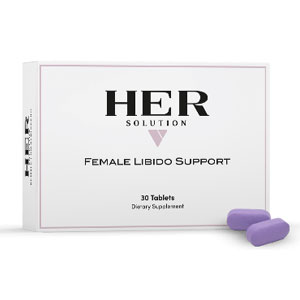
HerSolution
Product Type: Dietary Supplement
Primary Use: Female Libido, Arousal & Sexual Wellness Support
Overall Rating: 4.8/5
Price: $59.95
Key Benefits
- Supports sexual desire and libido
- Supports vaginal lubrication
- Supports sexual arousal and sensitivity
- Supports sexual satisfaction