
Introduction
Healthy-looking skin depends on several factors, including genetics, nutrition, sun exposure, aging, and daily skin-care habits. As a result, supplements marketed for collagen support, skin elasticity, and a more youthful appearance have become increasingly popular.
Celluvia is an oral dietary supplement marketed as a skin-rejuvenation formula. Its advertised approach combines vitamins, minerals, and botanical ingredients in a once-daily capsule. The formula is positioned to support skin health from within rather than working as a topical cream or serum.
But do its ingredients have enough scientific support to justify the product’s skin-related claims?
In this Celluvia review, I examine the available ingredient information, research behind its main nutrients, potential benefits, safety considerations, customer feedback, and current package prices. I also distinguish established nutrient functions from claims that have not been demonstrated in clinical trials of Celluvia itself.
Quick Summary Box
| Product Name | Celluvia |
| Category | Beauty and Skin Health Supplement |
| Product Type | Dietary supplement capsules |
| Primary Marketing Claims | Skin rejuvenation, collagen support, and skin appearance |
| Advertised Formula | Vitamins, minerals, and an 11-component proprietary blend |
| Notable Nutrients | Vitamin C, biotin, vitamin A, vitamin E, zinc, and other nutrients |
| Proprietary Blend | Reported as 179.5 mg in third-party label transcriptions; original label should be checked |
| Product-Specific Clinical Evidence | No published clinical trial of the finished Celluvia formula identified |
| Suggested Use | One capsule daily, according to published product information |
| Money-Back Guarantee | 60 days, according to the official order page |
What Is Celluvia?
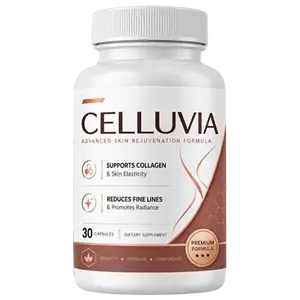 Celluvia is a dietary supplement marketed for skin health and cosmetic wellness. It is designed for adults interested in supporting their skin through a combination of vitamins, minerals, and plant-derived ingredients.
Published label transcriptions describe a formula containing 16 vitamins and minerals, alongside a proprietary blend of botanical and other ingredients. The reported nutrients include vitamins A, C, D, and E, several B vitamins, biotin, calcium, iron, magnesium, zinc, manganese, and potassium.
The botanical blend has been reported to include ingredients such as:
– PABA
– Horsetail extract
– Fo-Ti
– Bamboo extract
– Stinging nettle
– Chinese peony
– Spirulina
– Saw palmetto
– Soy-derived plant sterols
– Alfalfa
– Barley grass
There is an important labeling limitation. The accessible official order page does not display a complete readable Supplement Facts panel. Third-party transcriptions also contain discrepancies in some nutrient amounts and botanical details. The original bottle label should therefore be treated as the final reference before making ingredient-specific decisions.
Celluvia is a dietary supplement, not a prescription skin treatment or a clinically established method for reversing skin aging.
How Does Celluvia Work?
Celluvia’s marketing focuses on nutritional support for skin appearance. Its advertised formula can be considered through three main areas.
1. Supports Collagen Formation
Vitamin C is required for normal collagen synthesis. Collagen is a structural protein found in skin and other connective tissues.
Adequate vitamin C intake supports normal collagen production, but this does not mean that taking additional vitamin C automatically reduces wrinkles or restores lost skin elasticity.
2. Provides Nutrients for Normal Skin Function
Vitamin A, zinc, vitamin E, and several B vitamins contribute to normal cellular and metabolic processes. These nutrients have established physiological roles, including tissue maintenance and normal cell function.
Correcting a nutrient deficiency can help restore normal body functions. However, supplementation beyond nutritional requirements has not been shown to guarantee visible skin rejuvenation.
3. Combines Botanical Ingredients
The reported botanical blend includes horsetail, bamboo, ginseng-related ingredients, spirulina, and other plant materials.
Some of these ingredients are used in traditional wellness products or studied for antioxidant and nutritional properties. However, Celluvia does not provide sufficient publicly accessible information to establish the individual quantities or demonstrate that the blend improves skin appearance.
Celluvia Key Ingredients
The following assessment covers the nutrients and botanicals reported in published Celluvia label transcriptions. The individual amounts of several ingredients, particularly those inside the proprietary blend, require confirmation against the original product label.
1. Vitamin C
Vitamin C is one of the most relevant nutrients in Celluvia’s skin-health positioning. The body uses it to produce collagen, which helps provide structure to skin, bones, blood vessels, and connective tissues.
The NIH Office of Dietary Supplements explains that vitamin C is necessary for collagen biosynthesis. Adequate intake is important for normal skin and tissue health.
However, evidence that vitamin C is necessary for collagen production should not be confused with evidence that Celluvia reduces wrinkles or visibly tightens skin.
**Research link:**
– NIH ODS: Vitamin C and its role in collagen formation
2. Biotin
Biotin, also known as vitamin B7, helps the body metabolize carbohydrates, fats, and proteins. It is commonly included in beauty supplements marketed for hair, skin, and nails.
Some Celluvia label transcriptions report 2,500 mcg of biotin per capsule. This figure should be verified against the physical label before publication or use.
The NIH Office of Dietary Supplements notes that scientific evidence supporting biotin supplements for improving hair, skin, and nail health is limited. Biotin deficiency can affect skin and hair, but deficiency is uncommon in otherwise healthy adults.
An additional concern is that biotin can interfere with certain laboratory tests, potentially producing inaccurate results.
**Research links:**
– NIH ODS: Biotin and its health effects
– FDA: Biotin interference with laboratory tests
3. Vitamin A
Vitamin A contributes to normal cell growth, immune function, and tissue maintenance. It is also involved in the normal development and maintenance of epithelial tissues, including skin.
Some label transcriptions identify beta-carotene as the vitamin A source. Beta-carotene is a provitamin A carotenoid that the body can convert into vitamin A.
The presence of vitamin A in a supplement does not establish that it reverses visible signs of aging. Excessive intake of preformed vitamin A from multiple sources can also create safety concerns, particularly during pregnancy.
**Research link:**
– NIH ODS: Vitamin A health professional fact sheet
4. Vitamin E
Vitamin E is a fat-soluble nutrient that acts as an antioxidant. It helps protect cells from oxidative damage and contributes to normal immune function.
Oxidative stress is one of several processes studied in relation to skin aging. However, the presence of an antioxidant vitamin in a supplement does not prove that the finished product reduces wrinkles or improves skin firmness.
**Research link:**
– NIH ODS: Vitamin E
5. Zinc
Zinc is an essential mineral involved in immune function, protein synthesis, wound healing, and normal cell division.
Adequate zinc intake is important for healthy skin function. A deficiency can contribute to skin abnormalities and delayed wound healing.
However, there is insufficient evidence to conclude that additional zinc improves the appearance of healthy skin when dietary intake is already adequate.
**Research link:**
– NIH ODS: Zinc
6. Horsetail and Bamboo Extracts
Horsetail and bamboo are often included in beauty supplements because certain preparations contain silica or silica-related compounds.
Silicon is present in connective tissues, and researchers have investigated its possible role in skin and connective-tissue health. However, the evidence for oral horsetail or bamboo extracts as effective skin-rejuvenation ingredients remains limited.
Celluvia’s reported proprietary blend does not disclose the individual amounts of these ingredients, making it difficult to assess their contribution.
7. Fo-Ti
Fo-Ti, also known as Polygonum multiflorum, is a traditional Chinese herbal ingredient used in several herbal preparations.
It has been studied for various biological effects, but its safety deserves particular attention. The National Institute of Diabetes and Digestive and Kidney Diseases’ LiverTox resource documents cases of clinically significant liver injury associated with Fo-Ti products.
Because the amount and preparation of Fo-Ti in Celluvia are not independently verified, people with liver disease or a history of liver problems should avoid using the product without medical advice.
**Research links:**
– NIH LiverTox: Polygonum multiflorum and liver injury
– Published clinical report of liver injury associated with Polygonum multiflorum
Celluvia Benefits
Based on the advertised ingredients and their established nutritional functions, Celluvia may provide general nutritional support. The following are potential ingredient-related benefits, not clinically proven outcomes of the finished product.
– **Supports collagen production:** Vitamin C contributes to the body’s normal collagen synthesis.
– **Provides essential nutrients:** Vitamins A, C, D, E, and B vitamins contribute to normal physiological functions.
– **Supplies minerals:** Zinc, magnesium, iron, and other minerals support several metabolic processes.
– **Provides antioxidant nutrients:** Vitamins C and E participate in antioxidant defense.
– **Combines botanical ingredients:** The formula includes several plant-derived ingredients commonly used in wellness supplements.
– **Offers a simple routine:** The published product directions describe a once-daily capsule.
There is insufficient product-specific evidence to claim that Celluvia removes cellulite, eliminates wrinkles, tightens loose skin, reverses aging, or produces a measurable change in skin elasticity.
Celluvia Pros and Cons
Pros
– Combines several vitamins and minerals involved in normal skin and tissue function.
– Includes vitamin C, which has an established role in collagen synthesis.
– Offers a capsule-based daily supplement format.
– Publishes a 60-day money-back guarantee.
– Provides multi-bottle packages with lower advertised per-bottle prices.
– Discloses a number of its nutritional ingredients through published label transcriptions.
Cons
– No published clinical trial of the complete Celluvia formula was identified.
– The accessible official order page does not provide a complete readable Supplement Facts panel.
– Some third-party ingredient transcriptions disagree on individual nutrient amounts and botanical details.
– The proprietary blend does not disclose individual ingredient quantities.
– Evidence for biotin supplementation improving skin in people without a deficiency is limited.
– Fo-Ti has documented liver-injury concerns.
– There is no reliable evidence that dietary supplements reduce cellulite.
Celluvia Comparison Table with Alternatives
Celluvia belongs to the beauty and skin-health supplement category. However, supplements, topical products, and dermatologist-administered treatments have different purposes and evidence standards.
| Option | Main Focus | Evidence Considerations |
|---|---|---|
| Celluvia | General nutritional and skin-health support | No finished-product clinical trial identified |
| Vitamin C Supplement | Meeting vitamin C requirements and supporting collagen synthesis | Vitamin C has an established physiological role; extra intake does not guarantee visible rejuvenation |
| Biotin Supplement | Correcting inadequate biotin intake | Limited evidence for cosmetic benefits in people without deficiency |
| Topical Retinoids | Addressing certain signs of photoaging | Some formulations have clinical evidence for improving fine wrinkles and skin texture |
| Daily Sunscreen | Reducing ultraviolet exposure | Broad-spectrum sun protection helps prevent photoaging and sun damage |
| Dermatologist Consultation | Assessing skin concerns and selecting treatments | Provides individualized advice based on skin type and clinical assessment |
The American Academy of Dermatology explains that supplements marketed for cellulite do not have evidence demonstrating that they reduce cellulite. Its guidance is useful when evaluating products that extend their beauty claims to cellulite reduction.
Reference: American Academy of Dermatology: Cellulite treatments and what really works.
Celluvia Customer Reviews
The available product materials and promotional pages do not provide a sufficiently transparent, independently verified customer-review database from which to establish a reliable average rating or review count.
Some third-party articles discuss Celluvia and reproduce ingredient information, but those articles are not equivalent to verified purchaser feedback.
I would not treat seller-published testimonials or promotional before-and-after claims as clinical evidence. Individual experiences cannot establish that Celluvia caused a particular skin improvement.
Before ordering, buyers should look for independently hosted reviews and verify the seller’s contact details, refund process, and return conditions.
Who Should Use Celluvia?
Celluvia may interest adults who want a combined vitamin, mineral, and botanical supplement as part of a general wellness routine.
It may be worth researching further for adults who:
– Want to review a supplement containing nutrients involved in normal skin function.
– Prefer a once-daily capsule format.
– Have checked the complete Supplement Facts panel.
– Understand that nutritional support does not guarantee visible cosmetic results.
– Have discussed possible ingredient interactions with a healthcare professional.
Who Should Avoid It or Seek Medical Advice First?
People should consult a healthcare professional before using Celluvia if they:
– Have liver disease or a history of liver injury.
– Are pregnant, planning pregnancy, or breastfeeding.
– Take prescription medication or multiple dietary supplements.
– Have a known soy allergy, if the current product label confirms soy content.
– Have iron overload or have been advised to avoid iron supplementation.
– Have a medical condition that affects nutrient absorption or metabolism.
– Have upcoming blood tests that may be affected by biotin.
People with persistent skin changes, unexplained rashes, or worsening skin conditions should seek medical advice rather than relying on a beauty supplement.
Celluvia Side Effects and Safety
The safety of the complete Celluvia formula has not been established through a published product-specific clinical trial. Individual ingredients have different safety considerations.
Biotin: Some published Celluvia label transcriptions report 2,500 mcg per capsule. Biotin can interfere with certain laboratory tests, including some thyroid and cardiac-related assays. Tell healthcare professionals and laboratory staff about biotin-containing supplements before testing. Follow their advice about whether and when to stop supplementation.
Fo-Ti: This ingredient deserves particular caution. Fo-Ti has been associated with clinically significant liver injury, including severe cases. People with liver disease should avoid using it unless a qualified clinician specifically advises otherwise.
Iron: Iron is essential for normal oxygen transport, but unnecessary supplementation can be inappropriate for people who already have adequate iron stores or certain medical conditions. Check the total amount from all supplements.
Vitamin A: The form matters. Excessive intake of preformed vitamin A can be harmful, especially during pregnancy. Verify whether the product uses beta-carotene or preformed vitamin A and review total intake from other supplements.
Vitamin C: Higher supplemental doses can cause diarrhea, nausea, and abdominal discomfort. People with certain medical conditions should discuss supplementation with a healthcare professional.
Other botanicals: Ingredients such as ginseng, saw palmetto, and stinging nettle may interact with medicines or cause unwanted effects. The lack of individual blend amounts makes a complete interaction assessment difficult.
A further consideration is that the product’s accessible official order page does not provide a complete readable ingredient and allergen declaration. Obtain the current bottle label before using it, particularly if there is a history of allergies or medication interactions.
Celluvia Pricing and Packages
The official order page lists three promotional packages. The following prices were displayed on the supplied official page when reviewed and may change.
| Package | Advertised Supply | Price | Shipping |
|---|---|---|---|
| 2 Bottles | 60 days | $158 total ($79 each) | Additional shipping |
| 3 Bottles | 90 days | $216 total ($72 each) | Free US shipping |
| 6 Bottles | 180 days | $294 total ($49 each) | Free shipping |
The order page also displays reference prices and promotional savings. These figures are seller-advertised comparisons, not independently verified market prices.
Money-Back Guarantee
The official order page advertises a 60-day satisfaction guarantee. The page links to a separate return policy, which buyers should review before placing an order.
Check the written policy for the following details:
– Whether all bottles must be returned.
– Whether opened bottles are accepted.
– Who pays return shipping.
– Whether the return request must be approved before shipping.
– The exact date from which the refund period begins.
The existence of a guarantee does not establish that a product works or that every refund request will automatically be approved.
10 Frequently Asked Questions About Celluvia
1. What is Celluvia used for?
Celluvia is a dietary supplement marketed for skin health and rejuvenation support. It combines vitamins, minerals, and a botanical blend. It is not a clinically established treatment for wrinkles, cellulite, or other skin conditions.
2. What ingredients are in Celluvia?
Published label transcriptions describe vitamins A, C, D, and E, several B vitamins, biotin, calcium, iron, magnesium, zinc, manganese, and potassium. They also report a proprietary blend containing botanicals such as horsetail, Fo-Ti, bamboo, stinging nettle, and spirulina. The current bottle label should be checked because online transcriptions differ.
3. Does Celluvia really improve skin elasticity?
There is insufficient product-specific clinical evidence to establish that Celluvia improves skin elasticity. Vitamin C supports normal collagen production, but this does not prove that the finished supplement produces visible changes in skin firmness.
4. Can Celluvia reduce wrinkles or fine lines?
No published clinical trial of the finished Celluvia formula was identified demonstrating wrinkle reduction. Some nutrients support normal skin function, but that is different from proving a cosmetic anti-aging effect.
5. Does Celluvia help reduce cellulite?
There is no reliable evidence that Celluvia reduces cellulite. The American Academy of Dermatology states that supplements marketed for cellulite have not been shown to reduce it.
6. How should Celluvia be taken?
Published product information describes one capsule daily. Buyers should follow the directions on the current bottle label and ask a healthcare professional if they take medication or have an underlying medical condition.
7. How long does Celluvia take to work?
There is no verified clinical timeline for results from Celluvia. The accessible official order page does not establish how long the product takes to produce a measurable skin-related benefit.
8. Does Celluvia have side effects?
Possible concerns depend on the ingredient quantities and individual health factors. Biotin can interfere with some laboratory tests, and Fo-Ti has been associated with liver injury. Other vitamins and botanicals may also cause adverse effects or medication interactions.
9. How much does Celluvia cost?
The official order page lists two bottles for $158 plus shipping, three bottles for $216 with free US shipping, and six bottles for $294 with free shipping. Prices may change, so check the final checkout amount.
10. Does Celluvia offer a money-back guarantee?
Yes. The official order page advertises a 60-day money-back guarantee and provides a link to its return policy. Buyers should review the full terms, including return-shipping requirements and eligibility, before ordering.
Final Verdict: Is Celluvia Worth Trying?
Celluvia combines vitamins, minerals, and botanical ingredients in a supplement marketed for skin health and rejuvenation. Its formula includes several nutrients with established roles in normal physiology, particularly vitamin C, which contributes to collagen formation.
However, the available evidence does not establish that the complete Celluvia formula reduces wrinkles, improves skin elasticity, removes cellulite, or reverses visible signs of aging. The proprietary blend also makes it difficult to assess the individual botanical doses.
Two issues deserve particular attention before purchase: the incomplete ingredient information on the accessible official order page and the reported inclusion of Fo-Ti, which has documented liver-injury risks. The biotin amount should also be confirmed because biotin can interfere with certain laboratory tests.
The promotional package prices and 60-day guarantee may appeal to buyers, but neither demonstrates clinical effectiveness.
My assessment: Celluvia is a multi-ingredient beauty supplement containing nutrients that support normal skin function, but its skin-rejuvenation claims remain unproven at the finished-product level. I would not consider it a proven anti-aging or cellulite treatment. Anyone considering it should first verify the current Supplement Facts panel, pay particular attention to Fo-Ti and biotin, and discuss possible risks with a healthcare professional.