
Introduction
Unwanted facial and body hair can be frustrating, particularly when shaving, waxing, threading, and plucking require constant maintenance. Some people also find that traditional laser hair removal does not work equally well for every hair color or skin type.
Oilume is marketed as an alternative approach. It is a topical hair-removal oil designed to support a routine aimed at making unwanted hair regrowth look finer and less noticeable over time.
The product’s main advertised ingredient is *Cyperus rotundus* seed oil, also known as purple nutsedge oil. The manufacturer describes it as an 80% concentrated oil formula and promotes it for areas such as the chin, upper lip, jawline, underarms, and bikini line.
This ingredient has attracted scientific interest. A small 2014 human study investigated topical *Cyperus rotundus* oil for reducing unwanted underarm hair. Another study involving 91 women examined its effects on androgen-dependent hair growth. These findings offer some preliminary support for further research, but they do not establish that Oilume produces permanent hair removal or performs as well as professional laser treatment.
There are also important questions about the complete formula. The product information names several supporting ingredients, but a complete quantitative ingredient list is not clearly available in the accessible sales material.
In this Oilume review, I examine the advertised formula, published research, potential benefits, customer feedback, safety considerations, pricing, and return policy. I also distinguish research involving *Cyperus rotundus* from claims about the finished Oilume product.
Quick Summary Box
| Product Detail | Information |
|---|---|
| Product Name | Oilume |
| Category | Beauty & Personal Care / Topical Hair-Reduction Oil |
| Product Type | Topical cosmetic oil |
| Main Advertised Ingredient | 80% Cyperus rotundus seed oil |
| Other Advertised Ingredients | Acetyl Tripeptide-1, jojoba oil, rosehip oil, sweet almond oil, tea tree oil, and aloe |
| Primary Marketing Claims | Make unwanted hair regrowth look finer and less noticeable |
| Application Areas | Face, chin, upper lip, jawline, underarms, and external bikini-area skin |
| Suggested Use | 2–4 drops morning and evening after hair removal |
| Clinical Evidence | Limited human research on Cyperus rotundus oil; no Oilume-specific clinical trial identified |
| Single-Bottle Price | $29.95 in the reported checkout listing |
| Money-Back Guarantee | 30-day return policy reported; restrictions require careful review |
What Is Oilume?
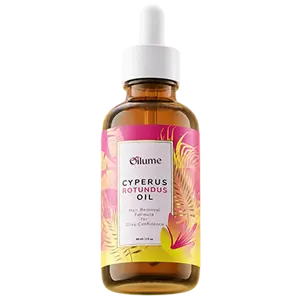 Oilume is a topical oil marketed for people who want to reduce the appearance of unwanted hair regrowth without relying exclusively on shaving, waxing, threading, or laser-based procedures.
The product is positioned particularly toward women dealing with recurring facial hair around the chin, upper lip, and jawline. However, the manufacturer also advertises use on other external body areas, including underarms and the bikini line.
Unlike a conventional depilatory cream, Oilume is not marketed as an instant hair-dissolving product. Instead, it is presented as a leave-on oil intended for consistent application after the user removes unwanted hair through an existing hair-removal method.
The manufacturer highlights several features:
- Concentrated oil base: The company advertises an 80% concentration of *Cyperus rotundus* seed oil.
- Gradual hair-reduction approach: The product is marketed to make regrowth appear finer and less noticeable over time.
- Multiple application areas: The manufacturer promotes use on the face and selected body areas.
- Hair-color independence: Because it is a topical product rather than a pigment-targeting laser, the company claims it can be used on gray, white, blonde, and darker hair.
- Skin-conditioning ingredients: Supporting oils are included to help condition skin that is frequently shaved, plucked, or waxed.
Oilume should not be confused with a permanent hair-removal treatment. The manufacturer describes a gradual routine, but the available evidence does not establish that the product permanently destroys hair follicles or eliminates the need for future hair removal.
How Does Oilume Work?
Oilume’s proposed approach is based on applying *Cyperus rotundus* oil to areas where unwanted hair has already been removed.
The manufacturer recommends using the oil consistently rather than expecting immediate results.
1. Applying the Oil After Hair Removal
The company recommends removing unwanted hair first through shaving, waxing, threading, plucking, or another preferred method.
Once the skin is clean, dry, and calm, users are instructed to apply 2–4 drops of Oilume to the treatment area.
The product is intended to remain on the skin rather than being rinsed off.
2. Using Cyperus Rotundus Oil for Hair-Regrowth Support
The central ingredient is *Cyperus rotundus* seed oil. Some published studies have investigated topical preparations of this plant for reducing unwanted hair growth.
Researchers have proposed that certain plant compounds may influence androgen-related hair-growth processes. However, the exact biological mechanism and its clinical relevance remain insufficiently established.
The available human studies are preliminary and do not prove that every product containing *Cyperus rotundus* oil will produce the same results.
3. Conditioning the Treatment Area
Oilume also lists supporting ingredients such as jojoba oil, rosehip oil, sweet almond oil, tea tree oil, and aloe.
These ingredients are included primarily for their cosmetic and skin-conditioning roles.
For example, jojoba and sweet almond oils can help soften the skin, while aloe is commonly used in topical skin-care preparations.
These properties may support a more comfortable skin-care routine, but they do not independently establish a hair-growth reduction effect.
4. Following a Consistent Routine
The manufacturer recommends applying Oilume twice daily.
Its sales material suggests that some users may notice changes after several weeks, with more visible changes potentially occurring around weeks six to eight.
These are marketing timelines, not clinically validated expectations for Oilume. Individual results may vary, and the available studies do not establish this exact application schedule for the finished product.
Oilume Key Ingredients
Oilume’s advertised formula centers on *Cyperus rotundus* seed oil, with several additional ingredients intended to support skin conditioning.
The sales material identifies the following ingredients:
- Cyperus rotundus seed oil
- Acetyl Tripeptide-1
- Jojoba oil
- Rosehip oil
- Sweet almond oil
- Tea tree oil
- Aloe
The manufacturer advertises an 80% concentration for the main oil ingredient. However, the accessible sales information does not provide a complete quantitative breakdown of the remaining ingredients or a fully detailed formulation.
1. Cyperus Rotundus Seed Oil
*Cyperus rotundus*, commonly called purple nutsedge or nutgrass, is a plant used in traditional preparations. Its essential oil contains various plant compounds, including flavonoids and other constituents that have attracted scientific interest.
The most relevant research concerns its possible effects on unwanted hair growth.
A 2014 open-label pilot study published in the *Aesthetic Surgery Journal* investigated topical *Cyperus rotundus* essential oil in 65 participants with unwanted underarm hair. Participants were assigned to groups receiving the oil, saline, or Alexandrite laser treatment. Sixty participants completed the study.
The researchers reported that overall hair-reduction results did not differ significantly between the oil and laser groups. They also reported a favorable finding for the oil in reducing white-hair growth.
However, the study had important limitations:
- It was an open-label pilot study rather than a large, blinded clinical trial.
- Only 65 participants were enrolled.
- The research examined a particular topical oil preparation, not Oilume.
- The study does not establish permanent hair removal.
A separate 2012 study involving 91 women with unwanted androgen-dependent hair examined topical *Cyperus rotundus* oil against saline over six months. The researchers reported a greater reduction in hair growth in the active-treatment group.
The findings are interesting, but they require confirmation through larger, independent studies using standardized preparations.
**Research links:**
– 2014 Study: Cyperus Rotundus Oil and Alexandrite Laser Hair Removal
– 2012 Study: Role of Cyperus Rotundus Oil in Decreasing Hair Growth
– 2022 Study: Cyperus Rotundus Oil and Underarm Hyperpigmentation
**Editorial assessment:** *Cyperus rotundus* is the most scientifically relevant ingredient in Oilume’s advertised formula. There is limited human research suggesting possible hair-growth reduction, but the studies do not establish Oilume’s effectiveness, permanent results, or equivalence to professional laser treatment.
2. Jojoba Oil
Jojoba oil is a plant-derived liquid wax obtained from the seeds of the jojoba plant. It is commonly used in cosmetic products because of its emollient properties.
Its primary role in a topical formulation is to help soften and condition the skin.
Jojoba oil may be useful in a routine involving frequent shaving, waxing, or plucking because these practices can leave skin feeling dry or uncomfortable.
However, there is no established clinical evidence that jojoba oil permanently reduces hair growth.
**Research link:** PubMed: Jojoba Oil and Skin Research
**Editorial assessment:** Jojoba oil may contribute to skin conditioning, but it should not be considered an active hair-removal ingredient.
3. Rosehip Oil
Rosehip oil is obtained from the seeds of rose plants and is commonly used in moisturizers and cosmetic skin-care preparations.
It contains fatty acids and other naturally occurring compounds that may support skin softness and moisture retention.
Some cosmetic research has investigated rosehip preparations for their potential effects on skin appearance and hydration. However, evidence varies depending on the specific preparation and study design.
There is no established clinical evidence showing that rosehip oil reduces unwanted hair growth.
**Research link:** PubMed: Rosehip Oil and Skin Research
**Editorial assessment:** Rosehip oil may support the cosmetic skin-conditioning purpose of Oilume, but it does not establish the product’s main hair-reduction claim.
4. Sweet Almond Oil
Sweet almond oil is commonly used as an emollient in skin-care products. It helps soften skin and can improve the feel of dry areas.
It may be particularly relevant in products intended for skin that experiences repeated shaving, waxing, or plucking.
However, sweet almond oil does not have established clinical evidence for reducing hair growth.
People with almond or tree-nut allergies should review the ingredient label carefully and seek professional advice before applying products containing almond-derived ingredients.
**Research link:** PubMed: Sweet Almond Oil and Topical Skin Research
**Editorial assessment:** Sweet almond oil is primarily a skin-conditioning ingredient, not a proven hair-growth inhibitor.
5. Tea Tree Oil
Tea tree oil is an essential oil obtained from the leaves of *Melaleuca alternifolia*. It is used in various topical cosmetic and personal-care products.
Researchers have investigated tea tree oil for antimicrobial and skin-related properties.
However, tea tree oil can also cause allergic contact dermatitis, particularly when it is oxidized or used improperly.
It should not be applied undiluted to sensitive or damaged skin.
There is no reliable clinical evidence establishing tea tree oil as an effective ingredient for permanent hair removal.
**Research links:**
– PubMed: Tea Tree Oil and Contact Dermatitis
– NCCIH: Tea Tree Oil Usefulness and Safety
**Editorial assessment:** Tea tree oil may contribute to the skin-care formulation, but its potential to cause irritation should be considered, especially on the face and sensitive areas.
6. Aloe
Aloe is widely used in topical skin-care products, particularly in formulations marketed for soothing and moisturizing skin.
Some research has examined aloe preparations for skin irritation, wound care, and other dermatological applications. However, findings depend on the preparation and condition being studied.
The Oilume sales material mentions aloe but does not provide a clearly disclosed quantity or full ingredient specification.
Aloe should therefore be viewed as a supporting skin-care ingredient rather than a proven hair-reduction agent.
**Research link:** NCCIH: Aloe Vera Usefulness and Safety
**Editorial assessment:** Aloe may support the cosmetic purpose of the formula, but its inclusion does not establish that Oilume reduces hair growth.
7. Acetyl Tripeptide-1
Acetyl Tripeptide-1 is a cosmetic peptide used in certain skin-care formulations.
Peptides are short chains of amino acids that may be included in cosmetic products for skin-conditioning or appearance-related purposes.
However, the accessible Oilume sales information does not provide enough detail about the peptide’s concentration, formulation, or intended mechanism.
I could not identify reliable human clinical evidence demonstrating that Acetyl Tripeptide-1 reduces unwanted hair growth when applied in a product such as Oilume.
**Editorial assessment:** Acetyl Tripeptide-1 may serve a cosmetic formulation role, but its contribution to hair reduction remains unestablished.
Ingredient Transparency: What Buyers Should Verify
The advertised 80% concentration of *Cyperus rotundus* oil is a notable formulation claim. However, the remaining ingredients are not presented with a complete quantitative breakdown in the accessible sales material.
Before purchasing, consumers should request or inspect:
- The complete ingredient list using standard cosmetic ingredient names.
- The exact basis for the advertised 80% concentration.
- The quantity or concentration of each supporting ingredient.
- The botanical source and plant part used for the Cyperus oil.
- Any available purity, oxidation, or contaminant testing.
- Batch-specific quality documentation.
Without this information, it is difficult to compare Oilume directly with the specific oil preparations used in published studies.
Oilume Benefits
Oilume is marketed for several hair-removal and skin-care benefits. The following points describe the manufacturer’s intended benefits rather than established clinical outcomes for the finished product.
- Support a hair-reduction routine: The manufacturer uses *Cyperus rotundus* oil, an ingredient investigated in preliminary human studies involving unwanted hair growth.
- Make regrowth appear finer: The product is marketed to help reduce the visible prominence of hair as part of a consistent routine.
- Condition frequently treated skin: Jojoba, rosehip, and sweet almond oils are included for their cosmetic skin-conditioning properties.
- Fit into existing hair-removal habits: Oilume is designed to be applied after shaving, waxing, threading, or plucking.
- Support a topical approach: The oil is applied directly to the skin rather than relying on a device or pigment-targeting technology.
- Accommodate different hair colors: Unlike laser treatments that depend on pigment, the product’s topical application does not require dark hair. However, that does not prove effectiveness on gray, white, blonde, or darker hair.
- Provide a leave-on skin-care step: The manufacturer recommends leaving the oil on the skin rather than rinsing it off.
**Important:** There is no established evidence that Oilume permanently removes hair, destroys hair follicles, or eliminates the need for future hair-removal methods.
Oilume Pros and Cons
Pros
- Uses a research-relevant main ingredient: Cyperus rotundus oil has been investigated in small human studies involving unwanted hair growth.
- Offers a topical application method: The product does not require an appointment or specialized hair-removal device.
- Can fit around existing routines: The manufacturer recommends applying it after the user’s preferred hair-removal method.
- Includes skin-conditioning oils: Jojoba, rosehip, and sweet almond oils may support skin softness.
- Advertises multiple application areas: The company promotes use on selected facial and body areas.
- Does not depend on hair pigment: The topical approach is not based on targeting melanin in hair follicles.
Cons
- Lacks product-specific clinical evidence: No published Oilume clinical trial was identified.
- Has limited formulation transparency: The complete quantitative ingredient list is not clearly disclosed in the accessible sales material.
- Does not establish permanent hair removal: The available evidence does not prove that Oilume permanently stops hair growth.
- Uses research that cannot be directly generalized: Studies of other Cyperus oil preparations do not prove that Oilume delivers equivalent results.
- Requires consistent application: The recommended routine involves twice-daily use.
- May irritate sensitive skin: Essential oils and botanical ingredients can cause irritation or allergic reactions.
- Has return-policy restrictions: The advertised guarantee should be checked against the seller’s written return conditions, particularly for opened products.
Comparison Table: Oilume vs. Other Hair-Removal Options
Oilume is a topical hair-reduction oil rather than a conventional depilatory cream. The following comparison shows how it differs from common hair-removal methods.
| Method | How It Works | Potential Advantages | Limitations |
|---|---|---|---|
| Oilume | Topical oil applied after hair removal | Non-device application; marketed for gradual visible regrowth changes | Finished-product effectiveness and permanent results are unproven |
| Shaving | Cuts hair at the skin surface | Quick, accessible, and inexpensive | Hair regrowth is usually noticeable relatively quickly |
| Waxing | Removes hair from the root | Can provide longer-lasting smoothness than shaving | May cause pain, irritation, or ingrown hairs |
| Threading | Uses twisted thread to remove individual hairs | Useful for precise facial hair removal | Requires skill and repeated appointments or practice |
| Depilatory Creams | Uses chemicals to dissolve hair at or near the skin surface | Can remove hair without shaving equipment | May irritate skin and requires careful product-specific instructions |
| Laser Hair Removal | Uses light energy to target pigment in hair follicles | Can provide long-term hair reduction after multiple sessions | Results vary by hair color, skin type, device, and treatment settings |
| Electrolysis | Uses electrical energy to destroy individual hair follicles | Can provide permanent hair removal when performed successfully | Requires repeated treatments and professional expertise |
**Comparison takeaway:** Oilume may appeal to consumers interested in a topical routine, but it should not be considered equivalent to established professional hair-removal procedures. Laser and electrolysis have different mechanisms and clinical evidence. The best option depends on hair color, skin type, treatment area, medical history, and personal preferences.
Oilume Customer Reviews
Oilume’s sales material includes customer testimonials describing changes in unwanted facial and body hair, reduced maintenance, and improved skin appearance.
However, testimonials published on a product sales page are promotional material. They do not independently establish the product’s effectiveness or demonstrate that most customers will experience similar results.
I also found a Trustpilot profile for Oilumeskin showing a 3.9/5 rating based on only three reviews at the time of the search. The profile was marked unclaimed, and the small number of reviews is not enough to establish a reliable overall customer-satisfaction trend.
One reviewer described the ordering process as easy but complained about repeated additional offers during checkout. Other short reviews described fast service or assistance with ordering.
These comments relate mainly to the purchasing experience rather than independently documented hair-reduction outcomes.
What Should Buyers Look for in Customer Feedback?
Before relying on reviews, it is useful to check:
- Whether the reviewer purchased the exact Oilume product.
- Whether the review describes the treatment area and duration of use.
- Whether before-and-after photographs are genuine and independently verified.
- Whether negative experiences and irritation reports are represented.
- Whether the reviewer received a free product or other incentive.
- Whether feedback comes from independent platforms rather than only the seller’s website.
**Customer review assessment:** Oilume has promotional testimonials and a small number of third-party reviews. The available customer feedback is insufficient to establish typical hair-reduction results or long-term effectiveness.
Who Should Use Oilume and Who Should Avoid It?
Who May Be Interested in Oilume?
Oilume is marketed toward adults who want a topical product to add to their existing hair-removal routine.
Potentially interested consumers may include:
- Adults who regularly remove unwanted facial hair.
- People looking for a topical alternative to adding another hair-removal device to their routine.
- Consumers interested in products containing botanical oils.
- People who want to condition skin frequently exposed to shaving, waxing, or threading.
- Adults interested in exploring the limited research on Cyperus rotundus oil.
These descriptions reflect the product’s intended audience. They do not establish that Oilume is effective or suitable for every skin type.
Who Should Avoid Oilume or Seek Professional Advice First?
- People with sensitive skin: Essential oils and botanical ingredients may trigger irritation or allergic contact dermatitis.
- People with almond allergies: The advertised formula includes sweet almond oil. Check the exact ingredient source and consult an allergist if necessary.
- People with a history of cosmetic allergies: Review the complete ingredient list and perform a patch test before applying it to larger areas.
- People with broken or inflamed skin: Avoid applying the oil to cuts, open wounds, active rashes, or freshly irritated skin.
- People considering internal intimate-area use: Do not apply the oil to mucous membranes or internal genital tissue.
- People with unexplained excessive hair growth: Sudden or increasing facial or body hair can sometimes be associated with hormonal or medical conditions and deserves medical evaluation.
Oilume Side Effects and Safety
Oilume is a topical cosmetic oil, so its main safety considerations involve skin irritation, allergy, and correct application.
The manufacturer recommends a patch test before full use. This is a sensible precaution, particularly because the advertised formula contains several botanical oils.
1. Skin Irritation
Essential oils and concentrated botanical ingredients can irritate some people’s skin.
Potential reactions include:
- Redness
- Burning or stinging
- Itching
- Dryness
- Rash
Discontinue use if persistent irritation develops.
2. Allergic Contact Dermatitis
Tea tree oil can cause allergic contact dermatitis, particularly when it has oxidized.
People with known sensitivities to essential oils or fragrance ingredients should review the complete label before use.
Relevant guidance: NCCIH: Tea Tree Oil Safety.
3. Almond Allergy Considerations
Oilume’s advertised formula includes sweet almond oil. People with almond or tree-nut allergies should not assume that a topical product is automatically safe.
The exact oil processing method and residual protein content are not clearly disclosed in the accessible product information. Anyone with a known allergy should obtain clarification from the manufacturer and seek professional advice.
4. Avoid Sensitive and Broken Skin
Do not apply Oilume:
- Directly around the eyes.
- Inside the nose or mouth.
- On mucous membranes.
- On open wounds or broken skin.
- On freshly irritated skin immediately after aggressive hair removal.
The bikini-area marketing should not be interpreted as permission to apply the product internally or to sensitive mucosal tissue.
5. Patch-Test Before Regular Use
A practical approach is to apply a small amount to a limited area of intact skin and monitor it for a reaction before using it more broadly.
A patch test does not guarantee that an allergic reaction will never occur, but it can help identify immediate irritation or sensitivity.
6. FDA and Cosmetic Product Considerations
Oilume is marketed as a topical cosmetic product, not an FDA-approved hair-removal drug.
The FDA does not approve cosmetic products before marketing in the same way it approves drugs. Cosmetic manufacturers are responsible for ensuring their products are safe and properly labeled under applicable laws.
The FDA also does not evaluate a manufacturer’s marketing statements simply because a product is sold online.
Relevant guidance: FDA: Cosmetics and U.S. Law.
**Safety recommendation:** Review the complete ingredient label before use, perform a patch test, and discontinue the product if irritation develops. People with known allergies or recurring skin conditions should consult a dermatologist before applying a multi-ingredient topical oil.
Oilume Pricing and Packages
The reported Oilume checkout information lists three purchasing options. Prices may change, so the final checkout page should be treated as the source of the amount actually charged.
| Package | Offer | Price Per Bottle | Product Total |
|---|---|---|---|
| 1 Bottle | Single purchase | $29.95 | $29.95 |
| 3 Bottles | Buy 2, Get 1 Free | $19.98 | $59.95 approximately |
| 5 Bottles | Buy 3, Get 2 Free | $17.99 | $89.95 |
Shipping was reported to start at $4.95, with the final charge calculated during checkout. The exact shipping amount should be verified before payment.
30-Day Money-Back Guarantee: Read the Conditions Carefully
Oilume’s marketing material promotes a 30-day money-back guarantee. However, the return-policy information creates an important qualification.
The reported policy states that opened health and personal-care products generally cannot be returned unless they are damaged or defective, subject to applicable consumer rights.
The return process reportedly requires customers to:
- Contact customer support within 30 days of receiving the order.
- Provide their name, email address, order number, and reason for the return.
- Obtain return authorization before sending the product back.
- Pay return shipping costs.
- Wait for the returned item to be inspected before a refund is approved.
The original shipping cost may not be refundable.
This is materially different from a completely unrestricted, no-questions-asked guarantee. Consumers should obtain written clarification about whether an opened bottle can be returned if they are dissatisfied with the results.
Customer Support Information
The brand’s published materials list the following contact information:
- Email: [email protected]
- Phone: +1 (484) 755-3768
The seller’s identity should also be checked in the checkout terms before payment. The brand’s terms reportedly state that the seller for a particular order is identified in the checkout’s terms and conditions.
Frequently Asked Questions About Oilume
1. What is Oilume used for?
Oilume is a topical hair-removal oil marketed to help make unwanted hair regrowth look finer and less noticeable. It is designed for use on selected facial and body areas after the user removes unwanted hair.
2. What is the main ingredient in Oilume?
The main advertised ingredient is *Cyperus rotundus* seed oil, which the manufacturer describes as making up 80% of the formula. Supporting ingredients include jojoba oil, rosehip oil, sweet almond oil, tea tree oil, aloe, and Acetyl Tripeptide-1.
3. Does Oilume permanently remove unwanted hair?
There is no reliable product-specific clinical evidence establishing that Oilume permanently removes hair. Limited studies have investigated *Cyperus rotundus* oil for reducing unwanted hair growth, but those findings do not prove permanent hair removal with Oilume.
4. Does Oilume work on gray, white, and blonde hair?
The manufacturer claims that Oilume can be used regardless of hair color because it is applied topically rather than relying on hair pigment. This is a difference in application mechanism, not proof that it effectively reduces every hair color.
5. How should Oilume be applied?
The manufacturer recommends removing unwanted hair first, allowing the skin to become clean and dry, and then applying 2–4 drops to the treatment area. The oil should be massaged gently into the skin and left on rather than rinsed off.
6. How often should Oilume be used?
The recommended routine is twice daily, once in the morning and once in the evening. The manufacturer emphasizes consistency, but this exact schedule has not been independently established through a clinical trial of the finished product.
7. How long does Oilume take to show results?
The sales material suggests that some users may notice changes after three to four weeks, with more noticeable changes around six to eight weeks. These are manufacturer-provided expectations, not clinically validated timelines for Oilume.
8. Can Oilume be used on the face and bikini area?
The manufacturer advertises use on the chin, upper lip, jawline, underarms, and external bikini-area skin. It should not be applied around the eyes, to broken skin, or to internal intimate tissue or mucous membranes.
9. Does Oilume have side effects?
Potential side effects include irritation, redness, itching, and allergic contact dermatitis. Tea tree oil and other botanical ingredients may cause reactions in sensitive individuals. A patch test is recommended before regular use.
10. How much does Oilume cost, and can it be returned?
Reported checkout prices are $29.95 for one bottle, approximately $59.95 for three bottles, and $89.95 for five bottles, with shipping calculated at checkout. A 30-day return policy is advertised, but the reported terms restrict returns of opened personal-care products unless damaged or defective. Buyers should verify the complete conditions before ordering.
Final Verdict: Is Oilume Worth Considering?
Oilume is a topical hair-removal oil marketed around an 80% *Cyperus rotundus* seed oil formula. Unlike shaving creams or depilatory products, it is designed as a leave-on treatment used after removing unwanted hair.
Its main ingredient has some interesting human research behind it. A 2014 pilot study investigated *Cyperus rotundus* oil for unwanted underarm hair, and a separate 2012 study examined its potential effects on androgen-dependent hair growth. These studies provide preliminary reasons to investigate the ingredient further.
However, the evidence has important limitations. The studies involved specific oil preparations, relatively small participant groups, and treatment conditions that cannot automatically be applied to Oilume. No published clinical trial of the finished Oilume formula was identified.
The supporting ingredients, including jojoba, rosehip, sweet almond, tea tree, aloe, and Acetyl Tripeptide-1, are primarily positioned for cosmetic skin-conditioning purposes. They do not independently establish a hair-reduction benefit.
The product’s purchase terms also deserve attention. Although the brand advertises a 30-day guarantee, the reported returns policy restricts returns of opened personal-care products unless they are damaged or defective. This is an important distinction for anyone considering a trial.
**My assessment:** Oilume has a research-relevant main ingredient and a convenient topical application concept. However, the available evidence is not sufficient to establish that the finished product permanently reduces hair growth or provides results comparable to professional hair-removal procedures. The incomplete quantitative ingredient information and restrictive return conditions also make it difficult to assess its overall value.
I would want to see a complete ingredient declaration, independent quality documentation, and a controlled clinical study of the finished Oilume formula before considering its stronger hair-reduction claims established.
For people seeking predictable long-term hair reduction, a dermatologist can help compare options such as laser treatment and electrolysis based on skin type, hair color, treatment area, and medical history.