
AlkaLean Overview
AlkaLean is a dietary supplement marketed as a natural GLP-1 support formula for appetite control, satiety, energy, and healthy weight management. According to the official website, it contains chicory root inulin, potato resistant starch, and a probiotic blend featuring Bifidobacterium infantis, Clostridium butyricum, and Akkermansia muciniphila. The recommended serving is one capsule daily with an 8-ounce glass of water.
My assessment is mixed. There is a reasonable scientific rationale behind some parts of the formula, particularly chicory-derived inulin and the emerging research surrounding Akkermansia muciniphila. However, AlkaLean itself has not been shown in a published randomized clinical trial to cause meaningful weight loss or reproduce the effects of prescription GLP-1 medications.
The other major limitation is dosage. The official website states that each serving contains 211 mg of chicory root inulin, 100 mg of potato resistant starch, and 36 mg of the probiotic blend. It does not disclose the individual amounts or colony-forming units (CFUs) of the three probiotic organisms.
Quick AlkaLean Review Summary
| Category | Assessment |
|---|---|
| Product type | Dietary supplement capsule |
| Primary purpose | Weight management, appetite and satiety support |
| Suggested use | 1 capsule daily with 8 oz of water |
| Chicory root inulin | 211 mg per serving |
| Potato resistant starch | 100 mg per serving |
| Probiotic blend | 36 mg total |
| Probiotic strains | Bifidobacterium infantis, Clostridium butyricum, and Akkermansia muciniphila |
| Individual probiotic CFUs disclosed | Not disclosed on the accessible product page |
| Stimulants | Manufacturer states the formula contains no stimulants |
| Product-specific clinical trial | Not identified |
| 60-day money-back guarantee | Advertised by the manufacturer |
| Overall assessment | Interesting gut-health and weight-management concept, but insufficient product-specific evidence and limited probiotic-dose transparency |
What Is AlkaLean?
AlkaLean is a capsule-based dietary supplement designed to support what its manufacturer calls the body’s “natural GLP-1 response.” The product is positioned around appetite control, satiety, metabolic health, energy, and long-term weight management rather than as a prescription medication.
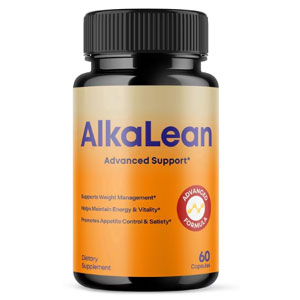
The formula is built around three components:
- Chicory root inulin — 211 mg per serving
- Potato resistant starch — 100 mg per serving
- Probiotic blend — 36 mg containing Bifidobacterium infantis, Clostridium butyricum, and Akkermansia muciniphila
The manufacturer describes these ingredients as working synergistically to support natural GLP-1 production, appetite control, satiety, and healthy weight management.
There is a scientifically plausible connection between dietary fiber, gut microbes, fermentation, short-chain fatty acids, and appetite-related hormones. However, that does not mean that taking a small amount of these ingredients will automatically produce clinically meaningful weight loss.
How Does AlkaLean Work?
AlkaLean appears to target weight management through the gut microbiome and appetite-regulation pathway.
GLP-1, or glucagon-like peptide-1, is a naturally occurring hormone involved in appetite regulation, insulin secretion, and gastrointestinal function. Certain nutrients and microbial metabolites can influence gut hormone signaling.
AlkaLean’s approach is therefore different from prescription GLP-1 receptor agonists. The supplement does not contain semaglutide, tirzepatide, or another pharmaceutical GLP-1 receptor agonist. Instead, it attempts to support physiological pathways associated with appetite and metabolic regulation.
That distinction is important. A supplement that may influence endogenous GLP-1 signaling should not be described as equivalent to a prescription GLP-1 medication.
AlkaLean Ingredients and Scientific Evidence
1. Chicory Root Inulin
Chicory root inulin is a type of soluble, fermentable dietary fiber classified as an inulin-type fructan. It functions as a prebiotic, meaning it can be fermented by certain microorganisms in the gut.
There is meaningful human research on chicory-derived inulin-type fructans. A 2024 systematic review and meta-analysis included 32 randomized controlled trials and found that chicory inulin-type fructans were associated with modest reductions in body weight, BMI, fat mass, and waist circumference compared with placebo. The pooled estimate for body weight was approximately 0.97 kg. However, the researchers also reported substantial heterogeneity for some outcomes.
A separate systematic review found that chicory-derived inulin-type fructans at doses of approximately 3–20 grams per day significantly increased Bifidobacterium abundance in 50 studies involving more than 2,500 participants.
The major issue for AlkaLean is dosage.
The product provides 211 mg, or 0.211 grams, of chicory root inulin per serving. That is substantially below the 3–20 gram daily range evaluated in the microbiome review. Therefore, it would be inappropriate to assume that AlkaLean’s 211 mg dose will produce the same effects observed in those studies.
Evidence assessment: Good ingredient-level evidence for prebiotic effects and modest weight-management outcomes at studied doses, but AlkaLean’s disclosed dose is considerably lower than many research protocols.
Studies:
Chicory Inulin-Type Fructans and Weight Management — PubMed
Chicory Inulin and Bifidobacterium — PubMed
2. Potato Resistant Starch
Resistant starch is a type of carbohydrate that resists digestion in the small intestine and reaches the colon, where it can be fermented by gut microorganisms.
This provides a plausible connection to gut health and metabolic function. However, human evidence concerning appetite and weight loss is inconsistent.
For example, a randomized controlled trial in adults with prediabetes examined 45 grams per day of resistant starch for 12 weeks. The researchers found no significant effects on appetite, food intake, GLP-1, peptide YY, or ghrelin compared with the control starch.
This is particularly relevant when assessing AlkaLean because its formula contains only 100 mg, or 0.1 gram, of potato resistant starch per serving. That is dramatically lower than the 45-gram daily dose used in the study.
Consequently, the scientific rationale for resistant starch should not be confused with proof that AlkaLean’s dose meaningfully increases satiety or GLP-1.
Evidence assessment: Biologically plausible ingredient, but clinical findings are mixed and AlkaLean’s disclosed dose is much lower than doses used in relevant trials.
Study: Resistant Starch and Appetite — PubMed
3. Akkermansia Muciniphila
Akkermansia muciniphila is a microorganism naturally found in the human intestinal tract and has become an important research target in metabolic health.
Unlike some of the other ingredients, A. muciniphila has recently generated interesting human clinical data.
A 2026 randomized controlled trial published in Nature Medicine evaluated pasteurized A. muciniphila MucT in 90 adults with overweight or obesity who had first achieved at least 8% weight loss through an eight-week low-energy diet. During a subsequent 24-week weight-maintenance period, participants receiving the pasteurized bacterium regained less weight than those receiving placebo. The study reported approximately 1.2 kg of regain in the treatment group versus 3.2 kg in the placebo group.
This is an important finding, but there are several reasons not to extrapolate it directly to AlkaLean.
The study used a specific pasteurized preparation called MucT, not AlkaLean’s unspecified probiotic blend. The participants had also already completed a substantial weight-loss intervention before supplementation began.
Therefore, the trial provides evidence that a particular preparation of A. muciniphila may help with weight-loss maintenance under specific conditions. It does not prove that the strain or preparation used in AlkaLean produces the same effect.
Evidence assessment: Promising and rapidly developing area of research, but the evidence is product- and preparation-specific.
Study: Pasteurized Akkermansia muciniphila and Weight-Loss Maintenance — PubMed
4. Bifidobacterium infantis
Bifidobacterium infantis belongs to a genus of bacteria that has been extensively investigated for gastrointestinal and metabolic effects. However, probiotic effects are often strain-specific.
This means that evidence involving one Bifidobacterium strain cannot automatically be transferred to every product containing another strain.
Recent systematic-review evidence suggests that Bifidobacterium supplementation may have modest effects on weight and BMI in overweight or obese adults. A 2025 meta-analysis of 21 randomized controlled trials reported an average reduction of approximately 0.61 kg in weight and 0.21 kg/m² in BMI compared with controls.
However, these findings concern various Bifidobacterium strains and products. The evidence cannot be interpreted as proof that the specific B. infantis preparation in AlkaLean causes weight loss.
The lack of a disclosed CFU amount for AlkaLean’s probiotic blend makes the comparison even more difficult.
Evidence assessment: Some supportive evidence for the genus as a whole, but strain, dose, and product formulation are critical.
Study: Bifidobacterium and Metabolic Parameters — PubMed
5. Clostridium butyricum
Clostridium butyricum is a butyrate-producing microorganism that has attracted research interest because short-chain fatty acids such as butyrate play important roles in gut and metabolic physiology.
However, the strongest human evidence relevant to metabolic effects generally involves butyrate itself or other specific microbial preparations, rather than proving that an unspecified amount of C. butyricum in a supplement produces weight loss.
A 2026 randomized controlled trial examined oral sodium butyrate at 1,875 mg per day in adults with overweight or obesity, including participants with type 2 diabetes. This illustrates an important point: the amount and form of the active intervention matter when interpreting clinical research.
AlkaLean does not disclose how much C. butyricum is contained in its 36 mg probiotic blend, nor does it establish that its formulation produces comparable butyrate exposure.
Evidence assessment: Interesting microbiome-related ingredient, but insufficient product-specific human evidence.
Does AlkaLean Really Work?
There is currently not enough evidence to conclude that AlkaLean itself produces clinically meaningful weight loss.
The product’s ingredients have scientific rationale, but the evidence needs to be interpreted at the correct level.
Chicory inulin has human evidence for modest weight-management effects, although many studies use substantially larger doses than AlkaLean’s 211 mg serving. Resistant starch has mixed evidence, including a controlled trial that found no effect on appetite or GLP-1 at 45 grams per day.
is particularly interesting because a recent randomized trial found that a specific pasteurized preparation reduced weight regain after intentional weight loss. However, that trial did not test AlkaLean.
Therefore, the strongest conclusion is that AlkaLean contains ingredients connected to scientifically plausible weight-management pathways, but the finished product remains clinically unproven.
Potential AlkaLean Benefits
Based on the available evidence, the reasonable potential benefits are:
- Prebiotic support for the gut microbiome from chicory inulin
- Potential support for digestive and gut microbial health
- Possible modest support for weight-management outcomes from inulin-type fructans
- Potential metabolic support from specific probiotic organisms
- Potential support for weight-loss maintenance from certain preparations of Akkermansia muciniphila
- Potential support for appetite-related pathways through gut microbiome and fermentation mechanisms
These should be regarded as potential ingredient-level effects, not guaranteed results from AlkaLean.
AlkaLean Limitations
The largest limitation is the gap between the scientific literature and the actual AlkaLean formulation.
The manufacturer describes AlkaLean as a GLP-1-support supplement, but there is no identified clinical trial showing that taking AlkaLean produces a clinically meaningful increase in GLP-1 or causes a specific amount of weight loss.
The second issue is dosing.
AlkaLean contains 211 mg of chicory inulin and 100 mg of resistant starch, while several relevant human studies have used gram-level doses. The product’s probiotic blend totals only 36 mg, and the individual CFU counts are not disclosed.
That makes it difficult to compare AlkaLean directly with the clinical literature.
AlkaLean Side Effects and Safety
The official website states that AlkaLean undergoes quality testing and reports that the manufacturer has not observed significant side effects. However, these statements are manufacturer claims and should not be treated as equivalent to independent clinical safety evidence.
Inulin and resistant starch are fermentable fibers and can cause gastrointestinal symptoms such as:
- Gas
- Bloating
- Abdominal discomfort
- Changes in bowel movements
The likelihood can depend on the individual’s tolerance, dietary intake, and gut microbiome.
Probiotics are generally tolerated by healthy people, but safety considerations are different for people who are seriously ill or immunocompromised.
Anyone taking prescription medication or managing a chronic condition should discuss AlkaLean with a healthcare professional before using it. The manufacturer itself recommends medical consultation for people with medical conditions or those taking prescription medication.
It is also important to remember that the FDA does not approve dietary supplements for safety and effectiveness before they are marketed. A supplement therefore should not be described as FDA-approved merely because its manufacturer references FDA-registered facilities or manufacturing standards.
Who May Consider AlkaLean?
AlkaLean may appeal to adults who:
- Prefer a capsule rather than a stimulant-based weight-loss product
- Want a supplement focused on gut health and appetite-related pathways
- Are interested in prebiotic fiber and probiotic ingredients
- Want an additional supplement alongside established diet and physical-activity habits
- Understand that the product has not been clinically established as a weight-loss medication
Who Should Use Caution?
Extra caution is appropriate for people who:
- Have a chronic medical condition
- Take prescription medications
- Have significant gastrointestinal sensitivity
- Are immunocompromised or seriously ill
- Are pregnant or breastfeeding
- Are considering AlkaLean as a substitute for prescribed obesity treatment
People experiencing significant or persistent weight gain should also consider discussing the underlying causes with a healthcare professional rather than relying exclusively on supplements.
AlkaLean Price and Value
The official AlkaLean website currently advertises three packages:
| Package | Advertised Price | Approx. Price Per Bottle | Advertised Supply |
|---|---|---|---|
| 2 bottles | $158 + shipping | $79 | 60 days |
| 3 bottles | $207 | $69 | 90 days |
| 6 bottles | $294 | $49 | 180 days |
The website states that free U.S. shipping is included with the three- and six-bottle packages and advertises a 60-day money-back guarantee. International orders may incur shipping fees.
From a value perspective, I would not judge AlkaLean solely by the price per bottle. The more important consideration is whether the actual doses justify the claimed benefits.
Because the probiotic CFUs are not disclosed and the disclosed fiber doses are relatively small compared with several clinical protocols, I would consider the formula’s dose transparency a meaningful weakness.
AlkaLean Pros and Cons
Pros
- Uses a gut-health-focused approach rather than relying on conventional stimulants
- Chicory inulin has human clinical research supporting prebiotic and modest weight-management effects
- Akkermansia muciniphila is an emerging area of metabolic-health research
- Manufacturer states the formula contains no stimulants
- Simple once-daily capsule
- 60-day money-back guarantee is advertised
Cons
- No published clinical trial on the finished AlkaLean formula was identified
- Individual probiotic CFU amounts are not disclosed
- Chicory inulin dose is much lower than doses used in many relevant studies
- Resistant-starch research on appetite and GLP-1 is mixed
- Marketing around “natural GLP-1 activation” may imply stronger evidence than currently exists for the finished product
- It should not be considered equivalent to prescription GLP-1 medications
- Fiber-based ingredients may cause digestive discomfort in some people
Frequently Asked Questions
What is AlkaLean?
AlkaLean is a dietary supplement capsule marketed to support natural GLP-1 pathways, appetite control, satiety, metabolic health, and weight management. The formula contains chicory root inulin, potato resistant starch, and a probiotic blend.
What ingredients are in AlkaLean?
The official website lists 211 mg of chicory root inulin, 100 mg of potato resistant starch, and a 36 mg probiotic blend containing Bifidobacterium infantis, Clostridium butyricum, and Akkermansia muciniphila.
Does AlkaLean contain GLP-1 medication?
No. AlkaLean does not contain a prescription GLP-1 receptor agonist such as semaglutide or tirzepatide. It is marketed as a supplement intended to support the body’s natural GLP-1-related pathways.
Can AlkaLean help with weight loss?
There is not enough evidence to determine how much weight, if any, AlkaLean itself can help a person lose. Some individual ingredients have research related to weight management, but the finished AlkaLean formula has not been established in a randomized clinical trial.
Does AlkaLean increase GLP-1?
The manufacturer claims that its ingredients support natural GLP-1 activation, but a product-specific clinical study demonstrating a clinically meaningful increase in GLP-1 from AlkaLean was not identified.
Is AlkaLean a substitute for Ozempic or Wegovy?
No. AlkaLean is a dietary supplement and should not be considered equivalent to prescription GLP-1 receptor agonists. Prescription medications undergo a different level of regulatory review and are used under medical supervision.
How do you take AlkaLean?
The manufacturer recommends taking one capsule daily with an 8-ounce glass of water and states that the product should be refrigerated for optimal quality.
Does AlkaLean have side effects?
The manufacturer reports no significant side effects based on its customer experience, but this is not independent clinical safety evidence. Because the formula contains fermentable fibers and probiotics, some people may experience digestive symptoms such as gas or bloating.
Is AlkaLean FDA approved?
No dietary supplement should be described as FDA-approved for safety and effectiveness. The FDA states that it does not approve dietary supplements before marketing for safety and effectiveness.
Final Verdict: Is AlkaLean Worth It?
My AlkaLean review conclusion is that the product has a scientifically interesting concept, but the evidence does not yet justify treating it as a clinically proven weight-loss supplement or a natural equivalent of prescription GLP-1 medications.
The strongest part of the formula is the inclusion of chicory root inulin and the focus on the gut microbiome. Human research suggests that chicory-derived inulin-type fructans can modestly improve several weight-management measures, although the studies generally use substantially larger doses than the 211 mg included in AlkaLean.
The Akkermansia muciniphila component is also scientifically interesting. A 2026 randomized controlled trial found that a specific pasteurized A. muciniphila preparation helped reduce weight regain after an intentional weight-loss phase. However, that study tested a specific preparation and did not test AlkaLean.
The biggest weakness is therefore the gap between ingredient research and product evidence. AlkaLean has not been shown in a published clinical trial to produce a specific amount of weight loss, increase GLP-1 to a clinically meaningful degree, or provide effects comparable with prescription GLP-1 medications.
The undisclosed individual probiotic CFU amounts also make it difficult to evaluate whether the product provides research-relevant quantities.
Bottom line: AlkaLean is best described as a gut-health and weight-management supplement with some promising ingredients but limited product-specific evidence. It may be reasonable for someone interested in prebiotic and probiotic support, but expectations should remain modest. Established nutrition, physical activity, sleep, and medically appropriate weight-management treatment remain substantially more important than relying on a supplement alone.
Our Top Weight Loss Products
We evaluated these products based on key factors relevant to their intended use. Our editorial ratings consider ingredient transparency, available scientific evidence, formulation quality, safety considerations, value, and other product-specific factors.

PrimeGENIX CalmLean
Product Type: Dietary Supplement
Primary Use: Weight Management Support
Overall Rating: 4.9/5
Price: $59.00
Key Benefits
- Supports healthy weight management
- Supports metabolic and thermogenic activity
- Supports appetite and hunger management
- Stimulant-free and caffeine-free formula
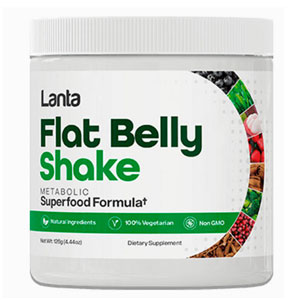
Lanta Flat Belly Shake
Product Type: Dietary Supplement
Primary Use: Weight Management & Metabolic Support
Overall Rating: 4.8/5
Price: $69.00
Key Benefits
- Supports healthy weight management
- Supports metabolism and energy
- Helps manage food cravings
- Supports healthy digestion
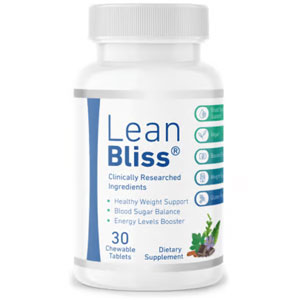
LeanBliss
Product Type: Dietary Supplement
Primary Use: Weight Management & Blood Sugar Support
Overall Rating: 4.8/5
Price: $69.00
Key Benefits
- Supports healthy weight management
- Supports healthy blood sugar levels
- Helps support healthy appetite and craving management
- Stimulant-free formula