
Introduction
Monitoring daily health habits can provide useful information about sleep, physical activity, recovery, and cardiovascular wellness. Wearable health trackers make this process easier by collecting physiological data throughout the day and presenting it in an accessible format.
The Hume Band 2.0 from Hume Health is designed to help people understand these patterns. It tracks several health-related measurements, including heart rate, heart rate variability (HRV), blood oxygen saturation (SpO2), skin temperature, sleep patterns, and activity levels.
Unlike conventional smartwatches, Hume Band 2.0 focuses on continuous wellness monitoring and long-term health insights rather than displaying notifications or providing an extensive collection of smartwatch functions.
Its main attraction is the company’s Metabolic Momentum and Metabolic Capacity scoring system, which aims to translate daily health measurements into understandable wellness insights.
But can a wrist-worn tracker genuinely help improve health and support longevity?
In this Hume Band 2.0 review, I examine its technology, features, potential benefits, scientific evidence, pricing, customer feedback, and limitations to determine whether it deserves consideration as a daily health-monitoring device.
Quick Summary Box
| Feature | Details |
|---|---|
| Product | Hume Band 2.0 |
| Manufacturer | Hume Health |
| Product Category | Wearable health tracker |
| Primary Purpose | Health, sleep, and recovery tracking |
| Sensors | 5 LEDs and 4 photodiodes |
| Heart Monitoring | Heart rate and HRV |
| Additional Measurements | SpO2 and skin temperature |
| Sleep Tracking | Light, deep, REM, and awake estimates |
| Special Features | Metabolic Momentum and Metabolic Capacity |
| Battery Life | Up to 14 days (manufacturer claim) |
| Water Resistance | IP68, specified conditions apply |
| App | Hume Health App |
| Subscription | Optional Premium membership |
| Warranty | 1 year included |
| Return Policy | Advertised 45-day refund policy |
What Is Hume Band 2.0?
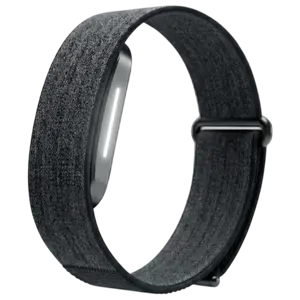 Hume Band 2.0 is a screenless wearable health tracker developed by Hume Health. It uses optical sensors and associated algorithms to monitor physiological signals and estimate different health and activity metrics.
The device is designed for people who want to understand how their daily habits influence sleep, recovery, activity, and broader wellness trends.
Its main features include:
- Continuous heart rate monitoring.
- Heart rate variability tracking.
- Blood oxygen saturation estimates.
- Skin temperature monitoring.
- Sleep duration and sleep-stage estimates.
- Activity and movement tracking.
- Strain and recovery insights.
- Blood pressure trend insights.
- Metabolic Momentum and Metabolic Capacity scores.
One notable difference is its screenless design. Users wear the band and review collected information through the Hume Health smartphone application.
This approach may appeal to people who prefer passive health tracking without the distractions of a traditional smartwatch.
How Does Hume Band 2.0 Work?
Hume Band 2.0 uses optical sensing technology to collect physiological signals from the wrist.
According to the manufacturer, the device incorporates five LEDs and four photodiodes. These components help detect changes in light absorption and reflection associated with blood flow and other physiological signals.
The process involves three main steps:
1. Collecting Physiological Information
The optical sensors collect signals associated with heart rate, HRV, and blood oxygen. Movement and temperature-related information also contribute to the device’s tracking functions.
2. Processing the Collected Data
The Hume Health application processes the collected signals using algorithms to estimate different health metrics.
3. Presenting Wellness Insights
The application organizes measurements into scores and trends, including recovery, sleep, Metabolic Capacity, and Metabolic Momentum.
These insights may help users recognize patterns associated with exercise, sleep schedules, and everyday lifestyle choices.
However, wearable estimates should not be confused with clinical measurements. Hume Band 2.0 is not a substitute for medical diagnostic equipment or professional health assessments.
Hume Band 2.0 Key Ingredients and Sensor Technology
Hume Band 2.0 does not contain dietary ingredients, vitamins, minerals, or herbal compounds. Its functionality depends on optical sensors, photodiodes, signal processing, and software algorithms.
The following components explain how its tracking technology works.
1. Optical LEDs and Photodiodes
Hume Band 2.0 uses five LEDs and four photodiodes to collect optical signals from the wrist.
Photoplethysmography (PPG) is a commonly used technology in wearable devices. It detects changes in reflected light associated with blood-volume changes beneath the skin.
Potential role: Supports heart rate and other optical health estimates, including HRV and SpO2-related measurements.
Scientific evidence: A systematic review and meta-analysis examined 44 studies involving 15 wearable brands. It found that wrist-worn optical devices generally measured heart rate reasonably well during rest, sleep, and treadmill activities, although accuracy varied with exercise type.
Study: Validity of Wrist-Worn Photoplethysmography Devices to Measure Heart Rate.
2. Heart Rate Variability (HRV) Tracking
HRV refers to variations in the time intervals between consecutive heartbeats. Researchers commonly study HRV as one indicator of autonomic nervous system activity.
Hume Band 2.0 uses optical signals to estimate HRV trends.
Potential role: Helps users observe changes associated with sleep, stress, physical activity, and recovery.
Scientific evidence: Research into consumer wearable technologies discusses the measurement performance and limitations of different wearable health metrics.
Study: Accuracy of Consumer Wearable Technologies in Health Measurement.
3. Blood Oxygen Monitoring (SpO2)
SpO2 estimates the percentage of hemoglobin carrying oxygen in the blood. Optical sensors can estimate oxygen saturation by analyzing light absorption at different wavelengths.
Potential role: Provides an additional wellness measurement that users can monitor over time.
However, consumer wearable readings are not interchangeable with medical-grade pulse oximetry. Measurement quality can vary with movement, circulation, sensor positioning, and other factors.
Scientific evidence: The systematic review of wearable technologies above also examined oxygen saturation measurement and reported variation in accuracy across devices.
4. Skin Temperature Monitoring
Hume Band 2.0 tracks skin temperature to help identify changes in temperature patterns.
Potential role: Helps users observe overnight and daily temperature variations that may coincide with changes in activity, sleep, or general wellness.
Skin temperature is not equivalent to core body temperature and should not be used alone to diagnose fever or infection.
5. Blood Pressure Insights
One of the advertised additions in Band 2.0 is blood pressure trend monitoring without a traditional inflatable cuff.
This feature deserves particular attention because blood pressure measurement requires rigorous validation.
A systematic review of cuffless blood pressure devices identified substantial differences in validation methods and device performance.
Study: Wearable Cuffless Blood Pressure Monitoring Devices: A Systematic Review and Meta-Analysis.
The American Heart Association’s scientific statement also explains why current cuffless technologies require additional validation before they can guide clinical decisions.
Reference: Cuffless Devices for the Measurement of Blood Pressure.
Editorial assessment: These studies support research into wearable sensing technology generally. They do not independently establish the clinical accuracy of Hume Band 2.0 specifically. Its blood pressure insights should be treated as wellness information, not a replacement for a validated upper-arm blood pressure monitor.
Hume Band 2.0 Benefits
Hume Band 2.0 offers several potential advantages for people interested in understanding their everyday health patterns.
- Monitor Heart Activity: Track heart rate and HRV trends throughout the day.
- Evaluate Sleep Patterns: Review estimated sleep duration and different sleep stages.
- Observe Recovery: Understand how activity and rest relate to recovery scores.
- Track Oxygen Levels: Monitor estimated blood oxygen saturation.
- Recognize Temperature Changes: Follow skin temperature trends over time.
- Understand Daily Activity: Review movement, activity levels, and strain.
- Explore Longevity Trends: Use Metabolic Momentum and other app-generated scores to evaluate lifestyle patterns.
- Simplify Health Monitoring: Collect multiple measurements through one screenless wearable.
These features may encourage greater awareness of daily habits. However, the device itself cannot guarantee better health, prevent disease, or extend lifespan.
Hume Band 2.0 Pros and Cons
| Pros | Cons |
|---|---|
| Screenless, lightweight design | No display on the wrist |
| Up to 14-day advertised battery life | Accuracy varies by measurement |
| Multiple health-tracking features | No established proof of longer lifespan |
| Free core application | Premium coaching costs extra |
| Sleep and recovery tracking | Not a medical diagnostic device |
| IP68-rated sensor | Not ideal for detailed workout feedback |
| Optional blood pressure insights | Blood pressure feature needs independent validation |
Hume Band 2.0 Comparison Table with Alternatives
Several wearable devices offer overlapping health-monitoring features. The right choice depends on whether the priority is longevity insights, sleep tracking, fitness performance, or smartwatch functionality.
| Feature | Hume Band 2.0 | Oura Ring 4 | WHOOP 5.0 | Garmin vívosmart 5 |
|---|---|---|---|---|
| Form | Wristband | Smart ring | Wristband | Fitness band |
| Sleep Tracking | Yes | Yes | Yes | Yes |
| HRV | Yes | Yes | Yes | Yes |
| Recovery Insights | Yes | Yes | Yes | Limited |
| Activity Tracking | Yes | Yes | Yes | Yes |
| Blood Pressure Insights | Advertised | No | Life tier | No |
| Display | No | No | No | Yes |
| Subscription | Optional | Optional | Required | No mandatory subscription |
| Starting Price | About $249 promotional | $349 | $199/year | $149.99 launch MSRP |
Prices are reference prices, not guaranteed current checkout prices. WHOOP pricing varies by membership tier. Oura’s membership is an additional expense.
Comparison takeaway: Hume Band 2.0 stands out for its combination of longevity-focused scores and optional blood pressure insights. Oura emphasizes sleep and recovery, WHOOP focuses on strain and performance, and Garmin offers a more conventional fitness-tracking experience.
Hume Band 2.0 Customer Reviews
Customer feedback can help identify practical advantages and potential purchasing concerns that specifications alone cannot explain.
Hume Health publishes customer testimonials highlighting its health insights, daily tracking, and ease of use. These are manufacturer-selected testimonials and should not be treated as independent product testing.
Independent feedback is more mixed.
A Wareable hands-on review published in June 2026 praised the comfortable strap and improved battery life but reported inconsistencies in heart rate, sleep, and recovery measurements.
Recent Trustpilot customer feedback also includes complaints about measurement accuracy and difficulties obtaining return assistance. Other customers describe positive experiences with the app and wellness tracking.
Editorial assessment: Customer experiences are mixed. Prospective buyers should consider independent testing, customer support experiences, and return conditions rather than relying exclusively on promotional testimonials.
Who Should Use Hume Band 2.0?
Hume Band 2.0 may suit:
- Adults interested in continuous wellness tracking.
- People who want to understand sleep and recovery patterns.
- Fitness enthusiasts who prefer passive health monitoring.
- Individuals interested in HRV and lifestyle trends.
- People who prefer a screenless wearable.
- Users who want multiple wellness metrics in one application.
Who Should Avoid It?
It may not be the right choice for:
- People who need clinically accurate blood pressure measurements.
- Individuals seeking medical-grade diagnostic monitoring.
- Athletes requiring detailed real-time workout feedback.
- Buyers who prefer a smartwatch display.
- People who do not want to use a smartphone application.
- Anyone expecting a wearable to diagnose diseases or guarantee longevity improvements.
Hume Band 2.0 Side Effects and Safety
Hume Band 2.0 is a non-invasive wearable device. It does not deliver medication, supplements, or electrical treatment.
Most potential concerns relate to wearing comfort, sensor readings, and how users interpret health information.
Important considerations include:
- Skin Irritation: Continuous contact with the strap may cause irritation or discomfort in sensitive skin.
- Incorrect Readings: Loose positioning, excessive movement, and poor sensor contact can affect measurements.
- Blood Pressure Interpretation: Do not use its blood pressure insights to diagnose or manage hypertension.
- Sleep Estimates: Wearable sleep stages are algorithm-based estimates, not equivalent to clinical sleep studies.
- Data Privacy: Review the company’s privacy policy to understand how personal health information is collected, stored, and shared.
- Medical Decisions: Consult a healthcare professional before making decisions based on wearable health data.
For people monitoring hypertension, a validated automatic upper-arm blood pressure monitor remains the more appropriate option.
Hume Band 2.0 Pricing and Packages
According to the Hume Health product listing, Hume Band 2.0 has been advertised at a promotional price of approximately $249, compared with a displayed regular price of $356.
The purchase includes:
- One Hume Band 2.0.
- Original Slate strap.
- Hume Health mobile application.
- One-year manufacturer warranty.
- Advertised 45-day refund policy.
| Optional Purchase | Advertised Price |
|---|---|
| Additional straps | $49 each |
| 10-year extended warranty | $35 promotional price |
| Hume Premium | Starting at $8.99/month |
The basic application provides access to core health metrics without requiring a subscription. Premium membership adds AI-powered coaching and more personalized insights.
Pricing, availability, warranty coverage, and refund conditions can change. Review the current terms before ordering.
Frequently Asked Questions
1. What is Hume Band 2.0 used for?
Hume Band 2.0 is a wearable health tracker designed to monitor heart rate, HRV, sleep, blood oxygen estimates, skin temperature, activity, and recovery. It also provides lifestyle and longevity-related insights through its smartphone application.
2. Does Hume Band 2.0 require a subscription?
No. The basic Hume Health application is available without a mandatory subscription. Premium membership is optional and provides additional AI-powered coaching and personalized insights.
3. How accurate is Hume Band 2.0?
Accuracy depends on the measurement. Wrist-based optical sensors can provide useful heart rate trends, but readings may vary during exercise or movement. Independent, device-specific clinical validation for all advertised measurements has not been established.
4. Can Hume Band 2.0 measure blood pressure?
Hume advertises blood pressure insights through its Band 2.0 system. However, these estimates should not replace readings from a clinically validated upper-arm blood pressure monitor.
5. Does Hume Band 2.0 track sleep?
Yes. It estimates sleep duration, sleep efficiency, and sleep stages, including light, deep, REM, and awake periods. These measurements are useful for observing general sleep patterns but are not equivalent to polysomnography.
6. How long does the Hume Band 2.0 battery last?
The manufacturer advertises up to 14 days on a single charge. Actual battery life may vary depending on usage, settings, connectivity, and software updates.
7. Is Hume Band 2.0 waterproof?
The manufacturer specifies an IP68 rating for the sensor, with water resistance up to one meter for up to two hours under specified conditions. Follow the official care instructions for the complete device and strap.
8. Can Hume Band 2.0 help improve longevity?
It may encourage healthier habits by helping users monitor sleep, activity, and recovery patterns. However, no established clinical evidence demonstrates that wearing Hume Band 2.0 directly extends lifespan.
9. Is Hume Band 2.0 suitable for everyday use?
Its screenless design, lightweight construction, and advertised battery life make it suitable for continuous wellness tracking. Individual comfort will depend on strap fit, skin sensitivity, and personal preferences.
10. Where can I buy Hume Band 2.0?
The device is available through the manufacturer’s official website. Buyers should review current pricing, warranty coverage, shipping terms, and the 45-day refund policy before purchasing.
Final Verdict: Is Hume Band 2.0 Worth Buying?
Hume Band 2.0 offers an interesting approach to everyday health monitoring. Its combination of optical sensors, HRV tracking, sleep estimates, recovery insights, and longevity-focused scoring provides a broad overview of several wellness measurements.
The screenless design, optional Premium membership, and advertised 14-day battery life are appealing features for people who prefer a relatively simple wearable.
However, some important limitations deserve consideration. Independent testing has identified inconsistencies in certain measurements, and the blood pressure insights should not be treated as clinically validated readings. The company’s claims about biological age and lifespan improvements also require stronger independent scientific evidence.
My assessment: Hume Band 2.0 is worth considering for adults who want a convenient wellness tracker and an overview of their daily health patterns. It is less suitable for people seeking medical-grade monitoring, advanced athletic performance data, or proven longevity benefits.
Overall, its strongest value proposition is helping users become more aware of their daily habits. Its real-world usefulness depends on interpreting its measurements appropriately rather than treating every app-generated score as a medical fact.
Editorial Sources and Further Reading
- Validity of Wrist-Worn Photoplethysmography Heart Rate Devices – PubMed.
- Consumer Wearable Measurement Accuracy – PubMed.
- Cuffless Blood Pressure Monitoring Systematic Review – PubMed.
- American Heart Association Scientific Statement on Cuffless Blood Pressure Devices.
- Independent Hume Band 2.0 Review – Wareable.
- Hume Health Customer Feedback – Trustpilot.