
Introduction
JointBrex is a dietary supplement marketed for joint pain, stiffness, cartilage support and mobility. Its current sales page highlights glucosamine sulfate, chondroitin sulfate, Boswellia, turmeric, MSM and bromelain as the main ingredients.
The formula contains several ingredients with human research behind them, particularly glucosamine, chondroitin and Boswellia. However, I did not identify a randomized clinical trial testing the finished JointBrex product. That distinction matters because ingredient research does not automatically prove that the complete formula works.
Quick Summary
| Product | JointBrex |
|---|---|
| Category | Joint health dietary supplement |
| Primary Use | Joint comfort, mobility and cartilage support |
| Serving | 2 capsules daily |
| Capsules | 60 per bottle |
| Advertised Key Ingredients | Glucosamine sulfate, chondroitin sulfate, Boswellia, turmeric, MSM, bromelain |
| Product-Specific RCT | None identified |
| Current Listed Price | $89 one bottle; lower per-bottle pricing on multi-bottle packages |
| Guarantee | 60 days |
| Overall Assessment | Reasonable ingredient concept, but evidence and labeling require caution |
What Is JointBrex?
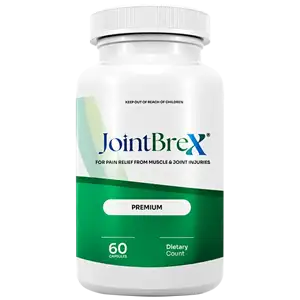 JointBrex is a capsule-based supplement designed around the traditional glucosamine-and-chondroitin joint-support concept. The manufacturer says it is intended to support cartilage, reduce joint discomfort and improve mobility.
The recommended serving is two capsules daily before a meal with water. The official sales page says each bottle contains 60 capsules, providing approximately 30 days of use.
JointBrex Ingredients
The current marketing page prominently identifies six ingredients:
| Ingredient | Manufacturer’s Position | Evidence |
|---|---|---|
| Glucosamine sulfate | Cartilage and joint support | Mixed |
| Chondroitin sulfate | Cartilage hydration and cushioning | Mixed |
| Boswellia extract | Inflammation and comfort | Promising |
| Turmeric | Inflammation and stiffness support | Promising but formulation-dependent |
| MSM | Connective-tissue and comfort support | Limited |
| Bromelain | Inflammation and recovery support | Limited |
The manufacturer does not clearly provide individual amounts for these six ingredients on the main sales page. A separate current label transcription reports an eight-ingredient panel that also includes quercetin and methionine, with 1,000 mg glucosamine sulfate, 133.3 mg Boswellia, 100 mg chondroitin and 100 mg turmeric per two-capsule serving. It also reports 16.7 mg each of quercetin, methionine, MSM and bromelain.
Because the marketing page and label transcription do not perfectly match, I would recommend verifying the physical Supplement Facts panel before publishing exact amounts as definitive.
Glucosamine Sulfate
Glucosamine sulfate is one of the most studied joint-supplement ingredients. Some clinical trials have reported improvements in osteoarthritis symptoms, but results vary considerably according to the formulation and study design.
NCCIH notes that evidence remains inconsistent and that major professional guidelines disagree about its usefulness. Some guidelines discourage glucosamine for knee osteoarthritis, while others allow certain glucosamine sulfate preparations as an option.
A 2024 systematic review and meta-analysis of 25 randomized trials found significant effects for glucosamine sulfate on tibiofemoral joint-space narrowing, but the glucosamine/chondroitin combination did not significantly improve pain or physical function in the pooled analysis.
Glucosamine Sulfate and Chondroitin: 2024 Systematic Review and Meta-Analysis
Chondroitin Sulfate
Chondroitin is another extensively studied osteoarthritis supplement. Some analyses report improvements in pain and physical function, but results vary between products and trials.
NCCIH specifically points out that the quality and formulation of chondroitin matter. Some pharmaceutical-grade preparations have performed better than other commercial products.
That makes it difficult to assume that any product containing chondroitin will reproduce the results of clinical trials.
Boswellia Serrata
Boswellia is arguably one of the more interesting ingredients in JointBrex.
A meta-analysis of seven randomized trials involving 545 osteoarthritis patients found that Boswellia or Boswellia extracts improved pain, stiffness and physical function compared with control groups.
However, the studies evaluated specific Boswellia preparations at particular doses. Without confirmed JointBrex extract standardization and dosing, the research cannot be transferred directly to this product.
Boswellia for Osteoarthritis: Systematic Review and Meta-Analysis
Turmeric
Turmeric and curcumin have substantial research involving knee osteoarthritis. A 2025 network meta-analysis included 17 randomized studies and found that multiple turmeric preparations reduced WOMAC pain compared with placebo.
The researchers nevertheless rated the certainty of evidence as low, and different turmeric preparations produced different results.
This is particularly important for JointBrex because the sales page simply identifies turmeric rather than clearly presenting a standardized curcumin dose.
Turmeric Products for Knee Osteoarthritis: Systematic Review and Network Meta-Analysis
MSM
MSM has less evidence than glucosamine, chondroitin or Boswellia.
A randomized controlled trial involving 49 adults with knee osteoarthritis found some improvement in WOMAC physical function and total score after 12 weeks of MSM, although the researchers described the improvements as small and questioned their clinical significance. Importantly, the study used 3.375 grams of MSM daily.
If the current JointBrex label amount of 16.7 mg is accurate, that is dramatically lower than the amount used in this trial. Therefore, the MSM research should not be used to imply that the amount in JointBrex has been clinically validated.
MSM for Knee Osteoarthritis: Randomized Controlled Trial
Bromelain
Bromelain is a pineapple-derived enzyme with proposed anti-inflammatory effects. However, the human evidence for osteoarthritis is not especially strong.
A randomized placebo-controlled trial involving 47 people with moderate-to-severe knee osteoarthritis found no statistically significant difference between bromelain and placebo for the primary outcome after 12 weeks. The study used 800 mg/day.
Again, if the current label transcription is correct and JointBrex supplies only 16.7 mg, that is far below the dose tested in this study.
Bromelain for Knee Osteoarthritis: Randomized Placebo-Controlled Trial
Does JointBrex Really Work?
There is a reasonable scientific rationale behind several JointBrex ingredients, but the evidence does not justify saying that JointBrex itself has been clinically proven to eliminate joint pain or regenerate cartilage.
The strongest case is for Boswellia and certain preparations of glucosamine sulfate, chondroitin and turmeric. Even there, the evidence is mixed and depends heavily on formulation, dose and patient population.
The manufacturer claims that JointBrex can “rebuild cartilage,” eliminate joint discomfort and restore mobility. Those statements go beyond what can be established from ingredient-level research.
Potential Benefits
- Joint comfort: Several ingredients have been studied for osteoarthritis-related pain.
- Mobility support: Boswellia and some glucosamine/chondroitin research involves physical function.
- Stiffness support: Boswellia has shown improvements in stiffness in clinical research.
- Cartilage-related support: Glucosamine and chondroitin are components of cartilage, although supplementation has not been proven to regenerate damaged cartilage.
- Simple routine: The manufacturer recommends two capsules once daily.
Pros and Cons
Pros
- Uses several established joint-health ingredients.
- Boswellia has encouraging human evidence.
- Glucosamine sulfate and chondroitin have extensive clinical literature.
- 60 capsules provide a 30-day supply.
- 60-day money-back guarantee.
Cons
- No published clinical trial on the finished JointBrex formula identified.
- Exact formula disclosure is inconsistent across current sources.
- Some listed ingredient amounts appear substantially below doses used in clinical trials.
- Marketing claims about cartilage regeneration are stronger than the evidence.
- Contains crustacean-derived glucosamine according to the current label disclosure.
- The official page contains unrelated medical content and references, reducing editorial confidence.
JointBrex vs. Other Joint Supplements
| Factor | JointBrex | Typical Evidence-Based Joint Formula |
|---|---|---|
| Glucosamine | Yes | Common |
| Chondroitin | Yes | Common |
| Boswellia | Yes | Often included |
| Turmeric | Yes | Common |
| MSM | Reported on label | Common in some formulas |
| Product-Specific RCT | Not identified | Varies by brand |
| Individual Doses on Main Sales Page | No | Varies |
Safety and Side Effects
JointBrex should not be considered automatically safe simply because its ingredients are naturally derived.
The most important issue is the reported crustacean shellfish allergen. The current label transcription specifically states that the glucosamine is derived from crustacean shellfish. Anyone with a shellfish allergy should avoid the product unless a qualified clinician confirms that the specific formulation is safe.
Glucosamine and chondroitin may also interact with warfarin and increase bleeding risk. NCCIH recommends caution with this combination.
MSM can cause gastrointestinal symptoms or skin reactions in some people, while botanical ingredients may interact with prescription medications.
The manufacturer advises pregnant or nursing individuals, people under 18 and people with medical conditions or prescription medications to consult a physician before use.
How to Take JointBrex
The official sales page recommends two capsules daily, preferably before a meal, with a full glass of water. A 60-capsule bottle is presented as a 30-day supply.
The company encourages several months of use, particularly because glucosamine and chondroitin studies often run for longer periods. That is reasonable from a research-design perspective, but it should not be interpreted as proof that six months of JointBrex will regenerate cartilage.
JointBrex Pricing and Packages
The current official sales page lists:
| Package | Price | Approx. Price/Bottle |
|---|---|---|
| 1 Bottle | $89 + shipping | $89 |
| 3 Bottles | $177 | $59 |
| 6 Bottles | $294 | $49 |
The 3- and 6-bottle packages include free U.S. shipping according to the current page. The product also carries a 60-day money-back guarantee, subject to the stated conditions.
Prices can change, so the checkout amount should be considered the final price.
Customer Reviews
JointBrex displays multiple positive customer testimonials describing reduced stiffness, improved mobility and less joint pain. The current page also displays a review count of more than 21,000.
These testimonials are manufacturer-controlled customer feedback and should not be treated as clinical evidence. They can demonstrate reported experiences, but they cannot determine whether JointBrex performs better than placebo or another joint supplement.
Important Website Transparency Issue
This is one area where JointBrex deserves extra scrutiny.
The main sales page contains obvious content inconsistencies. At one point, it describes JointBrex as useful for persistent dizziness and vestibular-system problems rather than only joint health. Later, its “Scientific References” section cites studies concerning gut microbiota, diabetes, Gymnema sylvestre and grape-seed extract rather than the JointBrex ingredients.
The current label information also reports eight ingredients, while the main marketing section highlights six.
These issues do not prove that the product is ineffective, but they reduce confidence in the website as a precise scientific source. For an evidence-based review, the physical Supplement Facts panel should take priority over promotional copy.
Who Might Consider JointBrex?
JointBrex may appeal to adults looking for a supplement containing glucosamine, chondroitin, Boswellia and turmeric for general joint support.
It makes more sense as an optional nutritional supplement alongside exercise, weight management, physical therapy when appropriate and evidence-based medical care than as a replacement for treatment of diagnosed arthritis.
Who Should Avoid It or Seek Medical Advice First?
- Anyone with a crustacean shellfish allergy.
- People taking warfarin or other medications that affect bleeding.
- People with significant medical conditions.
- People taking multiple prescription medications.
- Pregnant or breastfeeding individuals.
- Anyone experiencing severe, unexplained or rapidly worsening joint pain.
10 Frequently Asked Questions
1. What is JointBrex?
JointBrex is a dietary supplement marketed for joint comfort, mobility, cartilage support and flexibility.
2. What ingredients are in JointBrex?
The marketing page highlights glucosamine sulfate, chondroitin sulfate, Boswellia, turmeric, MSM and bromelain. A separate label transcription lists eight ingredients, adding quercetin and methionine.
3. Does JointBrex contain glucosamine?
Yes. The current label transcription reports 1,000 mg of glucosamine sulfate per two-capsule serving.
4. Does JointBrex contain shellfish?
Yes, according to the current label disclosure. It states that the product contains crustacean shellfish and identifies crayfish.
5. Can JointBrex rebuild cartilage?
There is insufficient evidence to make that claim. Glucosamine and chondroitin have been studied for joint structure, but results are inconsistent, and NCCIH says it remains uncertain whether they meaningfully alter osteoarthritis joint structure.
6. Does JointBrex eliminate joint pain?
The manufacturer makes that claim, but no clinical trial of the finished JointBrex formula was identified. The evidence supports discussing individual ingredients rather than calling the product a proven pain treatment.
7. How many capsules should be taken?
The official directions recommend two capsules daily, preferably before a meal.
8. Is JointBrex FDA approved?
No. JointBrex is marketed as a dietary supplement, not an FDA-approved drug. The manufacturer includes the standard dietary-supplement disclaimer.
9. Can JointBrex be taken with warfarin?
Medical advice is important before combining them. NCCIH notes that glucosamine and chondroitin have been associated with increased bleeding risk in people taking warfarin.
10. Is JointBrex worth trying?
The formula has several researched ingredients, but the lack of a finished-product clinical trial and the current labeling inconsistencies make it difficult to rate as a strongly evidence-based product.
Final Verdict
JointBrex has a reasonable ingredient concept but a weaker evidence and transparency profile than the marketing suggests. Glucosamine sulfate, chondroitin and Boswellia all have human clinical research, while turmeric has a growing evidence base for knee osteoarthritis symptoms.
The bigger issue is that none of this establishes JointBrex itself as a clinically proven treatment. I did not identify a randomized controlled trial testing the finished formula. In addition, the current sales page does not clearly provide individual ingredient amounts, while a separate label transcription reports an eight-ingredient formula that differs from the six ingredients emphasized in marketing.
The official website also contains unrelated dizziness, nerve-health and diabetes references that appear inconsistent with the product’s stated joint-health purpose. That does not establish that the supplement is ineffective, but it is a legitimate reason to apply greater scrutiny to the site’s scientific claims.
Editorial Rating: 3.3/5
JointBrex may be reasonable for someone interested in a glucosamine/Boswellia/turmeric-based joint supplement, but I would not describe it as proven to eliminate joint pain, regenerate cartilage or reverse joint deterioration. The strongest evidence supports certain ingredients under specific doses and formulations—not the finished JointBrex product.
Our Top Joint Health & Bone Strength Products
We evaluated these products based on key factors relevant to their intended use. Our editorial ratings consider ingredient transparency, available scientific evidence, formulation quality, safety considerations, value, and other product-specific factors.
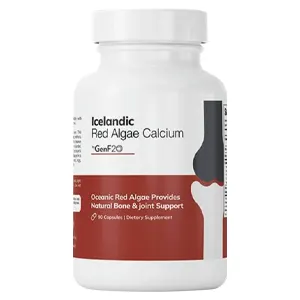
Red Algae Calcium
Product Type: Dietary Supplement
Primary Use: Bone Strength & Joint Mobility Support
Overall Rating: 4.9/5
Price: $59.95
Key Benefits
- Supports bone strength and mineral density
- Supports joint flexibility and mobility
- Provides calcium, magnesium, vitamin D3 and vitamin K2
- Supports healthy inflammatory balance
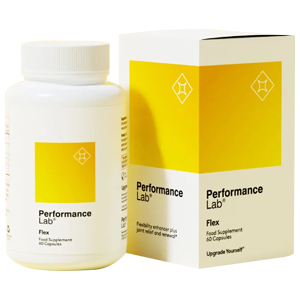
Performancelab Flex
Product Type: Dietary Supplement
Primary Use: Joint Health, Mobility & Flexibility Support
Overall Rating: 4.8/5
Price: $49.00
Key Benefits
- Supports comfortable joint movement
- Supports whole-body flexibility
- Supports healthy cartilage and connective tissues
- Supports joint lubrication and mobility
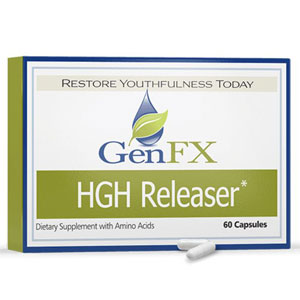
LeanBliss
Product Type: Dietary Supplement
Primary Use: Healthy Aging, Energy & Vitality Support
Overall Rating: 4.8/5
Price: $49.95
Key Benefits
- Supports energy and vitality
- Supports lean muscle mass
- Supports healthy body composition
- Supports memory and cognitive function