
Introduction
Thick, discolored, brittle, or damaged toenails can be frustrating. Nail fungus is one possible cause, and it can be difficult to manage because the infection may develop beneath the nail plate, where topical products have trouble reaching it.
KlaroNail is a topical nail-care spray marketed for people concerned about stubborn toenail fungus, recurring nail problems, and unhealthy-looking nails. Its formula combines 13 ingredients, including tea tree oil, undecylenic acid, clove bud oil, lavender oil, Manuka honey, aloe vera, and vitamin E.
The manufacturer promotes the spray as a way to support clearer-looking nails, stronger nail structure, and healthier surrounding skin. It also makes claims about targeting fungal buildup.
But do the ingredients have enough clinical evidence to support those claims? And can a botanical spray replace established antifungal treatments?
In this KlaroNail review, I examine the formula, research, application instructions, safety, and purchasing terms. The main distinction is between cosmetic nail care and a clinically proven treatment for fungal nail infections.
Quick Summary Box
| Product Name | KlaroNail |
| Product Type | Topical nail-care spray |
| Primary Use | Nail appearance and surrounding-skin care |
| Formula | 13 botanical and skin-supporting ingredients |
| Highlighted Ingredients | Tea tree oil, undecylenic acid, clove bud oil, lavender oil, Manuka honey, vitamin E |
| Format | Topical spray |
| Recommended Use | Four applications daily |
| Guarantee | 60-day money-back guarantee advertised |
| Purchase Type | One-time purchase, according to the seller |
What Is KlaroNail?
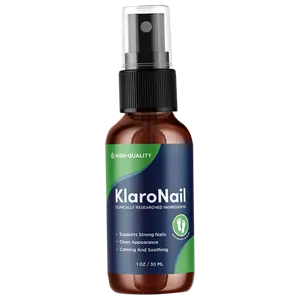 KlaroNail is a topical spray designed for application to the nails, cuticles, and surrounding skin. The manufacturer positions it as a convenient alternative to thicker creams and nail-care products that require more involved application.
The formula contains 13 named ingredients, combining essential oils, plant oils, a fatty acid, honey, and skin-conditioning ingredients.
The website promotes three main objectives:
– Supporting clearer, healthier-looking nails
– Improving the appearance and condition of nail structure
– Conditioning and soothing the skin around affected nails
The product is particularly marketed toward people experiencing thick, discolored, or damaged toenails. However, these symptoms do not always indicate a fungal infection. Nail trauma, psoriasis, and other conditions can produce similar changes.
That distinction matters because a cosmetic spray and a medical antifungal treatment serve different purposes.
KlaroNail Ingredients: What’s Inside?
KlaroNail contains 13 ingredients, combining essential oils, plant-based oils, and skin-conditioning compounds. The formula is designed to support nail appearance, condition the surrounding skin, and provide topical care.
| Ingredient | Potential Role |
|---|---|
| Tea Tree Oil | Provides antimicrobial properties and supports nail-surface care. |
| Undecylenic Acid | An antifungal-related ingredient used in topical products. |
| Clove Bud Oil | Contains eugenol, a compound studied for antimicrobial activity. |
| Lavender Oil | Provides skin-conditioning properties and a pleasant fragrance. |
| Manuka Honey | Offers moisturizing and antimicrobial properties. |
| Flaxseed Oil | Provides fatty acids that help condition the skin. |
| Sweet Almond Oil | Helps moisturize and condition nails and cuticles. |
| Camphor Oil | Provides a cooling sensation and supports topical skin care. |
| Aloe Vera | Helps soothe and hydrate the surrounding skin. |
| Menthol | Creates a cooling sensation when applied topically. |
| Walnut Oil | Provides conditioning support for the skin and cuticles. |
| Chia Seed Oil | Supplies plant-based fatty acids for skin conditioning. |
| Vitamin E | Provides antioxidant properties and supports skin conditioning. |
Important Ingredient Note: The official website lists all 13 ingredients but does not clearly disclose their individual concentrations. Although some ingredients have demonstrated antimicrobial activity in laboratory research, this does not establish that the complete KlaroNail formula can eliminate fungal nail infections.
1. Tea Tree Oil
Tea tree oil is one of the most recognizable botanical ingredients in topical nail-care products. It contains compounds with antimicrobial activity in laboratory research.
Some small human studies have investigated tea tree oil for fungal nail infections. However, the National Center for Complementary and Integrative Health (NCCIH) concludes that the amount and quality of available research are insufficient to determine whether topical tea tree oil is effective for this condition.
One randomized study involving 117 people compared 100% tea tree oil with 1% clotrimazole solution over six months. The results showed similar outcomes between the groups, but neither treatment produced a high culture-cure rate.
Research: Comparison of Tea Tree Oil and Clotrimazole for Toenail Onychomycosis.
2. Undecylenic Acid
Undecylenic acid is a fatty acid used in some topical antifungal products. It has antifungal activity and is included in KlaroNail’s formula for its potential role in nail and skin care.
However, the presence of an ingredient with antifungal properties does not establish that the finished product can treat an infection beneath the nail. Concentration, formulation, application, and the ability to penetrate the nail plate all matter.
Because KlaroNail does not clearly disclose the concentration of undecylenic acid, its strength cannot be compared reliably with other formulations.
3. Clove Bud Oil
Clove bud oil contains eugenol, a compound investigated for antimicrobial activity in laboratory studies.
These findings provide a scientific rationale for its use in topical formulations. However, laboratory antimicrobial activity is not equivalent to demonstrated clinical effectiveness against human nail infections.
4. Lavender Oil
Lavender oil is commonly used in skin-care and personal-care products for its fragrance and conditioning properties. Laboratory research has also examined its antimicrobial activity.
There is insufficient clinical evidence to conclude that lavender oil alone clears fungal nail infections. It may also cause skin irritation or allergic contact dermatitis in sensitive individuals.
5. Manuka Honey
Manuka honey contains compounds associated with antimicrobial activity and is used in certain wound-care products.
However, evidence relating to wound care cannot automatically be applied to fungal infections inside the nail. There is no established clinical evidence that Manuka honey in KlaroNail clears toenail fungus.
6. Aloe Vera and Menthol
Aloe vera is commonly used in topical products for skin conditioning, while menthol creates a cooling sensation.
These ingredients may contribute to the product’s cosmetic and sensory qualities. They should not be confused with proven treatments for fungal nail infections.
7. Plant Oils and Vitamin E
Flaxseed oil, sweet almond oil, walnut oil, chia seed oil, and vitamin E are included for conditioning and skin-supporting purposes.
Plant oils can help reduce dryness and improve the feel of surrounding skin. Vitamin E has antioxidant properties and is widely used in topical skin-care products.
However, conditioning the nail and cuticle does not necessarily eliminate a fungal infection.
How Does KlaroNail Work?
KlaroNail uses a spray format intended to distribute its formula across the nail surface, cuticle, and surrounding skin.
The manufacturer’s approach combines three functions:
Surface care: Tea tree oil, undecylenic acid, and clove bud oil are included for their antimicrobial or antifungal-related properties.
Skin conditioning: Aloe vera, Manuka honey, lavender oil, and plant oils are intended to support the condition of surrounding skin.
Moisture and appearance support: Vitamin E, flaxseed oil, chia seed oil, and sweet almond oil contribute conditioning ingredients.
The formula’s proposed mechanisms are plausible as elements of topical personal care. However, there is no product-specific clinical trial demonstrating that KlaroNail penetrates the nail plate sufficiently or eliminates the organisms responsible for fungal infections.
Can KlaroNail Really Treat Nail Fungus?
This is the most important question when evaluating the product.
Fungal nail infections, medically known as onychomycosis, develop within the nail unit. The infection can cause discoloration, thickening, brittleness, and separation of the nail from the nail bed.
The challenge is that the nail plate can make it difficult for topical ingredients to reach the infection.
The American Academy of Dermatology (AAD) explains that dermatologists may confirm suspected nail fungus by examining a nail sample under a microscope or using other tests. This is important because nail psoriasis and injuries can resemble fungal infections.
The AAD also identifies prescription treatments such as efinaconazole, tavaborole, and ciclopirox for certain cases of nail fungus. These treatments have been studied in clinical trials and are applied according to specific treatment schedules.
Tea tree oil has been investigated, but the NCCIH says the available evidence is insufficient to reach a reliable conclusion about its effectiveness for nail fungus.
**My assessment:** KlaroNail may offer a convenient way to condition nails and surrounding skin, but the available evidence does not establish it as a clinically proven treatment for onychomycosis.
Research: American Academy of Dermatology – Nail Fungus: Diagnosis and Treatment.
Potential Benefits of KlaroNail
Based on its formula and intended use, KlaroNail may offer:
– Convenient topical nail application
– Conditioning support for dry cuticles
– A cooling sensation from menthol
– Plant-derived oils for skin care
– Antioxidant-related support from vitamin E
– A simple routine for maintaining nail appearance
These are potential cosmetic and ingredient-related functions. They do not establish that KlaroNail cures fungal infections or restores damaged nails.
KlaroNail Pros and Cons
| Pros | Cons |
|---|---|
| Convenient spray application | No verified clinical trial on the complete formula |
| Lists 13 named ingredients | Individual ingredient concentrations are not disclosed |
| Includes undecylenic acid and tea tree oil | Evidence for tea tree oil against nail fungus is insufficient |
| Contains conditioning oils and vitamin E | Four daily applications may be inconvenient |
| 60-day guarantee advertised | Refund conditions require returning all bottles |
| Seller describes orders as one-time purchases | Not a substitute for established antifungal treatment |
Customer Reviews and Feedback
The KlaroNail sales page displays customer testimonials and advertises a review count of 13,872. It also presents positive statements about nail appearance and customer satisfaction.
These figures and testimonials are displayed by the seller. I could not independently verify the review database or establish whether the reported results are representative of typical customers.
The website also states that testimonials may not reflect the average purchaser’s experience. That disclosure is important when interpreting claims about dramatic improvements.
Customer experiences can help describe satisfaction with a spray’s application or texture, but they cannot prove that the formula eliminates fungal infections.
Who Should Consider KlaroNail?
Adults interested in a botanical topical nail-care spray may want to examine KlaroNail’s ingredient list. Its spray format may be convenient for applying a product to toenails and surrounding skin.
However, people with suspected fungal infections should consider professional diagnosis before relying on a cosmetic product.
Medical evaluation is particularly important for people with:
– Diabetes
– Poor circulation
– A weakened immune system
– Painful or worsening nail changes
– Redness, swelling, or discharge around the nail
These conditions can increase the risk of complications from untreated foot problems.
KlaroNail Side Effects and Safety
KlaroNail is intended for external use, but botanical ingredients can still cause adverse skin reactions.
Tea tree oil: May cause redness, irritation, or allergic contact dermatitis. It should never be swallowed.
Essential oils: Clove, lavender, and camphor oils may irritate sensitive skin, particularly if the concentration is high.
Menthol: Can cause a cooling or burning sensation. Avoid applying it to broken or severely irritated skin unless a healthcare professional advises otherwise.
Sweet almond and walnut oils: People with relevant nut allergies should review the full product label and seek professional advice before use.
The seller advises pregnant or nursing individuals and people taking medication to consult a healthcare professional before using the product.
For external use only. Avoid contact with eyes and mucous membranes, and discontinue use if significant irritation develops.
Safety resource: NCCIH – Tea Tree Oil: Usefulness and Safety.
KlaroNail Directions: How to Use It
The official website recommends applying KlaroNail four times daily:
– Twice in the morning
– Twice in the afternoon
The instructions say to spray the affected nail and cuticle, ensuring the surface is coated. A cotton swab can be used to work the formula around the cuticle.
The seller also recommends cleaning and drying the feet before application. Allow the product to absorb before washing the area or covering it.
Follow the instructions on the current packaging. Do not apply more frequently than directed.
The manufacturer emphasizes consistent use because toenails grow slowly. However, its suggested application schedule is not evidence that the spray cures fungal infections.
KlaroNail Pricing and Packages
The official KlaroNail website offers three purchasing options. Larger packages include additional bottles at no extra product cost.
| Package | Bottles Included | Shipping |
|---|---|---|
| Basic Package | 2 Bottles | $9.99 |
| Most Popular Package | 3 Bottles (2 + 1 Free) | Free US Shipping |
| Best Value Package | 6 Bottles (3 + 3 Free) | Free US Shipping |
Additional Offer: The six-bottle package also includes three digital guides covering skin care, nail care, and joint mobility.
Money-Back Guarantee: KlaroNail advertises a 60-day money-back guarantee. However, its refund policy requires customers to return all bottles, including empty ones, along with the packing slip. Customers are also responsible for return shipping costs.
Important: The website does not clearly display the numerical package prices in the product information reviewed. Check the official checkout page for the current total before ordering.
Frequently Asked Questions
1. What is KlaroNail used for?
KlaroNail is a topical spray marketed for nail appearance, cuticle conditioning, and surrounding-skin care. The seller also promotes it for people concerned about fungal nail problems.
2. Does KlaroNail really cure toenail fungus?
There is insufficient clinical evidence to establish that KlaroNail cures toenail fungus. Its ingredients include substances with antimicrobial properties, but the complete formula has not been clinically proven to eliminate nail infections.
3. What are the main ingredients in KlaroNail?
The 13 listed ingredients are tea tree oil, undecylenic acid, clove bud oil, lavender oil, Manuka honey, flaxseed oil, sweet almond oil, camphor oil, aloe vera, menthol, walnut oil, chia seed oil, and vitamin E.
4. How often should KlaroNail be applied?
The manufacturer recommends four applications daily: twice in the morning and twice in the afternoon. Follow the current product label.
5. How long does KlaroNail take to work?
The seller recommends consistent application, but no reliable clinical timeline has been established for the product. Toenails grow slowly, so visible changes in nail appearance can take months even when an underlying infection is being treated.
6. Is KlaroNail FDA-approved?
The sales page states that its claims have not been evaluated by the FDA and that the product is not intended to diagnose, treat, cure, or prevent disease. It should not be described as an FDA-approved antifungal treatment.
7. Can tea tree oil treat nail fungus?
A few small studies have investigated tea tree oil for nail fungus, but the NCCIH considers the evidence insufficient to determine its effectiveness.
8. Is KlaroNail safe for sensitive skin?
Essential oils and menthol may irritate sensitive skin or trigger allergic reactions. Review the full ingredient list and stop using the spray if significant irritation occurs.
9. Does KlaroNail offer a money-back guarantee?
The seller advertises a 60-day money-back guarantee. Its refund policy requires all bottles and the packing slip to be returned, and customers must pay return shipping.
10. Where can KlaroNail be purchased?
KlaroNail is marketed through its official sales page, Check the current package price, shipping, and refund conditions before ordering.
Final Verdict: Is KlaroNail Worth Trying?
KlaroNail offers a 13-ingredient topical spray containing tea tree oil, undecylenic acid, clove bud oil, Manuka honey, aloe vera, plant oils, and vitamin E. Its spray format may be convenient for people who want a simple nail and cuticle care routine.
However, the evidence does not establish that KlaroNail eliminates fungal nail infections. Research on tea tree oil remains limited, and the product does not disclose the individual concentrations of its ingredients. This makes it difficult to assess the formula’s strength or compare it with studied topical treatments.
The refund policy also deserves attention. Although the seller advertises a 60-day guarantee, its recommendation to use the product for at least three months creates a practical timing conflict.
**My assessment:** KlaroNail may be considered a botanical nail-care spray for cosmetic conditioning, but it should not be presented as a proven cure for toenail fungus. Anyone with persistent discoloration, thickening, or nail damage should seek a proper diagnosis and discuss evidence-based treatment options with a dermatologist.