
Introduction
Healthy vision plays an important role in everyday life. Reading, driving, working on digital devices, and recognizing faces all depend on properly functioning eyes. As people age, concerns about eye strain, visual clarity, and age-related eye conditions can lead them to explore nutritional supplements.
Lasiberry is a dietary supplement marketed for eye health, retinal support, and visual clarity. Its official website highlights five primary ingredients: lutein, zeaxanthin, bilberry extract, eyebright extract, and vitamin A.
These ingredients have different nutritional and botanical properties. Lutein and zeaxanthin, in particular, have been investigated in clinical research involving age-related macular degeneration (AMD). However, evidence supporting specific nutrients does not establish that every eye-health supplement delivers the same results.
Lasiberry’s marketing also makes ambitious claims about restoring vision and regenerating retinal cells. These claims require careful examination because no independent clinical trial of the finished Lasiberry formula was identified during this review.
This article examines its advertised ingredients, scientific evidence, potential benefits, safety considerations, customer testimonials, and current pricing.
Lasiberry Quick Summary Box
| Feature | Details |
|---|---|
| Product Name | Lasiberry |
| Category | Eye health and vision-support supplement |
| Product Form | Capsules |
| Recommended Serving | 2 capsules daily, according to the official website |
| Primary Advertised Ingredients | Lutein, zeaxanthin, bilberry extract, eyebright extract, and vitamin A |
| Other Reported Ingredients | Vitamins, minerals, taurine, grape seed extract, and other compounds appear in a third-party label transcription |
| Primary Purpose | Eye health, retinal support, and visual wellness |
| Product-Specific Clinical Trial | Not identified |
| Advertised Guarantee | 60 days |
| Price Range | $49–$79 per bottle, depending on package |
What Is Lasiberry?
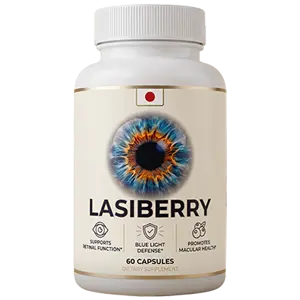 Lasiberry is a capsule-based dietary supplement marketed to adults interested in maintaining healthy vision and supporting normal eye function.
The official website describes the product as a natural formula containing nutrients and plant extracts intended to support the retina, protect against oxidative stress, and promote visual clarity.
The seller particularly emphasizes five ingredients:
- Lutein
- Zeaxanthin
- Bilberry extract
- Eyebright extract
- Vitamin A
There is an important ingredient-transparency consideration. A third-party transcription of a Supplement Facts label lists 23 active ingredients, including vitamins C and E, B vitamins, zinc, taurine, grape seed extract, alpha-lipoic acid, and other compounds. However, the official sales page primarily promotes five ingredients.
Because the publicly accessible sales information does not consistently present the complete formulation, the physical bottle’s Supplement Facts panel should be checked before purchase.
Lasiberry is a dietary supplement, not a prescription eye treatment. It should not replace an eye examination, prescribed medication, corrective lenses, or treatment for an existing eye condition.
How Does Lasiberry Work?
Lasiberry is designed around several proposed nutritional pathways associated with normal eye function.
**Macular carotenoids:** Lutein and zeaxanthin are carotenoids that accumulate in the retina, particularly in the macula. They contribute to macular pigment and help filter certain wavelengths of light.
**Vitamin A and visual function:** Vitamin A is essential for normal vision because it participates in the visual cycle, which allows the eyes to respond to light.
**Antioxidant support:** Bilberry contains anthocyanins, while several other reported ingredients contain antioxidant compounds. Researchers have investigated these substances for their potential role in protecting cells from oxidative stress.
**Botanical eye support:** Eyebright has a history of traditional use for eye-related complaints, although strong clinical evidence supporting oral eyebright supplementation remains limited.
These mechanisms provide a basis for studying individual nutrients and plant extracts. They do not establish that Lasiberry restores damaged vision, reverses retinal degeneration, or treats eye disease.
Lasiberry Key Ingredients
The following discussion focuses on the five ingredients promoted prominently on the official website. Where a quantity is mentioned, it comes from a third-party transcription of the product label and should be verified against the physical packaging.
1. Lutein
Lutein is a carotenoid found in leafy green vegetables, eggs, and other foods. It accumulates in the macula, where it contributes to macular pigment.
Researchers have investigated lutein supplementation as part of the Age-Related Eye Disease Study 2 (AREDS2). The study evaluated 10 mg of lutein alongside 2 mg of zeaxanthin in people at risk of progression to advanced AMD.
The AREDS2 randomized clinical trial provides important evidence about these nutrients in a specific population. However, it does not prove that Lasiberry produces the same outcomes.
A third-party label transcription reports 800 mcg of lutein per serving. If accurate, this is substantially below the 10 mg lutein amount used in AREDS2.
2. Zeaxanthin
Zeaxanthin is another carotenoid found in the macula. It works alongside lutein to contribute to macular pigment and light-filtering activity.
The AREDS2 research investigated 2 mg of zeaxanthin alongside 10 mg of lutein. The National Eye Institute explains that the AREDS2 formulation may help certain people with intermediate AMD reduce their risk of progression to advanced disease.
Read the National Eye Institute’s AREDS2 supplement guidance.
A third-party label transcription reports 2.4 mg of zeaxanthin per serving. This amount alone does not make Lasiberry equivalent to the AREDS2 formulation.
3. Bilberry Extract – Reported 18 mg
Bilberry (Vaccinium myrtillus) contains anthocyanins, plant pigments with antioxidant properties. Researchers have investigated bilberry for visual function and eye-related concerns.
A randomized, double-blind, placebo-controlled trial involving 109 adults examined 240 mg of standardized bilberry extract daily for 12 weeks. Researchers reported improvements in certain objective measurements of ciliary muscle function after visual-display tasks.
The 2020 bilberry clinical trial offers some human research, but its findings should not be generalized to all bilberry products.
The reported 18 mg amount in Lasiberry is considerably lower than the 240 mg used in this study. Extract standardization may also differ.
4. Eyebright Extract – Reported 12 mg
Eyebright (Euphrasia officinalis) is a traditional European herb historically used in preparations associated with eye comfort.
The plant contains naturally occurring compounds that have attracted interest for their potential biological properties. However, reliable human clinical evidence demonstrating that oral eyebright supplementation improves vision or treats dry eyes is limited.
The reported 12 mg amount comes from a third-party label transcription. There is not enough evidence to establish that this amount produces a meaningful eye-health benefit.
5. Vitamin A – Reported 100 mcg as Beta-Carotene
Vitamin A is essential for normal vision, immune function, and cellular development. It contributes to the production of visual pigments that help the eyes respond to light.
Beta-carotene is a plant-derived compound that the body can convert into vitamin A.
The NIH Office of Dietary Supplements Vitamin A Fact Sheet explains its role in vision, dietary sources, and safety considerations.
Vitamin A deficiency can affect normal vision, but additional supplementation does not automatically improve eyesight in people who already have adequate intake.
Other Ingredients Reported on the Label
A third-party transcription also identifies vitamin C, vitamin E, thiamine, riboflavin, niacin, vitamin B12, biotin, magnesium, zinc, selenium, copper, chromium, taurine, grape seed extract, alpha-lipoic acid, quercetin, rutin, and lycopene.
These ingredients have different nutritional and biological functions. However, their quantities should be verified using the current physical Supplement Facts panel before making a complete safety or efficacy assessment.
Lasiberry Benefits
Based on the advertised ingredients and established nutritional functions, Lasiberry is intended to:
- Support macular nutrition: Lutein and zeaxanthin contribute to the macular pigment found in the retina.
- Maintain normal visual function: Vitamin A supports the visual cycle and normal light perception.
- Provide antioxidant compounds: Bilberry and other reported plant extracts contain naturally occurring antioxidant substances.
- Complement daily nutrient intake: The reported vitamin and mineral ingredients provide additional nutritional support.
- Support a convenient eye-care routine: The capsule format makes daily supplementation straightforward.
- Provide carotenoid supplementation: Lutein and zeaxanthin are among the better-studied nutrients associated with macular health.
These points describe nutritional functions and potential areas of research. They do not establish that Lasiberry improves eyesight, reverses retinal damage, or prevents age-related eye disease.
Lasiberry Pros & Cons
**Pros**
- Includes lutein and zeaxanthin, which have been investigated in major eye-health studies.
- Features vitamin A, an essential nutrient for normal vision.
- Includes bilberry and eyebright as botanical ingredients.
- Offers a simple two-capsule daily routine.
- Provides multiple package options.
- Advertises a 60-day money-back guarantee.
**Cons**
- No independent clinical trial of the finished Lasiberry formula was identified.
- The official marketing page emphasizes five ingredients, while a third-party label transcription lists 23.
- Some reported carotenoid amounts are below those used in AREDS2.
- Claims about restoring vision and regenerating retinal cells are not established by the available evidence.
- Independent verification of manufacturing and third-party testing claims was not available.
- Customer testimonials on the seller’s page do not establish typical results.
Comparison Table With Alternatives
The following comparison uses established eye-health approaches rather than unverified commercial products. It helps distinguish general nutritional support from a clinically studied formula.
| Option | Main Focus | Evidence Consideration |
|---|---|---|
| Lasiberry | General eye health and visual wellness | Contains advertised eye-health ingredients, but the finished formula lacks identified clinical trials. |
| AREDS2 formulation | Reducing progression risk in certain people with AMD | Supported by large clinical trials for people with intermediate AMD or specific advanced AMD circumstances. |
| Balanced eye-supportive diet | Meeting nutritional needs through food | Leafy greens, colorful vegetables, fruit, and fish provide nutrients associated with general health. |
| Routine eye examinations | Monitoring eye health and detecting disease | Allows an eye-care professional to identify problems and recommend appropriate treatment. |
The National Eye Institute explains that AREDS2 supplements can help certain people with intermediate AMD slow progression to advanced disease. They do not prevent AMD from developing in people without the condition or treat every stage of the disease.
Read the National Eye Institute’s AREDS/AREDS2 findings.
Lasiberry should not be assumed to be an AREDS2-equivalent product. Its advertised ingredients and reported quantities do not match the complete AREDS2 formula.
Lasiberry Customer Reviews
The official Lasiberry website displays several five-star testimonials attributed to customers who describe improvements in visual clarity, reading comfort, and everyday vision.
These accounts are presented by the seller and should be treated as promotional testimonials rather than independent clinical evidence. The accessible page does not provide enough information to independently verify the reviewers’ identities, purchase histories, or the typicality of their reported results.
The sales page also includes a disclaimer explaining that testimonials and case studies are not intended to guarantee similar outcomes for other customers.
I did not identify a sufficiently reliable independent review database to establish a representative customer satisfaction rating.
Customer experiences may help readers understand how some buyers describe the product, but they cannot establish that Lasiberry reverses vision loss or treats eye conditions.
Who Should Use or Avoid Lasiberry?
Lasiberry is marketed toward adults interested in general eye-health and nutritional support. However, whether an eye supplement is appropriate depends on an individual’s diet, health status, medications, and existing eye conditions.
People who may want to discuss nutritional supplementation with an eye-care professional include:
- Adults concerned about meeting their daily nutritional needs.
- People interested in lutein and zeaxanthin supplementation.
- Individuals who have been advised to consider a specific eye-health supplement.
- Adults who want to review their existing vitamin and mineral intake.
Extra caution is appropriate for:
- Current or former smokers considering supplements containing beta-carotene.
- People taking blood-thinning or anticoagulant medication.
- Individuals with kidney or liver conditions.
- Pregnant or breastfeeding individuals.
- People taking other multivitamins or high-dose vitamin supplements.
- Anyone with an existing eye condition or unexplained vision changes.
Sudden blurred vision, flashes, new floaters, eye pain, or sudden loss of vision require prompt medical assessment. A supplement should never delay an eye examination.
Lasiberry Side Effects & Safety
The seller describes Lasiberry as a natural formula and claims it is manufactured under quality standards. However, natural ingredients are not automatically free from side effects, and the complete product’s long-term safety has not been established through a product-specific clinical trial.
Several reported ingredients deserve attention.
**Zinc:** A third-party label transcription reports 26 mg of zinc per serving. The adult upper intake level is 40 mg daily from all sources. Additional zinc from multivitamins or other supplements could bring total intake closer to this limit. Excessive zinc intake can cause nausea and other gastrointestinal symptoms. See the NIH Zinc Fact Sheet.
**Biotin:** The reported label lists 800 mcg of biotin. Biotin can interfere with certain laboratory tests, including some thyroid and hormone tests. People taking biotin-containing supplements should tell their healthcare professionals before laboratory testing. The NIH Biotin Fact Sheet explains this issue.
**Vitamin A and beta-carotene:** The reported label lists vitamin A as beta-carotene. High-dose beta-carotene supplementation has been associated with increased lung cancer risk in current and former smokers in major clinical research. The National Eye Institute recommends AREDS2 rather than beta-carotene-containing AREDS formulas for these groups.
**Bilberry and other botanical ingredients:** Botanical extracts can vary in composition and may interact with medications. People taking anticoagulants or other prescription medicines should check with a healthcare professional before use.
**Multiple supplements:** The reported formula contains several vitamins and minerals. Taking it alongside other multivitamins or eye-health supplements could result in unnecessary duplication.
The official website advises pregnant or nursing individuals and people with pre-existing medical conditions to consult a healthcare professional before use.
Lasiberry is a dietary supplement, not an FDA-approved treatment for vision loss, macular degeneration, cataracts, or glaucoma. The FDA does not approve dietary supplements for effectiveness before they enter the market.
Lasiberry Pricing & Packages
The official sales page currently lists three package options. Each bottle contains a 30-day supply based on the advertised two-capsule daily serving.
| Package | Supply | Price Per Bottle | Total Price | Shipping |
|---|---|---|---|---|
| 2 Bottles | 60 days | $79 | $158 | $9.99 shipping |
| 3 Bottles | 90 days | $69 | $207 | Free shipping |
| 6 Bottles | 180 days | $49 | $294 | Free US shipping |
The seller advertises a 60-day money-back guarantee. Its sales page states that customers should use the product for at least 30 days before requesting a refund.
The six-bottle package has the lowest advertised per-bottle price, while the two-bottle option has an additional shipping charge.
The official website also promotes digital bonuses with selected three- and six-bottle packages. Buyers should confirm which bonuses are included in the checkout offer.
Prices and promotional terms can change, so the final amount should be verified before placing an order.
10 Frequently Asked Questions
1. What is Lasiberry used for?
Lasiberry is a dietary supplement marketed for eye health, retinal support, and visual wellness. Its official website highlights lutein, zeaxanthin, bilberry, eyebright, and vitamin A.
2. Does Lasiberry really improve eyesight?
There is insufficient clinical evidence to confirm that Lasiberry improves eyesight. Some ingredients have been studied for eye health, but research on individual nutrients does not prove that the finished supplement restores vision.
3. What are the main ingredients in Lasiberry?
The official website promotes five main ingredients: lutein, zeaxanthin, bilberry extract, eyebright extract, and vitamin A. A third-party label transcription reports additional vitamins, minerals, and botanical compounds.
4. How many Lasiberry capsules should someone take daily?
The official website recommends taking two capsules daily with a glass of water. Consumers should follow the directions on the physical product label and avoid exceeding the recommended serving.
5. How long does Lasiberry take to work?
The seller reports that some users notice changes within days or weeks and recommends using the product consistently for several months. These are manufacturer claims, not timelines established by a clinical trial of Lasiberry.
6. Does Lasiberry contain lutein and zeaxanthin?
Yes. Both ingredients are highlighted on the official website. They are carotenoids found in the macula and have been studied in relation to age-related macular degeneration.
7. Is Lasiberry an AREDS2 supplement?
The available information does not establish that Lasiberry is an AREDS2-equivalent formula. The AREDS2 formulation contains specific amounts of vitamin C, vitamin E, zinc, copper, lutein, and zeaxanthin. Lasiberry’s advertised formula is different.
8. Is Lasiberry safe for everyone?
No supplement is appropriate for everyone. People taking medication, pregnant or breastfeeding individuals, and those with existing medical conditions should consult a healthcare professional before use.
9. How much does Lasiberry cost?
The official website lists two bottles for $158, three bottles for $207, and six bottles for $294. Shipping is additional for the two-bottle package and advertised as free for the larger packages.
10. Can Lasiberry replace eye medication or an eye examination?
No. Lasiberry is a dietary supplement and should not replace prescribed eye medication, corrective lenses, or routine eye examinations. Changes in vision require appropriate professional assessment.
Final Verdict: Is Lasiberry Worth Considering?
Lasiberry is an eye-health supplement built around ingredients that have attracted scientific interest, particularly lutein and zeaxanthin. These carotenoids contribute to macular pigment, while vitamin A supports normal visual function. Bilberry and eyebright provide additional botanical components.
However, the available evidence does not establish that the finished Lasiberry formula restores vision, regenerates retinal cells, or reverses age-related eye changes. The product has not been supported by an identified independent clinical trial, and the difference between the five ingredients emphasized in its marketing and the broader third-party label transcription deserves clarification.
The comparison with AREDS2 is particularly important. AREDS2 has clinical evidence for slowing progression to advanced AMD in certain people with the condition. Lasiberry should not be considered a substitute for that specific formulation or for an eye specialist’s recommendations.
The pricing is straightforward, with three package options and a 60-day advertised guarantee. However, value depends on ingredient transparency, appropriate doses, safety, and whether the product meets an individual’s actual nutritional needs.