
Introduction
Nerve pain, burning sensations, tingling, and numbness can interfere with walking, sleep, and everyday activities. Nervecept is a dietary supplement marketed to support nerve health, improve comfort, and reduce symptoms commonly associated with neuropathy.
The official website promotes Nervecept as a natural formula that may help with nerve discomfort and mobility. Its prominently listed ingredients include glucosamine sulfate, frankincense (Boswellia serrata), chondroitin sulfate, turmeric, and quercetin, alongside other nutritional compounds.
However, a supplement’s marketing claims do not establish that it can repair damaged nerves. Several Nervecept ingredients have been studied primarily for joint pain, inflammation, or related outcomes rather than peripheral neuropathy. The available information also does not establish that the finished Nervecept formula has undergone a published clinical trial.
In this Nervecept review, I examine the advertised benefits, ingredient evidence, potential side effects, package prices, and important limitations.
**The bottom line:** Nervecept is marketed for nerve comfort, but there is insufficient clinical evidence to conclude that it relieves neuropathy, reverses nerve damage, or restores normal sensation.
Nervecept Quick Summary
| Feature | Details |
|---|---|
| Product name | Nervecept |
| Category | Nerve-health dietary supplement |
| Format | Capsules |
| Advertised benefits | Nerve comfort, reduced tingling, burning, and improved mobility |
| Ingredients named on the main sales page | Glucosamine sulfate, Boswellia, chondroitin sulfate, turmeric, quercetin, and methionine |
| Additional ingredient information | An associated Nervecept information site lists eight ingredients and specific amounts; the discrepancy should be clarified with the seller |
| Suggested use | One capsule daily, according to the main sales page |
| Product-specific clinical evidence | No published clinical trial of the finished formula identified in the reviewed sources |
| Reported package prices | $158 for two bottles, $207 for three, or $294 for six, before applicable shipping |
| Reported guarantee | 60 days; confirm the seller’s current refund terms |
| Important precautions | Potential shellfish allergy, medication interactions, and limited evidence for nerve-related benefits |
What Is Nervecept?
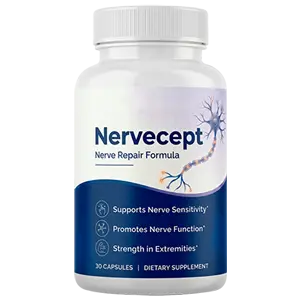 Nervecept is a supplement promoted for adults experiencing nerve discomfort, tingling, burning sensations, or numbness. Its sales page claims that the formula supports nerve health and mobility by addressing inflammation and supporting the body’s natural recovery processes.
These are marketing claims, not established clinical outcomes.
There is also an important labeling issue. The main sales page names six ingredients in its ingredient descriptions, while an associated Nervecept information site lists eight ingredients with exact amounts: glucosamine sulfate, Boswellia serrata, chondroitin sulfate, turmeric, quercetin, methionine, methylsulfonylmethane (MSM), and bromelain.
I could not reconcile this difference from the available information. Before purchasing, check the actual bottle’s Supplement Facts panel and confirm that it matches the product being advertised.
How Does Nervecept Work?
Nervecept’s marketing presents the formula as a combination of nutritional and botanical ingredients intended to support tissue health, inflammatory balance, and overall comfort.
Some of these ingredients have been researched for osteoarthritis and joint symptoms. For example, glucosamine and chondroitin are associated with cartilage, while Boswellia and turmeric have been investigated for certain inflammatory and pain-related outcomes.
However, joint pain and neuropathic pain are not the same condition. Neuropathy involves dysfunction or damage affecting the peripheral nerves, and its causes may include diabetes, vitamin deficiencies, medication effects, alcohol exposure, or other medical conditions.
Evidence that an ingredient may affect joint pain does not establish that it regenerates nerves or relieves tingling and numbness. No published clinical trial of the complete Nervecept formula was identified in the reviewed sources.
Nervecept Ingredients: What Does the Research Say?
The following assessment focuses on the ingredients named in Nervecept’s product information. The studies linked below evaluate individual ingredients or related preparations, not Nervecept itself.
1. Glucosamine Sulfate
Glucosamine is a compound associated with cartilage and connective tissue. Researchers have studied it mainly for osteoarthritis, particularly knee symptoms.
Results have been mixed. The [National Center for Complementary and Integrative Health’s glucosamine and chondroitin overview](https://www.nccih.nih.gov/health/glucosamine-and-chondroitin-for-osteoarthritis-what-you-need-to-know) explains that studies have produced inconsistent findings for joint pain.
That research does not establish glucosamine as a treatment for peripheral neuropathy. I could not identify convincing human clinical evidence showing that glucosamine alone relieves neuropathic pain or restores sensation.
**Editorial assessment:** Glucosamine has a research history in joint health, but its relevance to Nervecept’s nerve-related claims remains unproven.
2. Boswellia Serrata (Frankincense)
Boswellia serrata is a botanical extract traditionally used for inflammatory conditions. Some studies have investigated its effects on osteoarthritis symptoms and joint discomfort.
The [NCCIH Boswellia evidence review](https://www.nccih.nih.gov/health/boswellia) notes that some research suggests possible benefits for osteoarthritis-related pain, but many studies are small or low quality.
This evidence does not demonstrate that Boswellia repairs damaged peripheral nerves. Furthermore, the strength and standardization of the extract matter when comparing a product with research studies.
**Editorial assessment:** Boswellia may have potential for selected joint-related outcomes, but direct evidence for Nervecept’s advertised nerve benefits is lacking.
3. Chondroitin Sulfate
Chondroitin sulfate is a structural component of cartilage and is frequently combined with glucosamine in joint supplements. Researchers have examined whether it helps relieve osteoarthritis symptoms, but results vary across studies.
The [NCCIH review of glucosamine and chondroitin](https://www.nccih.nih.gov/health/glucosamine-and-chondroitin-for-osteoarthritis-what-you-need-to-know) discusses the inconsistent evidence for joint-related benefits.
There is no established basis for assuming that chondroitin relieves nerve burning, tingling, or numbness simply because it has been studied for joint health.
**Editorial assessment:** Its presence may fit a joint-support formula more clearly than a supplement specifically targeting peripheral neuropathy.
4. Turmeric
Turmeric contains curcuminoids, including curcumin, which have been investigated for their potential anti-inflammatory properties. Some studies have reported improvements in selected osteoarthritis-related outcomes, but the evidence varies by preparation and study design.
According to the [NCCIH turmeric review](https://www.nccih.nih.gov/health/turmeric), there is not enough evidence to reach definitive conclusions about turmeric’s benefits for many health conditions.
Nervecept’s main sales page does not establish that its turmeric content has been tested in a clinical trial for neuropathy. The amount and curcuminoid concentration also matter when evaluating whether a formula resembles studied preparations.
**Editorial assessment:** Turmeric has plausible biological properties, but its inclusion does not prove that Nervecept relieves neuropathic symptoms.
5. Quercetin
Quercetin is a plant flavonoid found in foods such as onions, apples, and several other fruits and vegetables. Laboratory research has explored its antioxidant and anti-inflammatory properties.
However, laboratory findings do not establish a clinical benefit for people with peripheral neuropathy. Evidence for a particular outcome also depends on the dose, formulation, and population studied.
**Editorial assessment:** Quercetin has research interest, but there is insufficient product-specific evidence to connect it to meaningful nerve-pain relief from Nervecept.
6. Methionine
Methionine is an essential amino acid that the body uses to make proteins and other compounds. It is normally obtained through dietary protein.
Its presence in a supplement does not, by itself, establish a benefit for nerve regeneration. The available Nervecept product information does not demonstrate that the amount supplied treats a deficiency or improves neuropathy symptoms.
**Editorial assessment:** Methionine is a normal nutritional component, but its role in Nervecept’s specific nerve-health claims remains unclear.
7. Methylsulfonylmethane (MSM)
MSM is a sulfur-containing compound sold in supplements, often for joint or muscle comfort. Research has explored its use for selected musculoskeletal outcomes, but the evidence is not sufficient to establish it as a treatment for peripheral neuropathy.
The associated Nervecept ingredient page lists MSM as part of its eight-ingredient formula. Because the main sales page does not clearly reconcile the complete formula, the actual product label should be checked.
**Editorial assessment:** Evidence for joint or muscle-related outcomes cannot be treated as proof of nerve repair.
8. Bromelain
Bromelain is a mixture of enzymes derived from pineapple. It has been investigated for certain inflammatory conditions, but research remains limited for many of the uses promoted in supplements.
The NCCIH discussion of [nutritional approaches to musculoskeletal inflammation](https://www.nccih.nih.gov/health/providers/digest/nutritional-approaches-for-musculoskeletal-pain-and-inflammation) notes that evidence for bromelain varies by condition and does not establish benefits for all inflammatory complaints.
**Editorial assessment:** There is no sufficient evidence that bromelain in Nervecept improves neuropathy or restores normal nerve function.
Potential Benefits of Nervecept
Based on the product’s marketing and the available ingredient research, Nervecept is intended to support:
- Nerve comfort: The product is marketed for discomfort associated with tingling, burning, and numbness, but these outcomes have not been established for the finished formula.
- Everyday mobility: Certain ingredients have been studied for joint-related function, but this does not establish improved mobility caused by neuropathy relief.
- Inflammatory balance: Boswellia and turmeric have been investigated for selected inflammation-related outcomes, with limitations in the evidence.
- Convenient supplementation: The seller recommends one capsule daily, although convenience alone does not demonstrate effectiveness.
These points describe intended uses and ingredient research, not guaranteed results. Nervecept should not be described as a proven nerve-regeneration treatment.
Nervecept Pros and Cons
| Pros | Cons |
|---|---|
| Uses ingredients with research histories in joint health and inflammation | No published clinical trial of the finished formula identified |
| Capsule format may be convenient | Ingredient descriptions differ between the main sales page and an associated information site |
| Offers multiple package options | Large bundles require a higher upfront payment |
| Advertises a 60-day refund guarantee | Refund eligibility and return requirements should be verified |
| Lists a suggested daily serving | Evidence does not establish that the formula relieves neuropathy or repairs nerves |
Nervecept vs. Other Nerve-Health Supplements
The most useful comparison focuses on the evidence for the intended condition, transparent labeling, and safety—not the number of ingredients or strength of the marketing.
| Evaluation factor | Nervecept | What to look for in alternatives |
|---|---|---|
| Ingredient transparency | Product pages do not fully agree on the ingredient list | A Supplement Facts panel that clearly matches the seller’s description |
| Evidence for neuropathy | No finished-product trial identified | Human clinical evidence for the exact condition and formulation |
| Ingredient research | Much of the relevant research concerns joints or inflammation | Evidence directly relevant to nerve symptoms and their cause |
| Safety information | Requires review of the full label and medication interactions | Clear warnings, allergen declarations, and independently verifiable quality testing |
| Cost | Reported packages range from $158 to $294 | Transparent per-serving pricing without pressure to buy several bottles |
A product with a clear label and evidence relevant to the specific condition is easier to evaluate. For persistent neuropathy symptoms, a healthcare professional can also help identify treatments with evidence appropriate to the underlying cause.
Customer Reviews: What Can Be Verified?
The Nervecept sales page displays positive testimonials that describe improvements in pain, tingling, sleep, and mobility. These are seller-published claims, and I could not independently verify the identities, medical histories, or outcomes of the people quoted.
Testimonials can provide information about individual experiences, but they cannot establish that a product caused an improvement. They also do not replace controlled clinical trials, which compare outcomes systematically and account for other factors.
For that reason, I would not treat the displayed testimonials as proof that Nervecept works or assign a verified customer satisfaction rating based on them.
Who Should Consider Nervecept—and Who Should Be Cautious?
Nervecept is marketed to adults seeking support for nerve comfort. However, people experiencing persistent burning, numbness, weakness, or tingling should first consider medical evaluation rather than relying solely on a supplement.
**Check with a healthcare professional before use if:**
- You take warfarin or another anticoagulant, because glucosamine and chondroitin may interact with warfarin.
- You have diabetes or need to monitor blood glucose, because glucosamine may affect blood sugar in some people.
- You have a shellfish allergy. The associated ingredient information says its glucosamine comes from crayfish shells; verify the actual bottle’s allergen statement.
- You take prescription medication, have a chronic condition, or plan to combine Nervecept with other supplements.
These precautions are particularly important because the product pages do not fully agree on the complete formula. Confirm the actual label before taking it.
Side Effects and Safety
Potential safety concerns depend on the final formula, ingredient amounts, health conditions, and medication use.
Glucosamine may affect blood glucose in some people and may increase bleeding risk when combined with warfarin. Chondroitin has also been associated with increased bleeding risk when taken with warfarin. Turmeric supplements can cause digestive side effects, and certain enhanced-bioavailability curcumin products have been associated with liver injury.
These risks do not mean every user will experience an adverse effect. They do mean that a product should not be assumed safe simply because its ingredients are described as natural.
The seller’s claim that a supplement supports nerve health is also not equivalent to proof that it is approved to treat neuropathy. In the United States, dietary supplements are not FDA-approved for effectiveness before they are marketed in the way prescription medicines are.
Seek prompt medical attention for sudden numbness or weakness, especially if it affects one side of the body or occurs with facial drooping, difficulty speaking, or severe dizziness.
Nervecept Pricing and Packages
The main sales page lists the following offers:
| Package | Total price | Price per bottle | Advertised supply |
|---|---|---|---|
| 2 bottles | $158 plus shipping | $79 | 60 days |
| 3 bottles | $207 | $69 | 90 days |
| 6 bottles | $294 | $49 | 180 days |
These are prices displayed on the website reviewed and may change. Confirm the final checkout total, shipping charges, applicable taxes, and delivery availability before ordering.
The site advertises a 60-day money-back guarantee. Review the current policy carefully, including the deadline, whether opened bottles must be returned, who pays return shipping, and how to request a refund. A money-back guarantee is a purchasing policy, not evidence that the product is clinically effective.
Frequently Asked Questions
1. What is Nervecept used for?
Nervecept is marketed to support nerve comfort and help with symptoms such as tingling, burning, and numbness. However, the available evidence does not establish that the finished formula treats neuropathy or repairs damaged nerves.
2. Does Nervecept really relieve nerve pain?
There is insufficient clinical evidence to conclude that Nervecept reliably relieves nerve pain. Some ingredients have been studied for joint pain or inflammation, but those results do not establish a benefit for peripheral neuropathy.
3. Can Nervecept repair damaged nerves?
No published clinical trial identified in the reviewed sources demonstrates that Nervecept regenerates damaged nerves. Claims about nerve regeneration should not be treated as proven outcomes.
4. What ingredients are in Nervecept?
The main sales page names glucosamine sulfate, Boswellia, chondroitin sulfate, turmeric, quercetin, and methionine. An associated information site lists two additional ingredients, MSM and bromelain, so buyers should verify the actual bottle label.
5. How should Nervecept be taken?
The main sales page recommends one capsule daily with water, preferably 20 to 30 minutes before a meal. Check the current bottle label and consult a healthcare professional if medication interactions or medical conditions are a concern.
6. Does Nervecept have side effects?
Potential concerns include medication interactions involving glucosamine or chondroitin, changes in blood glucose in some people, and digestive effects associated with turmeric. Individual risk depends on the actual formula and the person’s health status.
7. Is Nervecept safe for people with diabetes?
People with diabetes should consult their healthcare professional before use because glucosamine may raise blood glucose in some individuals. Nerve symptoms in people with diabetes also deserve medical assessment.
8. Is Nervecept suitable for people taking blood thinners?
People taking warfarin should seek medical advice before using Nervecept. Glucosamine and chondroitin have been associated with an increased bleeding risk when combined with warfarin.
9. How much does Nervecept cost?
The reviewed sales page lists two bottles for $158, three for $207, and six for $294. Prices, shipping, and availability can change, so confirm the final cost at checkout.
10. Is Nervecept worth buying?
The product may appeal to people interested in a multi-ingredient supplement, but its nerve-related benefits remain unproven. The differences between ingredient descriptions and the lack of a product-specific clinical trial make it difficult to recommend confidently.
Final Verdict: Is Nervecept Worth It?
Nervecept is marketed as a natural supplement for nerve comfort, tingling, burning, and mobility. Some of its listed ingredients have been researched for joint symptoms or inflammation, but that evidence does not demonstrate that the finished formula treats neuropathy or repairs nerve damage.
The main concerns are the absence of product-specific clinical evidence, the discrepancy between ingredient descriptions on related product pages, and the need to account for allergies and medication interactions. The advertised discounts and refund guarantee do not resolve these scientific limitations.
My verdict: Nervecept’s nerve-health benefits remain unproven. Before considering it, I would verify the complete Supplement Facts panel, confirm the seller’s refund terms, and discuss potential interactions with a healthcare professional. Persistent numbness, burning, tingling, or weakness deserves medical evaluation to identify the underlying cause and appropriate treatment.