
NeuroMind Pro is a dietary supplement marketed for memory, focus, mental clarity, brain circulation, and long-term cognitive wellness. The official website currently describes a formula centered on rosmarinic acid, phosphatidylserine, curcumin, and resveratrol, while also promoting concepts such as BDNF support, balanced brain signaling, and antioxidant protection.
My assessment is cautiously mixed. Several of the ingredients promoted by NeuroMind Pro have legitimate scientific research behind them, particularly phosphatidylserine and curcumin. However, the evidence varies considerably by ingredient, dose, formulation, and population. More importantly, I did not identify a peer-reviewed clinical trial testing the complete NeuroMind Pro formula.
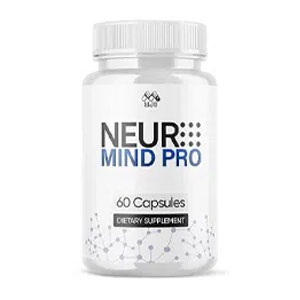
There is also an important transparency issue. Multiple websites currently use the NeuroMind Pro or Neuro Mind Pro name while describing substantially different formulas. The official URL provided for this review, getneuromindpro.org, currently highlights rosmarinic acid, phosphatidylserine, curcumin, and resveratrol, while other sites using the same product name describe formulas containing B vitamins, caffeine, Bacopa, Rhodiola, L-theanine, ginseng, or other ingredients.
For that reason, this review evaluates the product sold through the official URL supplied for this review and does not assume that ingredient lists found on similarly named websites represent the same product.
Quick NeuroMind Pro Review Summary
| Category | Assessment |
|---|---|
| Product type | Brain and cognitive-support dietary supplement |
| Primary marketing goals | Memory, focus, mental clarity, brain health, and cognitive resilience |
| Featured ingredients on supplied official website | Rosmarinic acid, phosphatidylserine, curcumin, and resveratrol |
| Ingredient doses | Not disclosed on the accessible official product page reviewed |
| Product-specific clinical trial | Not identified |
| FDA approval | No; the website states its claims have not been evaluated by the FDA |
| Money-back guarantee | 180 days according to the official website |
| Current advertised packages | 2, 3, or 6 bottles |
| Lowest advertised package price | $294 for six bottles |
| Overall assessment | Scientifically interesting ingredients, but insufficient evidence to establish the finished product’s effectiveness |
What Is NeuroMind Pro?
NeuroMind Pro is marketed as a daily supplement intended to support memory, recall, focus, mental clarity, cognitive performance, and general brain health.
The supplied official website describes the formula as supporting healthy brain circulation, memory and recall, focus and mental clarity, cognitive synchronization, BDNF activity, and overall brain resilience.
The current official page highlights:
- Rosmarinic acid
- Phosphatidylserine
- Curcumin
- Resveratrol
The website also describes a “BBB-friendly” formulation approach and supercritical extraction, but it does not provide enough information on the accessible page to independently determine the exact doses, extract standardization, or clinical equivalence of these ingredients.
That matters because cognitive supplements are highly dependent on dose and formulation. A clinical trial involving 300 mg of a standardized Bacopa extract, for example, cannot automatically validate a product containing an unspecified amount of a different Bacopa preparation.
The same principle applies to curcumin, phosphatidylserine, resveratrol, and other botanical compounds.
How Does NeuroMind Pro Work?
NeuroMind Pro’s proposed mechanisms are based largely on the biological activities of its featured ingredients.
Phosphatidylserine is a phospholipid found in cell membranes, including neuronal membranes. It has been investigated for its potential role in cognitive function and age-related cognitive changes.
Curcumin is a polyphenolic compound derived from turmeric. It has antioxidant and anti-inflammatory properties and has been investigated in human trials involving cognition.
Resveratrol is a polyphenol found in foods such as grapes and has been studied for antioxidant, vascular, and metabolic effects.
Rosmarinic acid is a polyphenolic compound found in herbs such as rosemary and lemon balm. NeuroMind Pro specifically promotes it in connection with BDNF, or brain-derived neurotrophic factor, which is involved in neuronal plasticity and learning.
These mechanisms are scientifically plausible, but it is important not to confuse effects observed in biochemical or laboratory research with demonstrated improvements in everyday memory.
NeuroMind Pro Ingredients and Scientific Evidence
1. Rosmarinic Acid
Rosmarinic acid is a naturally occurring polyphenolic compound found in several plants, including rosemary and other members of the mint family.
NeuroMind Pro highlights rosmarinic acid as a BDNF-supporting compound and connects BDNF with learning, memory, and cognitive resilience.
BDNF is certainly important to neuroscience. It participates in neuronal survival, synaptic plasticity, learning, and memory.
However, demonstrating that an ingredient can influence a biological pathway is different from demonstrating that taking the ingredient as a supplement produces a meaningful improvement in memory in humans.
I did not identify strong human clinical evidence demonstrating that the specific rosmarinic-acid component in NeuroMind Pro improves memory or prevents cognitive decline.
Evidence assessment: Biologically interesting, but product-specific and human cognitive evidence is limited.
2. Phosphatidylserine
Phosphatidylserine, commonly abbreviated as PS, is a phospholipid naturally present in cell membranes and is particularly abundant in nervous tissue.
The scientific rationale for PS is stronger than for many trendy nootropic ingredients. Research has examined its relationship with neuronal membranes, neurotransmission, cognitive aging, and memory.
A review published in Nutrition examined 127 scientific publications and concluded that phosphatidylserine is important to healthy neuronal membranes and has been investigated for several cognitive functions. However, the authors discussed supplemental doses generally ranging from 300–800 mg per day, while the current NeuroMind Pro page does not disclose how much PS it provides.
A more recent 2024 review concluded that clinical studies have generally found phosphatidylserine to be well tolerated, but stated that evidence for improving memory functions remains unclear.
This is an important qualification.
Evidence assessment: Reasonable scientific rationale and substantial research history, but the exact NeuroMind Pro dose is needed before the evidence can be meaningfully applied to the product.
Study: Phosphatidylserine and the Human Brain — PubMed
Recent review: Phosphatidylserine: Comprehensive Overview — PubMed
3. Curcumin
Curcumin is one of the better-researched botanical compounds in the NeuroMind Pro formula.
It has antioxidant and anti-inflammatory properties and has been studied for potential effects on cognitive function.
A systematic review and meta-analysis of eight randomized controlled trials involving 389 participants found that curcumin supplementation was associated with an improvement in working memory. The researchers did not find significant improvements across all cognitive domains, and gastrointestinal adverse events were more common in the curcumin group.
A separate 12-month randomized, placebo-controlled study in 96 older adults tested a specific curcumin formulation at 1,500 mg per day. The study found some evidence of preservation on one cognitive measure, but not broad improvements across all clinical and cognitive outcomes. The authors called for additional research.
A 2026 review of randomized controlled trials similarly concluded that curcumin shows promise for certain cognitive outcomes but emphasized substantial variation in formulations, dosages, and study results.
The key issue for NeuroMind Pro is formulation and dosage. Curcumin products vary substantially in bioavailability, and some clinical studies use specialized formulations designed to improve absorption.
Without a disclosed amount and standardized form, it is impossible to know whether NeuroMind Pro provides an amount comparable to the products used in clinical research.
Evidence assessment: Promising ingredient with meaningful human research, but the evidence cannot be directly transferred to NeuroMind Pro without knowing its dose and formulation.
Study: Curcumin and Cognitive Function — Systematic Review and Meta-Analysis
Recent review: Curcumin and Cognitive Health — 2026 Review
4. Resveratrol
Resveratrol is a polyphenol found naturally in grapes, berries, peanuts, and some other plants.
It has attracted considerable interest because of its antioxidant, vascular, and cellular effects. NeuroMind Pro describes resveratrol as providing antioxidant support to help defend brain cells from oxidative stress.
The biological rationale is reasonable, but the evidence for cognitive enhancement in healthy adults is not strong enough to conclude that resveratrol reliably improves memory or focus.
One challenge is bioavailability. Resveratrol is rapidly metabolized, and different formulations can produce different exposure levels.
Therefore, the presence of resveratrol on an ingredient list does not automatically establish a meaningful cognitive benefit.
Evidence assessment: Interesting compound with extensive preclinical research, but human evidence for routine cognitive enhancement remains uncertain.
Does NeuroMind Pro Really Work?
There is currently insufficient evidence to conclude that NeuroMind Pro itself reliably improves memory, focus, or cognitive performance.
The individual ingredients have varying levels of scientific support.
Curcumin has randomized human trials and recent systematic reviews suggesting possible benefits in selected cognitive domains. Phosphatidylserine has a substantial research history but remains inconclusive for broad cognitive enhancement. Rosmarinic acid and resveratrol have plausible biological mechanisms but less convincing evidence for meaningful improvements from the finished product.
Most importantly, I did not identify a randomized, placebo-controlled clinical trial testing the complete NeuroMind Pro formulation.
That means the product’s claims should be interpreted as ingredient-based structure/function claims, not as demonstrated clinical outcomes.
The official website itself states that its statements have not been evaluated by the FDA and that the product is not intended to diagnose, treat, cure, or prevent disease.
Potential NeuroMind Pro Benefits
Based on the ingredients and available research, reasonable potential benefits include:
- General nutritional support for brain health
- Potential support for normal cognitive function
- Possible support for memory-related processes
- Potential antioxidant support
- Possible support for healthy inflammatory responses
- Support for neuronal membrane structure through phosphatidylserine
- Potential support for cognitive resilience as part of a healthy lifestyle
These are potential ingredient-level benefits, not guaranteed outcomes from taking NeuroMind Pro.
NeuroMind Pro Limitations
The first major limitation is the absence of a published clinical trial on the finished formula.
The second is insufficient dose transparency. The official website identifies several featured ingredients but does not provide their individual amounts on the accessible page reviewed.
This makes it difficult to determine whether the formula provides research-relevant doses.
The third issue is the existence of multiple NeuroMind Pro products online.
For example, another website currently describes a NeuroMind Pro formula containing B1, B6, B12, caffeine, L-tyrosine, theacrine, theobromine, Bacopa, Rhodiola, and huperzine-A. Another version describes Bacopa, Rhodiola, L-theanine, and Panax ginseng. These are materially different formulations.
Therefore, consumers should verify the exact domain, label, ingredient list, and seller before purchasing.
NeuroMind Pro Safety and Side Effects
The safety profile depends on the exact formulation and doses.
Curcumin is generally tolerated by many people, but gastrointestinal adverse effects have been reported in clinical research. One meta-analysis found a significantly higher risk of gastrointestinal adverse events compared with placebo.
Phosphatidylserine has generally been reported as well tolerated in clinical research, although individual responses can vary.
Resveratrol can also cause gastrointestinal symptoms at higher doses, and its effects on platelet function and drug metabolism may be relevant for some people.
The larger issue is that the official NeuroMind Pro page does not disclose enough dosing information to perform a precise safety assessment.
Anyone taking prescription medications, managing a chronic disease, pregnant or breastfeeding, or already using multiple cognitive or herbal supplements should discuss the product with a healthcare professional.
The official website itself advises people taking medications or managing health conditions to consult a healthcare professional before use.
Who May Consider NeuroMind Pro?
NeuroMind Pro may be worth considering for adults who:
- Want a general brain-health supplement rather than a medication
- Prefer a multi-ingredient formulation
- Are interested in ingredients such as phosphatidylserine and curcumin
- Understand that the evidence is based mainly on individual ingredients
- Are willing to verify the current Supplement Facts label before purchasing
- Use it alongside adequate sleep, exercise, balanced nutrition, and other established brain-health habits
Who Should Use Caution?
Extra caution is appropriate for people who:
- Are pregnant or breastfeeding
- Take prescription medications
- Have a bleeding disorder or use anticoagulant or antiplatelet medication
- Have significant gastrointestinal sensitivity
- Have a diagnosed neurological or cognitive disorder
- Are already taking multiple supplements containing similar botanical compounds
- Are experiencing new or rapidly worsening memory problems
Persistent memory loss, confusion, personality changes, or significant cognitive decline should not be managed with a supplement alone. Those symptoms warrant professional medical evaluation.
NeuroMind Pro Price and Value
The official website currently advertises three package options. The two-bottle package is listed at $158 total, the three-bottle package at $207 total, and the six-bottle package at $294 total. The site describes the packages as 60-, 90-, and 180-day supplies respectively and advertises a 180-day money-back guarantee.
| Package | Advertised Total | Approx. Cost Per Bottle | Advertised Supply |
|---|---|---|---|
| 2 bottles | $158 | $79 | 60 days |
| 3 bottles | $207 | $69 | 90 days |
| 6 bottles | $294 | $49 | 180 days |
The six-bottle package offers the lowest advertised price per bottle, but I would not recommend choosing the largest package solely because of the discount.
The scientific uncertainty around the finished product means it makes more sense to verify the label, dosage, return terms, and seller information first.
The advertised 180-day money-back guarantee is a positive feature, although consumers should read the actual refund terms before ordering.
NeuroMind Pro Pros and Cons
Pros
- Includes ingredients with legitimate scientific research behind them
- Curcumin has human randomized-trial evidence involving cognitive outcomes
- Phosphatidylserine has a substantial history of cognitive research
- Formula is marketed for general brain health rather than disease treatment
- Convenient daily supplement format
- 180-day money-back guarantee is advertised
Cons
- No published clinical trial of the complete NeuroMind Pro formula was identified
- Individual ingredient doses are not disclosed on the accessible official page
- Evidence varies substantially between ingredients
- Some marketing concepts, such as BDNF support and cognitive synchronization, are stronger mechanistic descriptions than clinical evidence
- Multiple products using the NeuroMind Pro name have different formulations online
- Curcumin can cause gastrointestinal adverse effects in some people
- It should not be used as a substitute for evaluation of significant cognitive symptoms
Frequently Asked Questions
What is NeuroMind Pro?
NeuroMind Pro is a dietary supplement marketed to support memory, focus, mental clarity, brain health, and cognitive resilience. The official URL supplied for this review currently highlights rosmarinic acid, phosphatidylserine, curcumin, and resveratrol.
What are the main NeuroMind Pro ingredients?
The current official website highlights rosmarinic acid, phosphatidylserine, curcumin, and resveratrol. The accessible page does not provide individual amounts for these ingredients.
Does NeuroMind Pro contain Bacopa or caffeine?
The product sold through the supplied official URL currently does not list Bacopa or caffeine among its highlighted ingredients. However, other websites using the NeuroMind Pro name describe different formulas that do contain those ingredients. Consumers should verify the label of the specific product being purchased.
Does NeuroMind Pro really improve memory?
There is insufficient product-specific evidence to conclude that NeuroMind Pro reliably improves memory. Some of its individual ingredients have been studied for cognitive effects, but the finished formula has not been established in a published randomized controlled trial.
Does phosphatidylserine help memory?
Phosphatidylserine has been investigated extensively for cognitive function and aging. Some studies suggest potential benefits, but more recent reviews describe the evidence as unclear.
Does curcumin improve cognitive function?
Some randomized trials suggest that particular curcumin formulations may improve selected cognitive outcomes. A meta-analysis found a significant improvement in working memory but not across all cognitive domains.
What is BDNF?
BDNF stands for brain-derived neurotrophic factor. It is a protein involved in neuronal survival, synaptic plasticity, learning, and memory. NeuroMind Pro’s website promotes rosmarinic acid as a BDNF-supporting ingredient, but pathway-level effects should not be interpreted as proof of improved memory in humans.
How long does NeuroMind Pro take to work?
The official website says results vary and that some people may notice changes in focus and mental clarity within several weeks. However, there is no independently established timeline for the complete NeuroMind Pro formula.
Is NeuroMind Pro FDA approved?
No. The official website states that its product statements have not been evaluated by the FDA and that the product is not intended to diagnose, treat, cure, or prevent disease.
Is NeuroMind Pro safe?
Safety depends on the exact ingredients, doses, medications, and health status of the person taking it. The official website recommends consulting a healthcare professional when taking medication or managing a medical condition.
How much does NeuroMind Pro cost?
The supplied official website currently lists $158 for two bottles, $207 for three bottles, and $294 for six bottles. Prices and promotions can change.
Final Verdict: Is NeuroMind Pro Worth It?
My NeuroMind Pro review conclusion is that the product has an interesting scientific concept, but the evidence is not strong enough to call it a clinically proven memory or focus supplement.
The strongest aspect is the inclusion of ingredients such as phosphatidylserine and curcumin, which have genuine human research behind them. Curcumin has been evaluated in randomized controlled trials and meta-analyses, including research showing possible improvements in working memory.
Phosphatidylserine also has a substantial research history involving neuronal membranes and cognitive function, although recent evidence reviews still describe the cognitive benefits as uncertain.
The weaker part of the case is the finished product.
I did not find a peer-reviewed randomized clinical trial demonstrating that NeuroMind Pro as a complete formula improves memory, focus, mental clarity, or long-term cognitive performance.
There is also a transparency concern because the current official website does not disclose the individual quantities of its featured ingredients. That prevents a meaningful comparison between NeuroMind Pro and the doses used in human studies.
The presence of multiple products using the NeuroMind Pro name makes label verification even more important. A search can return versions containing caffeine and B vitamins, Bacopa and Rhodiola, or other completely different ingredients. Those products should not be treated as interchangeable.
Bottom line: NeuroMind Pro may be a reasonable option for someone seeking general cognitive-support nutrition and who understands the limitations of the evidence. However, I would not describe it as clinically proven to improve memory, prevent cognitive decline, or treat a neurological condition. Before purchasing, verify that the product label matches the formulation discussed here, check the exact ingredient doses, and consider the supplement as complementary to—not a replacement for—sleep, exercise, balanced nutrition, and appropriate medical evaluation of persistent cognitive problems.
Our Top Memory, Focus & Cognitive Products
We evaluated these products based on key factors relevant to their intended use. Our editorial ratings consider ingredient transparency, available scientific evidence, formulation quality, safety considerations, value, and other product-specific factors.
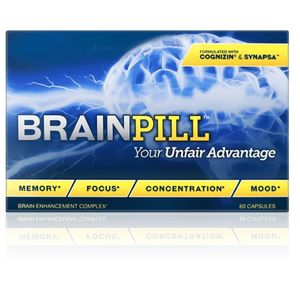
Brainpill
Product Type: Dietary Supplement
Primary Use: Memory, Focus & Cognitive Performance Support
Overall Rating: 4.9/5
Price: $69.95
Key Benefits
- Supports memory and recall
- Supports focus and concentration
- Supports mental performance under pressure
- Supports cognitive energy and productivity
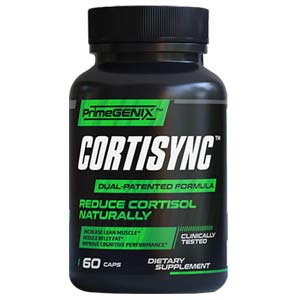
PrimeGENIX CortiSync
Product Type: Male Performance Spray
Primary Use: Cortisol, Stress & Adrenal Support
Overall Rating: 4.8/5
Price: $59.00
Key Benefits
- Supports healthy cortisol levels
- Supports stress management and resilience
- Supports energy and physical performance
- Supports focus and cognitive function
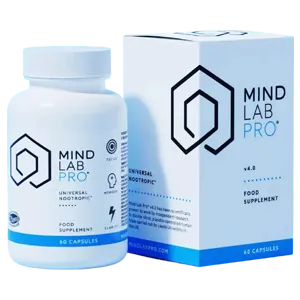
Mind Lab Pro
Product Type: Oil
Primary Use: Cognitive Performance Support
Overall Rating: 4.8/5
Price: $69.00
Key Benefits
- Supports focus and concentration
- Supports memory and recall
- Supports mental clarity and cognitive performance
- Supports mood, motivation and mental energy