
Introduction
Paragon Wellness FlexGuard is a dietary supplement marketed for joint comfort, mobility, flexibility, inflammation and cartilage support. The manufacturer positions it as an all-natural alternative for people dealing with joint discomfort, stiffness, arthritis-related pain, back pain and other mobility concerns.
The formula is built around several ingredients that have been studied individually, including Boswellia serrata, turmeric, ginger and collagen. However, the evidence for those ingredients should not be confused with clinical evidence for FlexGuard itself. I did not find a published randomized clinical trial testing the finished Paragon Wellness FlexGuard formula.
Quick Summary
| Product | Paragon Wellness FlexGuard |
|---|---|
| Category | Joint health dietary supplement |
| Primary Use | Joint comfort, mobility and flexibility support |
| Serving | 2 capsules daily |
| Supply | 60 capsules / 30 days |
| Key Ingredients | Ginger, Type II collagen, Boswellia, selenium, turmeric |
| Product-Specific RCT | None identified |
| Current Listed Price | $46.99 + $6.95 shipping for one bottle |
| Guarantee | 90-day money-back guarantee |
| Overall Assessment | Promising ingredients, limited finished-product evidence |
What Is Paragon Wellness FlexGuard?
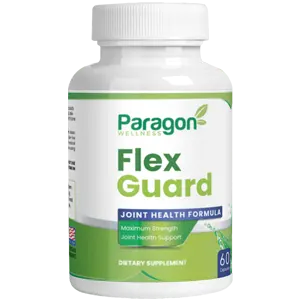 FlexGuard is a capsule-based joint supplement from Paragon Wellness. The official website says each bottle contains 60 capsules and recommends taking two capsules every morning with or without food.
The company claims FlexGuard can reduce joint pain and inflammation, improve mobility, support cartilage and help lubricate stiff joints. It also advertises results beginning within one week. These statements are manufacturer claims rather than evidence that the finished product has been clinically proven to produce those outcomes.
How Does FlexGuard Work?
The formula appears to use a combination of anti-inflammatory botanicals and structural-support nutrients.
Boswellia and turmeric are included primarily for their potential effects on inflammatory pathways and joint symptoms. Collagen is intended to provide nutritional support for cartilage and connective tissue, while ginger may contribute additional pain or inflammation support.
Selenium has an antioxidant role, but its inclusion does not mean that supplemental selenium has been established as a treatment for osteoarthritis.
FlexGuard Ingredients
| Ingredient | Why It Is Included | Evidence Assessment |
|---|---|---|
| Ginger Root Powder | Joint comfort and inflammation support | Mixed/limited evidence |
| Type II Collagen | Cartilage and joint structure support | Moderate evidence for collagen derivatives |
| Boswellia Serrata Extract | Joint pain, stiffness and mobility support | Promising evidence |
| Selenium | Antioxidant and nutritional support | Weak evidence for OA treatment |
| Turmeric Root Powder | Inflammation and joint comfort | Promising but formulation-dependent |
Important: The official FlexGuard sales page does not currently provide individual amounts for these ingredients. A 2026 secondary review identifies these five ingredients and a 60-capsule bottle, but the amounts should not be assumed without confirming the current physical label.
Boswellia Serrata
Boswellia is one of the stronger components of the formula from an evidence perspective. A meta-analysis of seven randomized trials involving 545 people found improvements in osteoarthritis pain, stiffness and physical function compared with controls.
A newer 2024 systematic review of nine randomized trials also found improvements in pain and WOMAC outcomes with Boswellia extracts, although the researchers noted that more comparative research is needed.
Boswellia for Osteoarthritis: Systematic Review and Meta-Analysis
Turmeric
Turmeric and curcumin have been studied extensively for knee osteoarthritis. A systematic review of 16 randomized trials involving 1,810 adults found that turmeric extracts reduced knee pain and improved physical function compared with placebo, although study heterogeneity was substantial.
A newer 2025 network meta-analysis also found that several turmeric preparations improved WOMAC pain, but the certainty of evidence remained low. This matters because turmeric powder is not necessarily equivalent to standardized, curcumin-rich or bioavailability-enhanced extracts used in clinical trials.
NCCIH similarly notes that early evidence for oral turmeric in osteoarthritis is positive but that higher-quality research is still needed.
Turmeric Extracts for Knee Osteoarthritis: Systematic Review
Type II Collagen
Collagen is another interesting ingredient. A 2024 trial-sequential meta-analysis included 35 randomized trials involving 3,165 patients and found small-to-moderate improvements in pain and function from collagen derivatives, with moderate-to-high certainty for the primary outcomes.
However, collagen products vary considerably by source, molecular form and dose. Without the amount and exact type of collagen disclosed on the current FlexGuard label, it is difficult to determine how closely the product matches the formulations used in clinical research.
Collagen Derivatives for Osteoarthritis: Trial-Sequential Meta-Analysis
Ginger
Ginger has some evidence for osteoarthritis symptoms, but the results are less consistent than those for Boswellia.
One meta-analysis of five randomized trials involving 593 patients found modest improvements in pain and disability, although participants taking ginger were more likely to discontinue treatment because of adverse events.
Another systematic review found the evidence insufficient to confidently support ginger for knee osteoarthritis pain and function.
Ginger for Osteoarthritis: Meta-Analysis of Randomized Trials
Selenium
Selenium is an essential trace mineral with antioxidant functions, but the evidence does not support presenting it as an established osteoarthritis treatment.
A systematic review of randomized trials found no convincing evidence that selenium supplementation was effective for arthritis.
More recent research has found associations between selenium levels and osteoarthritis, but observational associations do not establish that taking additional selenium treats joint disease.
What Does the Science Say About FlexGuard?
The overall evidence is best described as ingredient-level rather than product-level.
A 2025 network meta-analysis covering 39 randomized studies and 4,599 patients found that several nutritional supplements—including Boswellia, curcumin, ginger and collagen—showed benefits for some knee osteoarthritis outcomes. However, the researchers specifically called for better-designed trials and more standardized formulations.
Another 2025 systematic review found collagen among the better-ranked supplements for osteoarthritis pain and function, but the GRADE assessment still classified the overall evidence as low quality.
This is useful context for FlexGuard, but it does not establish that FlexGuard itself will produce the same results.
Potential Benefits
- Joint comfort: Boswellia and turmeric have clinical research supporting symptom improvement in some osteoarthritis studies.
- Mobility support: Boswellia and collagen have evidence involving physical function.
- Cartilage support: Collagen provides a reasonable nutritional rationale for connective-tissue support.
- Inflammation support: Turmeric and Boswellia have documented biological and clinical research related to inflammatory pathways.
- Simple dosing: The manufacturer recommends two capsules once daily.
Pros and Cons
Pros
- Contains several researched joint-health ingredients.
- Boswellia has relatively strong evidence for osteoarthritis symptoms.
- Turmeric and collagen also have human clinical research.
- 30-day supply with once-daily dosing.
- 90-day money-back guarantee.
- No subscription or automatic recurring billing according to the official page.
Cons
- No published clinical trial on the finished FlexGuard formula identified.
- Individual ingredient amounts are not displayed on the official sales page.
- Evidence for ginger and selenium is less convincing.
- Turmeric powder cannot automatically be equated with high-curcumin clinical formulations.
- Marketing claims about repairing damaged cartilage are stronger than the available product evidence.
FlexGuard vs. Other Joint Supplements
| Factor | FlexGuard | Typical Evidence-Based Joint Formula |
|---|---|---|
| Primary Focus | Joint comfort and mobility | Joint comfort and structural support |
| Boswellia | Yes | Often included |
| Turmeric | Yes | Commonly included |
| Collagen | Yes | Commonly included |
| Glucosamine/Chondroitin | Not listed | Common in many formulas |
| Individual Doses Publicly Listed | Not on current sales page | Varies by product |
| Finished-Product RCT | Not identified | Depends on brand |
Side Effects and Safety
FlexGuard contains several botanicals, so “natural” does not automatically mean risk-free.
Turmeric can cause nausea, reflux, stomach upset, diarrhea or constipation. NCCIH also reports liver injury with some highly bioavailable curcumin products.
Boswellia appears reasonably well tolerated in clinical research, although gastrointestinal effects can occur. NCCIH notes that Boswellia has been used safely in several clinical studies, but research remains limited.
Because turmeric, ginger and Boswellia may have effects relevant to blood clotting, anyone taking anticoagulant or antiplatelet medication should discuss the formula with a physician or pharmacist before use.
The manufacturer also advises people with medical conditions or those taking prescription medications to obtain medical approval before using FlexGuard. It says pregnant or nursing individuals and anyone under 18 should not take the product.
How to Take FlexGuard
The official instructions recommend two capsules each morning with or without food and 6–8 ounces of water. The website says each bottle contains 60 capsules, equivalent to a 30-day supply.
The manufacturer’s statement that users can expect results within one week is a marketing claim rather than a finding from a published FlexGuard clinical trial.
FlexGuard Pricing and Packages
The current official sales page lists the following offers:
| Package | Listed Price | Shipping |
|---|---|---|
| 1 Bottle | $46.99 | $6.95 |
| 3 Bottles | $34.99 each / $104.97 total | Free |
| 6 Bottles | $27.99 each / $167.99 total | Free |
The company states that these are one-time purchases with no automatic subscription billing. It also offers a 90-day money-back guarantee.
Customer Reviews
The official FlexGuard page displays several positive customer testimonials describing improvements in pain, flexibility and activity. These testimonials are useful for understanding the manufacturer’s reported customer experience, but they are not controlled clinical evidence.
There are also third-party reviews with mixed assessments. For an evidence-based evaluation, I would place considerably more weight on the clinical research than on either positive testimonials or isolated negative experiences.
Who Might Consider FlexGuard?
FlexGuard may appeal to adults looking for a nutritional supplement containing Boswellia, turmeric and collagen for general joint support.
It makes more sense as an adjunct to a broader joint-health strategy than as a replacement for diagnosis or treatment of arthritis.
Who Should Avoid It or Seek Medical Advice First?
- People taking blood-thinning or antiplatelet medication.
- People with a history of liver disease.
- People with significant gastrointestinal sensitivity or reflux.
- People taking multiple prescription medications.
- Pregnant or breastfeeding individuals.
- Anyone with severe, unexplained or rapidly worsening joint pain.
10 Frequently Asked Questions
1. What is Paragon Wellness FlexGuard?
FlexGuard is a dietary supplement marketed for joint comfort, flexibility, mobility and inflammation support.
2. What ingredients are in FlexGuard?
Available product information identifies ginger root powder, Type II collagen, Boswellia serrata extract, selenium and turmeric root powder. Individual amounts are not disclosed on the current official sales page.
3. Does FlexGuard contain glucosamine?
The current product information reviewed for this Paragon Wellness formula does not list glucosamine. A separate product using the FlexGuard name has a different formula, so the two should not be confused.
4. Does FlexGuard really relieve joint pain?
It may provide benefits for some people, but there is no identified clinical trial proving that the finished FlexGuard product relieves joint pain.
5. Does FlexGuard repair damaged cartilage?
The manufacturer claims that FlexGuard supports cartilage repair, but this is stronger than the available product-specific evidence. It should not be described as clinically proven to regenerate damaged cartilage.
6. How long does FlexGuard take to work?
The manufacturer promotes results within one week, but this timing has not been established by a published FlexGuard clinical trial.
7. How many capsules should be taken?
The official instructions recommend two capsules daily with 6–8 ounces of water.
8. Is FlexGuard FDA approved?
No. FlexGuard is marketed as a dietary supplement, and the website states that its claims have not been evaluated by the FDA.
9. Can FlexGuard be taken with prescription medication?
The manufacturer recommends consulting a physician if taking prescription medication or managing a medical condition. This is particularly important with medications that affect bleeding or blood pressure.
10. Is FlexGuard worth trying?
It has a reasonable ingredient concept, particularly because Boswellia, turmeric and collagen have human research behind them. The main weaknesses are the lack of a product-specific trial and incomplete dose transparency.
Final Verdict
Paragon Wellness FlexGuard has a plausible joint-support formula, but the finished product has not been clinically validated. Boswellia is the strongest part of the formula from an evidence perspective, while turmeric and collagen also have meaningful research supporting certain osteoarthritis outcomes. Ginger has mixed evidence, and selenium has little convincing evidence as an arthritis treatment.
The biggest issue is the gap between ingredient research and product claims. FlexGuard’s official website says it can reduce pain, improve mobility and help repair damaged cartilage, but I could not identify a randomized controlled trial showing that the complete FlexGuard formula produces those outcomes. The absence of published ingredient amounts on the current sales page also makes it difficult to compare the formula with doses used in clinical research.
Editorial Rating: 3.6/5
I would consider FlexGuard a reasonable option for someone specifically interested in a botanical/collagen joint supplement, but I would not describe it as a clinically proven treatment for arthritis, cartilage damage, sciatica or chronic pain. Persistent or severe joint symptoms should be medically evaluated rather than managed exclusively with a supplement.
Our Top Joint Health & Bone Strength Products
We evaluated these products based on key factors relevant to their intended use. Our editorial ratings consider ingredient transparency, available scientific evidence, formulation quality, safety considerations, value, and other product-specific factors.
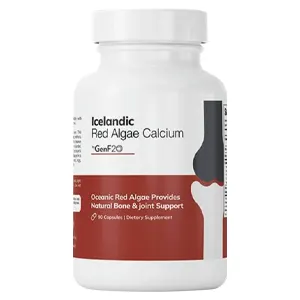
Red Algae Calcium
Product Type: Dietary Supplement
Primary Use: Bone Strength & Joint Mobility Support
Overall Rating: 4.9/5
Price: $59.95
Key Benefits
- Supports bone strength and mineral density
- Supports joint flexibility and mobility
- Provides calcium, magnesium, vitamin D3 and vitamin K2
- Supports healthy inflammatory balance
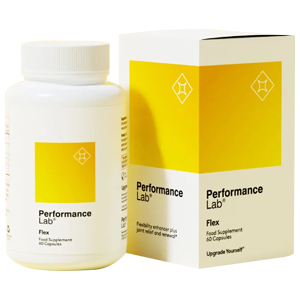
Performancelab Flex
Product Type: Dietary Supplement
Primary Use: Joint Health, Mobility & Flexibility Support
Overall Rating: 4.8/5
Price: $49.00
Key Benefits
- Supports comfortable joint movement
- Supports whole-body flexibility
- Supports healthy cartilage and connective tissues
- Supports joint lubrication and mobility
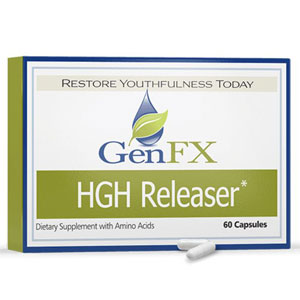
LeanBliss
Product Type: Dietary Supplement
Primary Use: Healthy Aging, Energy & Vitality Support
Overall Rating: 4.8/5
Price: $49.95
Key Benefits
- Supports energy and vitality
- Supports lean muscle mass
- Supports healthy body composition
- Supports memory and cognitive function