
Introduction
The liver helps process nutrients, metabolize medications, and remove waste products from the body. When liver health becomes a concern, supplements marketed for detoxification and metabolic support can seem appealing. Akka, sold by Enclave BioActives, is a dietary supplement marketed for liver health, digestive wellness, and metabolic support.
The formula combines pasteurized Akkermansia muciniphila with milk thistle extract, artichoke leaf extract, quercetin, and resveratrol. Some of these ingredients have been investigated in human studies, but the evidence varies considerably.
My verdict upfront: Akka contains ingredients worth examining, particularly silymarin and pasteurized Akkermansia. However, evidence does not establish that the finished supplement detoxifies the liver, reverses liver damage, or reliably produces weight loss. The product page also contains inconsistent ingredient descriptions, so verifying the exact Supplement Facts label is essential.
Quick Summary Box
| Feature | Details |
|---|---|
| Product name | Akka Superbiotic |
| Brand | Enclave BioActives |
| Product type | Dietary supplement |
| Primary purpose | Marketed for liver, gut, and metabolic health |
| Highlighted ingredients | Akkermansia muciniphila, milk thistle, artichoke, quercetin, resveratrol |
| Suggested use | Two capsules daily, according to the product page |
| One-time price | $59 for one bottle; discounts available for larger packages |
| Money-back guarantee | Advertised 90-day guarantee; confirm the applicable terms |
| Scientific evidence | Some promising ingredient research, but limited evidence for the finished formula |
| Overall assessment | Consider cautiously; do not use as a substitute for liver disease treatment |
What Is Akka?
Akka is a supplement marketed as a next-generation probiotic or “superbiotic” designed to support the gut microbiome and liver health. Enclave BioActives promotes it as a way to support digestion, metabolic wellness, and healthy liver function.
The official website highlights pasteurized Akkermansia muciniphila, silymarin, resveratrol, quercetin, and artichoke leaf extract. A linked product page lists a Supplement Facts panel with the following amounts per two-capsule serving:
| Ingredient | Listed amount |
|---|---|
| Milk thistle extract, standardized to 80% silymarin | 400 mg |
| Artichoke leaf extract | 300 mg |
| Quercetin dihydrate | 250 mg |
| Resveratrol | 150 mg |
| Akkermansia muciniphila AH39 | 30 mg, listed as 3 billion TFU |
These amounts appear on the linked Akka product label. Because the main Enclave BioActives page contains inconsistent ingredient descriptions in some sections, buyers should confirm that the label on the bottle being purchased matches this formula.
Akka is a dietary supplement, not an FDA-approved treatment for fatty liver disease, hepatitis, cirrhosis, or other liver conditions.
How Does Akka Work?
Akka combines a pasteurized gut-associated bacterium with plant-derived compounds studied for antioxidant and metabolic effects.
Akkermansia muciniphila is a bacterium found naturally in the human intestinal microbiome. Researchers have investigated its relationship with the intestinal barrier, insulin sensitivity, and metabolic health. Pasteurized Akkermansia has also been studied in human clinical research.
Milk thistle provides silymarin, a mixture of compounds investigated for liver-related outcomes. Artichoke extract, quercetin, and resveratrol have also been studied for effects on liver enzymes, inflammation, or metabolic markers.
However, the biological activity of an ingredient does not establish that the complete Akka formula improves liver function. Claims about removing toxins, clearing bile ducts, reversing scar tissue, or regenerating damaged liver cells require direct clinical evidence.
The National Institute of Diabetes and Digestive and Kidney Diseases provides information about liver diseases, their causes, and appropriate medical care.
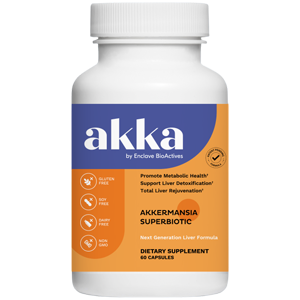
- 1 Bottle : $50.15
- 3 Bottles : $124.95
- 6 Bottles : $198.90
Akka Key Ingredients
1. Akkermansia muciniphila
Akkermansia muciniphila is a bacterium associated with the intestinal mucus layer. Scientists have investigated whether supplementation can influence metabolic health and the intestinal barrier.
A landmark randomized, double-blind, placebo-controlled pilot study examined pasteurized Akkermansia in adults with overweight or obesity and insulin resistance. The researchers reported improvements in selected metabolic measures, including insulin sensitivity, after supplementation. However, the study was small and did not establish that Akkermansia treats liver disease.
Study: Pasteurized Akkermansia and metabolic health research — PubMed.
The findings are promising but preliminary. They do not prove that Akka reverses fatty liver, promotes substantial weight loss, or acts like a prescription GLP-1 medication.
2. Milk thistle extract (silymarin)
Silymarin is a mixture of compounds extracted from milk thistle. Researchers have investigated it for potential effects on liver enzymes and metabolic dysfunction-associated steatotic liver disease (MASLD), previously called nonalcoholic fatty liver disease.
A 2021 systematic review and meta-analysis of eight randomized clinical trials reported reductions in certain liver enzyme levels among participants receiving silymarin. However, the researchers cautioned that study quality and the relationship between enzyme changes and actual liver improvement remain important limitations.
Study: Silymarin in nonalcoholic fatty liver disease — PubMed.
Lower liver enzyme levels do not automatically prove that liver scarring has reversed or that a supplement prevents complications.
3. Artichoke leaf extract
Artichoke leaf extract has been studied for digestive and metabolic outcomes. A systematic review and meta-analysis published in 2022 examined five randomized trials involving 333 participants with fatty liver disease. The analysis reported improvements in certain liver enzyme and lipid measurements.
However, these findings relate to the studied preparations and doses. They do not establish that Akka delivers the same results or reverses liver disease.
Study: Artichoke extract and fatty liver disease — PubMed.
4. Quercetin
Quercetin is a plant flavonoid with antioxidant properties. In a 2024 randomized, double-blind, placebo-controlled crossover trial, researchers studied quercetin supplementation in people with fatty liver disease and reported a reduction in measured liver fat during the intervention.
The trial was relatively small and tested a specific quercetin dose. Akka’s listed amount is 250 mg per serving, so the study cannot be assumed to establish the effectiveness of the product’s complete formula.
Study: Quercetin and hepatic fat deposition — PubMed.
5. Resveratrol
Resveratrol is a polyphenol found in grapes and other plant foods. It has been investigated for antioxidant, inflammatory, and metabolic effects.
However, systematic reviews of clinical trials in people with fatty liver disease have produced inconsistent findings. One meta-analysis concluded that available evidence was insufficient to support resveratrol as an effective treatment for the condition.
Study: Resveratrol supplementation and fatty liver disease — PubMed.
Ingredient verdict: Akka’s ingredients have plausible biological roles and some encouraging research. Nevertheless, evidence remains insufficient to conclude that the finished product rejuvenates the liver, eliminates toxins, or produces reliable weight loss.
Akka Benefits
The manufacturer promotes several potential benefits. These should be understood as intended uses rather than established outcomes.
- Support gut microbiome research goals: Provide pasteurized Akkermansia, an organism being investigated for its relationship with intestinal and metabolic health.
- Complement liver-health routines: Offer plant-derived compounds that have been studied for selected liver-related biomarkers.
- Support antioxidant intake: Include quercetin and resveratrol, which have antioxidant properties.
- Encourage digestive wellness: Provide a supplement option for adults interested in gut health, while recognizing that digestive benefits are not guaranteed.
- Promote informed health decisions: Encourage discussion of liver health, metabolic risk factors, and supplement safety with a healthcare professional.
There is insufficient evidence to claim that Akka reverses liver scarring, clears bile ducts, detoxifies the bloodstream, or causes a specific amount of weight loss.
Akka Pros and Cons
| Pros | Cons |
|---|---|
| Combines Akkermansia with several researched plant compounds | No verified clinical trial of the complete Akka formula identified |
| Some ingredients have been investigated in human studies | Research findings do not establish liver regeneration or detoxification claims |
| Provides a listed serving size and ingredient amounts on a linked product page | Ingredient descriptions on the main product page are inconsistent |
| Offers single- and multi-bottle purchasing options | Bulk purchases require greater upfront spending |
| Advertises a 90-day money-back guarantee | Refund eligibility and conditions should be checked before ordering |
Comparison Table: Akka vs. Alternatives
| Option | Primary purpose | Evidence considerations |
|---|---|---|
| Akka | Marketed for gut, liver, and metabolic health | Finished-product effectiveness remains unverified |
| Milk thistle extract | Investigated for liver-related outcomes | Some liver enzyme findings are encouraging, but clinical benefits remain uncertain |
| Artichoke leaf extract | Investigated for liver enzymes and lipid markers | Promising small-trial evidence; not a proven liver-disease treatment |
| Pasteurized Akkermansia | Investigated for gut and metabolic health | Early human research is promising but limited |
| Clinician-guided liver care | Identify and manage liver conditions | Supports diagnosis, appropriate monitoring, and evidence-based treatment |
Customer Reviews
The Akka product page displays customer testimonials and reports 271 reviews. Some seller-published testimonials describe improved digestion, reduced bloating, increased energy, and changes in weight or laboratory results.
These accounts are anecdotal. I could not independently verify the reviewers’ medical records, laboratory results, or whether the supplement caused the reported changes. People may also change their diet, activity levels, or other supplements during the same period.
Customer feedback can help assess convenience and satisfaction, but it cannot establish that Akka treats fatty liver disease or regenerates liver cells. Laboratory findings should be interpreted by a qualified healthcare professional.
Who Should Use or Avoid Akka?
Who might consider it?
- Adults interested in researching gut and metabolic health supplements.
- People who have checked the complete ingredient label and discussed potential interactions with a healthcare professional.
- Consumers who understand that the product’s liver-related benefits remain uncertain.
Who should seek medical advice before use?
- People with diagnosed liver disease, abnormal liver enzymes, or unexplained abdominal symptoms.
- Anyone taking prescription medication, particularly drugs that may interact with botanical extracts.
- People with allergies or sensitivities to any listed ingredient.
- Pregnant or breastfeeding individuals, because safety data may be insufficient.
- Anyone considering Akka as a replacement for prescribed liver or metabolic treatment.
Side Effects and Safety
The safety of the complete Akka formula has not been established through large product-specific clinical trials. Individual ingredients may cause adverse effects or interact with medication.
Milk thistle can cause digestive symptoms or allergic reactions, particularly in people sensitive to plants in the same botanical family. Quercetin and resveratrol may interact with certain medications, while artichoke extracts may be unsuitable for people with particular bile duct conditions.
Pasteurized Akkermansia differs from a live probiotic, but that does not establish that every formulation is free from side effects or suitable for long-term use. Product quality and manufacturing controls also matter.
The FDA does not approve dietary supplements for safety and effectiveness before marketing in the same way it approves prescription drugs. Claims about FDA registration or manufacturing standards should not be confused with FDA approval of Akka.
People with suspected liver disease should seek medical evaluation rather than attempting to detoxify the liver with supplements. The NIDDK liver disease resource provides information on symptoms, diagnosis, and treatment.
Pricing and Packages
The official Akka sales page advertises these one-time purchase options:
| Package | Listed total | Approximate price per bottle |
|---|---|---|
| 1 bottle | $59 | $59 |
| 3 bottles | $147 | $49 |
| 6 bottles | $234 | $39 |
The seller also advertises subscription discounts and a 90-day money-back guarantee. Prices and terms can change, so verify the checkout total, shipping costs, subscription frequency, cancellation process, and refund conditions before ordering.
The lowest per-bottle price requires the largest initial purchase. Since the clinical benefits of Akka remain uncertain, buying several months’ supply upfront may not be the most prudent option for someone trying the formula for the first time.
Frequently Asked Questions
1. What is Akka used for?
Akka is marketed as a dietary supplement for liver, gut, and metabolic health. Its effectiveness for liver rejuvenation or detoxification has not been established in a verified clinical trial of the complete formula.
2. Does Akka really detoxify the liver?
There is insufficient evidence to establish that Akka detoxifies the liver or removes harmful substances from the body. The liver already performs essential processing and waste-removal functions.
3. What are the main ingredients in Akka?
The linked product label lists Akkermansia muciniphila, milk thistle extract, artichoke leaf extract, quercetin, and resveratrol. Verify that the label matches the product being purchased.
4. Can Akka reverse fatty liver disease?
No verified evidence establishes that Akka reverses fatty liver disease. Some individual ingredients have been studied, but that does not prove the complete supplement improves liver structure or prevents complications.
5. Does Akka help with weight loss?
The manufacturer promotes metabolic and weight-management benefits, but reliable product-specific evidence is lacking. Weight changes cannot be predicted from the ingredient list alone.
6. How many capsules should be taken daily?
The product page recommends two capsules daily with water, preferably before a meal. Follow the label on the actual bottle and consult a healthcare professional if needed.
7. Are there side effects?
Potential side effects depend on the formula, dosage, and individual health conditions. Botanical extracts can cause digestive symptoms, allergic reactions, or medication interactions.
8. Is Akka FDA-approved?
No. Akka is marketed as a dietary supplement, not an FDA-approved treatment for liver disease.
9. How much does Akka cost?
The official sales page lists one bottle for $59, three bottles for $147, and six bottles for $234. Confirm the current offer and shipping charges at checkout.
10. Is Akka worth buying?
Akka may interest adults researching gut and liver wellness, but the lack of verified product-specific clinical evidence limits confidence in its benefits. Check the full label, compare the cost, and discuss safety with a healthcare professional before purchasing.
Final Verdict: Is Akka Worth Considering?
Akka combines pasteurized Akkermansia with milk thistle, artichoke leaf extract, quercetin, and resveratrol. Some ingredients have promising research involving metabolic markers or liver-related outcomes, but the strength of the evidence varies.
The available research does not establish that Akka detoxifies the body, regenerates damaged liver tissue, reverses liver scarring, or produces reliable weight loss. The inconsistent ingredient descriptions on the seller’s main page also make label verification particularly important.
My verdict: Akka is a supplement worth researching cautiously, not a proven liver-rejuvenation treatment. Before purchasing, confirm the exact Supplement Facts panel, review the return terms, and discuss potential interactions with a healthcare professional. Anyone with abnormal liver tests or diagnosed liver disease should prioritize appropriate medical evaluation and evidence-based care.