
Introduction
ProtaFlo is a multi-ingredient dietary supplement marketed for prostate health, urinary function, and nighttime urinary comfort. The current formula combines pumpkin seed, turmeric extract, beta-sitosterol, stinging nettle, lycopene, vitamins D3 and K2, zinc, selenium, black walnut, and a five-strain probiotic blend. (protaflo.com)
The formula is broader than many prostate supplements because it combines traditional prostate ingredients with vitamins, antioxidants, and probiotics. Several individual ingredients have human research related to benign prostatic hyperplasia (BPH) and lower urinary tract symptoms (LUTS), but I did not identify a published randomized controlled trial testing ProtaFlo as a complete formula.
Quick Summary Box
| Product | ProtaFlo |
|---|---|
| Product Type | Men’s prostate and urinary health dietary supplement |
| Primary Use | Prostate, bladder, and urinary support |
| Serving Size | 2 capsules |
| Servings | 30 per container |
| Key Ingredients | Pumpkin seed, turmeric, beta-sitosterol, stinging nettle, lycopene, probiotics, vitamin D3/K2 |
| Product-Specific Clinical Trial | None identified |
| Current Customer Rating | 3.5/5 from 196 reviews on the product page |
| Money-Back Guarantee | 90 days |
| Manufacturing Claims | U.S.-made and GMP-focused quality standards claimed by manufacturer |
What Is Protaflo?
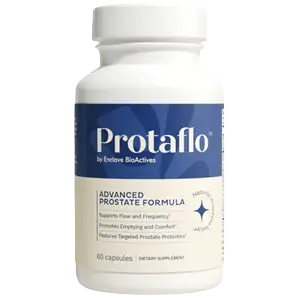 ProtaFlo is a two-capsule-per-day supplement designed around a broad prostate-health formula. The current Supplement Facts panel lists 320 mg pumpkin seed, 200 mg turmeric extract standardized to 95% curcuminoids, 130 mg beta-sitosterol complex standardized to 40% beta-sitosterol, 100 mg black walnut hull, 100 mg nettle leaf, 15 mg lycopene, and a 5-strain probiotic blend providing 6 billion CFU per serving. (protaflo.com)
The formula also provides 50 mcg vitamin D3, 15 mcg zinc, 200 mcg selenium, 100 mcg vitamin K2, and 5 mg BioPerine black pepper extract standardized to 95% piperine. (protaflo.com)
One formulation detail deserves attention: the main product page lists nettle leaf, while ProtaFlo’s ingredient-marketing page refers to stinging nettle root. Because the root and leaf are different plant materials, the current Supplement Facts panel should take priority when describing the actual labeled formula. (protaflo.com)
How It Works
ProtaFlo uses several different approaches rather than relying on one prostate ingredient.
Beta-sitosterol, pumpkin seed, and stinging nettle have been investigated for urinary symptoms associated with BPH. Curcumin and lycopene have been studied for inflammatory and oxidative pathways relevant to prostate health. The probiotic component is based on emerging research linking the gut and urinary microbiome with prostate conditions.
The microbiome theory is interesting but still developing. A recent systematic review found associations between gut microbiota changes and BPH, while emphasizing that more research is needed to establish how microbiome-targeted interventions should be used clinically. (pubmed.ncbi.nlm.nih.gov)
Protaflo Key Ingredients
Pumpkin Seed – 320 mg
Pumpkin seed is one of the better-known botanical ingredients for prostate support. The one-year GRANU randomized trial included 1,431 men with BPH/LUTS and compared pumpkin seed, pumpkin seed extract, and placebo. Whole pumpkin seed produced a descriptively higher response rate than placebo, while the pumpkin seed extract did not differ from placebo on the primary response measure. (pubmed.ncbi.nlm.nih.gov)
This is useful evidence, but the study used 5 g of pumpkin seed twice daily or 500 mg pumpkin seed extract twice daily. ProtaFlo’s 320 mg dose cannot automatically be assumed to produce the same outcome.
Study: PubMed – One-year randomized pumpkin seed study
Turmeric Extract – 200 mg
ProtaFlo provides 200 mg turmeric root extract standardized to 95% curcuminoids. (protaflo.com)
Curcumin has increasingly been studied in men with BPH. A 2023 double-blind randomized placebo-controlled trial involving 52 men found that a specific nano-micellar curcumin formulation improved IPSS compared with placebo. (pubmed.ncbi.nlm.nih.gov)
A 2026 systematic review and meta-analysis of six comparative studies involving 697 patients also reported improvements in IPSS, PSA, prostate volume, residual urine, and maximum urinary flow with curcumin. However, the formulations and clinical settings differed across studies. (pubmed.ncbi.nlm.nih.gov)
Study: PubMed – Randomized curcumin trial in BPH
Additional study: PubMed – Curcumin systematic review and meta-analysis
Beta-Sitosterol Complex – 130 mg
ProtaFlo provides 130 mg of a beta-sitosterol complex standardized to 40% beta-sitosterol. That means the labeled complex supplies approximately 52 mg beta-sitosterol, assuming the stated 40% standardization applies to the full 130 mg. (protaflo.com)
Beta-sitosterol has some of the strongest evidence among ProtaFlo’s botanical ingredients. A systematic review of four randomized trials involving 519 men found improvements in urinary symptom scores and urinary flow compared with placebo. However, the trials were short and did not show prostate-size reduction. (pubmed.ncbi.nlm.nih.gov)
Study: PubMed – Beta-sitosterol systematic review for BPH
Stinging Nettle – 100 mg
The Supplement Facts panel lists nettle leaf at 100 mg. (protaflo.com)
Stinging nettle has some clinical evidence for BPH symptoms, although much of the research involves root extract rather than leaf. A 12-month randomized, double-blind, placebo-controlled trial involving 246 men found that a 459 mg dry stinging nettle root extract improved IPSS compared with placebo. (pubmed.ncbi.nlm.nih.gov)
That difference in plant part matters. Evidence for nettle root should not automatically be presented as evidence for the 100 mg nettle leaf used in the current ProtaFlo label.
Study: PubMed – Stinging nettle root randomized trial
Lycopene – 15 mg
ProtaFlo provides 15 mg lycopene per serving. (protaflo.com)
A small randomized study in men with BPH reported that 15 mg/day lycopene for six months was associated with lower PSA and less prostate enlargement compared with placebo. (pubmed.ncbi.nlm.nih.gov)
However, a systematic review of randomized trials concluded that the evidence was too limited and heterogeneous to support or refute lycopene for BPH treatment or prevention. NCCIH likewise says there is insufficient evidence to support lycopene for BPH. (pubmed.ncbi.nlm.nih.gov)
Study: PubMed – Lycopene pilot study in BPH
Systematic review: PubMed – Lycopene systematic review
Probiotic Blend – 6 Billion CFU
ProtaFlo contains five probiotic strains: Lactobacillus paracasei, Limosilactobacillus reuteri, Lactobacillus rhamnosus, Bifidobacterium longum, and Saccharomyces boulardii. (protaflo.com)
The company describes this blend as a way to restore the prostate microbiome. However, current research is still preliminary. A 2024 narrative review found potentially relevant links between urinary microbiota and LUTS/BPH but emphasized that evidence for probiotic supplementation remains scarce and additional prospective trials are needed. (pubmed.ncbi.nlm.nih.gov)
Study: PubMed – Urinary microbiome and probiotics in BPH
Vitamin D3, Vitamin K2, Zinc & Selenium
These nutrients support normal physiological functions, but their presence should not automatically be interpreted as proof that they improve urinary symptoms.
ProtaFlo provides 50 mcg vitamin D3, 15 mcg zinc, 200 mcg selenium, and 100 mcg vitamin K2 per serving. (protaflo.com)
The current evidence does not establish this particular combination as a treatment for BPH.
Black Walnut – 100 mg
Black walnut hull powder is included at 100 mg. The company describes it as an antimicrobial ingredient intended to address microbial stressors. (protaflo.com)
However, the clinical evidence supporting oral black walnut hull specifically for BPH or urinary symptoms is limited. Laboratory antimicrobial activity should not be treated as proof that the ingredient eliminates prostate pathogens in humans.
Protaflo Benefits
Based on the formula and available research, ProtaFlo may:
- Support normal urinary function through ingredients studied for BPH-related symptoms.
- Promote prostate wellness with pumpkin seed, beta-sitosterol, nettle, and lycopene.
- Support healthy inflammatory pathways through curcumin.
- Provide antioxidant nutrients including lycopene and selenium.
- Explore microbiome-related prostate support through its multi-strain probiotic blend.
These are potential benefits based on formulation and ingredient research. They do not establish ProtaFlo as a treatment for BPH, prostatitis, prostate cancer, or urinary disease.
Protaflo Pros & Cons
Pros
- Broad formula containing several prostate-focused ingredients.
- Individual ingredient amounts are disclosed.
- Contains beta-sitosterol, pumpkin seed, curcumin, and nettle.
- Includes a five-strain probiotic blend.
- Two capsules daily.
- Current product page provides a 90-day money-back guarantee.
Cons
- No identified clinical trial testing the complete ProtaFlo formula.
- Some evidence uses different doses or plant parts than the current product.
- Prostate-microbiome claims are ahead of the available clinical evidence.
- Lycopene evidence for BPH remains insufficient according to NCCIH.
- Black walnut has limited clinical evidence for prostate health.
- Customer feedback is mixed, particularly on independent review platforms.
Comparison Table With Alternatives
| Product/Approach | Main Ingredients | Evidence Profile | Format |
|---|---|---|---|
| ProtaFlo | Pumpkin seed, curcumin, beta-sitosterol, nettle, lycopene, probiotics | Ingredient-level evidence; no product-specific RCT identified | 2 capsules/day |
| Beta-Sitosterol | Beta-sitosterol | Randomized trials support some urinary symptom and flow improvements | Capsules |
| Pumpkin Seed | Pumpkin seed/seed oil | Several human trials, with mixed results depending on preparation | Capsules/oil |
| Saw Palmetto | Serenoa repens | Current NCCIH assessment: little or no benefit alone for BPH symptoms | Softgels/capsules |
| Prescription BPH Treatment | Alpha blockers/5-alpha-reductase inhibitors | Established medical treatment requiring appropriate diagnosis | Prescription |
The key distinction is that ProtaFlo combines many ingredients, while single-ingredient options can make it easier to compare the actual dose with clinical studies.
For men with diagnosed BPH, prescription treatments also have substantially more established clinical evidence than dietary supplements. NCCIH notes that BPH treatment can include lifestyle changes, medications, minimally invasive procedures, or surgery depending on the situation. (nccih.nih.gov)
Customer Reviews
The current ProtaFlo product page shows an overall rating of 3.5/5 from 196 reviews. Recent on-site reviews include both positive reports of fewer nighttime bathroom visits and complaints that symptoms did not improve. (protaflo.com)
Independent Trustpilot feedback is considerably more mixed. The current Trustpilot page shows a 2.4/5 score from 59 reviews, with many one-star reviews. Complaints frequently mention subscriptions, refunds, customer service, and lack of noticeable results. Other reviewers report improvements in urinary frequency and nighttime bathroom trips. (trustpilot.com)
These experiences are useful for understanding customer satisfaction, but testimonials cannot establish clinical effectiveness.
Who Should Use Protaflo?
ProtaFlo may be of interest to adult men who:
- Want a broad botanical and nutritional prostate supplement.
- Prefer a two-capsule daily formula.
- Are interested in ingredients such as beta-sitosterol, pumpkin seed, and curcumin.
- Want a formula that also includes probiotics and antioxidant nutrients.
It is most appropriate to consider it as general prostate and urinary support, not as a replacement for medical evaluation.
Who Should Avoid or Discuss It With a Clinician?
Medical advice is particularly important for men experiencing:
- Blood in the urine.
- Inability or severe difficulty urinating.
- Recurrent urinary infections.
- Significant pelvic or urinary pain.
- Rapidly worsening urinary symptoms.
- Unexplained changes in PSA.
- A known prostate condition or cancer.
Anyone taking prescription medications should also review the full formula with a physician or pharmacist before starting it.
Side Effects & Safety
The complete ProtaFlo formula has not been tested in a dedicated clinical safety trial, so its combined safety profile cannot be established from the available evidence.
Potential considerations include:
Curcumin: Oral turmeric/curcumin can cause gastrointestinal symptoms, and some highly bioavailable formulations have been associated with liver injury.
Probiotics: Probiotics can cause temporary gas or digestive discomfort. People who are severely immunocompromised should discuss probiotic use with a healthcare professional.
Black walnut: Black walnut preparations can cause allergic reactions, particularly in people with tree-nut allergies. The current product specifically states that it contains tree nuts because of walnut. (protaflo.com)
Vitamin D: ProtaFlo provides 50 mcg (2,000 IU) vitamin D3 per serving. Total intake from other supplements should be considered.
Selenium: The formula contains 200 mcg selenium, which is a substantial amount relative to the adult recommended intake of 55 mcg. The NIH Office of Dietary Supplements lists 400 mcg/day as the adult upper limit from all sources.
Medication interactions: Men taking prescription medications should check the entire ingredient list with a healthcare professional before use.
Does Protaflo Really Restore the Prostate Microbiome?
This is one of ProtaFlo’s most distinctive claims, but it needs careful qualification.
The company says its probiotic blend can “restore” the prostate microbiome and describes microbial imbalance as an important driver of prostate dysfunction. (protaflo.com)
Scientific research does support an association between microbiome changes and BPH. A 2026 systematic review identified clinical and preclinical evidence connecting gut microbiota changes with BPH. However, the authors emphasized that the specific microbiome characteristics and mechanisms are not yet fully established. (pubmed.ncbi.nlm.nih.gov)
A separate 2024 review concluded that probiotic supplementation for LUTS/BPH is promising but that clinical evidence remains scarce and further prospective trials are needed. (pubmed.ncbi.nlm.nih.gov)
Therefore, it is reasonable to describe the probiotic component as an emerging research area. It would not be accurate to state that ProtaFlo has been proven to restore the prostate microbiome or eliminate prostate pathogens.
Pricing & Packages
The current ProtaFlo website prominently promotes multi-bottle purchasing and a 90-day guarantee, but the product page content available for verification did not expose a stable current dollar price for every package. Because pricing can change with promotions and subscription offers, the checkout price should be treated as the current reference rather than relying on older advertised prices. (protaflo.com)
The company currently markets the product in multi-bottle packages and states that a 90-day money-back guarantee applies. (protaflo.com)
10 Frequently Asked Questions
1. What is ProtaFlo?
ProtaFlo is a dietary supplement designed to support prostate and urinary health. Its current formula combines botanical extracts, vitamins, minerals, lycopene, and probiotics.
2. What ingredients are in ProtaFlo?
The current formula contains pumpkin seed, turmeric extract, beta-sitosterol, black walnut, nettle, lycopene, vitamins D3 and K2, zinc, selenium, BioPerine, and a five-strain probiotic blend. (protaflo.com)
3. How many ProtaFlo capsules should be taken daily?
The current product page recommends two capsules daily, preferably with food. (protaflo.com)
4. Can ProtaFlo reduce nighttime urination?
Some ProtaFlo ingredients have been studied for lower urinary tract symptoms, including nocturia. However, no identified randomized clinical trial demonstrates that the complete ProtaFlo formula reduces nighttime urination.
5. Does ProtaFlo shrink the prostate?
There is no product-specific clinical evidence showing that ProtaFlo shrinks the prostate. Beta-sitosterol research, for example, found improvements in urinary symptoms and flow but not prostate size. (pubmed.ncbi.nlm.nih.gov)
6. Does ProtaFlo contain beta-sitosterol?
Yes. The current label provides 130 mg of a beta-sitosterol complex standardized to 40% beta-sitosterol. (protaflo.com)
7. Does ProtaFlo contain saw palmetto?
No. Saw palmetto is not listed in the current ProtaFlo Supplement Facts panel. (protaflo.com)
8. Can ProtaFlo replace tamsulosin or finasteride?
There is no evidence establishing ProtaFlo as a replacement for prescription BPH medications. Prescription medication should only be changed under the direction of the prescribing healthcare professional.
9. Is ProtaFlo FDA approved?
No. ProtaFlo is marketed as a dietary supplement, and dietary supplements are not FDA-approved for effectiveness before they are sold. This differs from FDA approval of prescription drugs for specific medical indications.
10. How long does ProtaFlo take to work?
There is no clinically established timeline for the complete ProtaFlo formula. Individual studies of ingredients have used treatment periods ranging from weeks to months, but those results cannot be used to guarantee when ProtaFlo will produce an effect.
Final Verdict
ProtaFlo has a comprehensive formula that combines several ingredients with relevant prostate research, particularly beta-sitosterol, pumpkin seed, curcumin, and stinging nettle. Beta-sitosterol has randomized-trial evidence for improving some urinary symptoms and flow measures, while pumpkin seed and curcumin have also produced promising findings in selected clinical studies. (pubmed.ncbi.nlm.nih.gov)
The formula’s probiotic approach is more experimental. Research increasingly suggests that the gut and urinary microbiome may be associated with BPH, but current evidence does not establish that a supplement such as ProtaFlo can “restore” the prostate microbiome or eliminate the microbial causes of prostate dysfunction. (pubmed.ncbi.nlm.nih.gov)
There are also important formulation differences between the product and the studies behind individual ingredients. For example, the current ProtaFlo label uses 100 mg nettle leaf, while a notable BPH trial used 459 mg of nettle root extract. Similarly, the pumpkin-seed research used substantially different preparations and doses.
Customer feedback is mixed: ProtaFlo’s own product page currently shows 3.5/5 from 196 reviews, while Trustpilot currently shows 2.4/5 from 59 reviews. (protaflo.com) (trustpilot.com)
Overall, ProtaFlo is best characterized as a multi-ingredient prostate and urinary-support supplement with several scientifically relevant ingredients. The ingredient research is more convincing than the evidence for the finished product, and claims about microbiome restoration should be treated as preliminary rather than clinically established.