
RxZell Sleep Aid Review: Can It Really Help You Fall Asleep Faster?
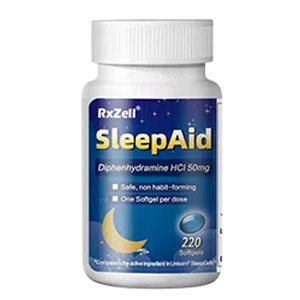
RxZell Sleep Aid is an over-the-counter nighttime sleep aid containing 50 mg of diphenhydramine hydrochloride per softgel. Unlike many modern sleep supplements that use melatonin, magnesium, or herbal extracts, RxZell relies on a first-generation antihistamine with sedating effects. The product page reviewed for RxZell states that adults and children over 12 can take one softgel at bedtime.
My assessment is mixed. Diphenhydramine can make some people sleepy and has clinical evidence showing short-term effects on sleep onset. However, the evidence does not support using it as a long-term solution for chronic insomnia. In fact, the American Academy of Sleep Medicine guideline suggests that clinicians should not use diphenhydramine for sleep-onset or sleep-maintenance insomnia in adults, based on trials using 50 mg doses.
There is another important distinction: RxZell is better classified as an OTC drug/sleep aid rather than a dietary supplement. Its active ingredient, diphenhydramine, is a medication with established pharmacological effects and precautions.
Quick RxZell Sleep Aid Review Summary
| Category | Assessment |
|---|---|
| Product type | OTC nighttime sleep aid |
| Active ingredient | Diphenhydramine HCl |
| Amount per softgel | 50 mg |
| Container size | 220 softgels |
| Recommended serving | 1 softgel at bedtime if needed |
| Primary purpose | Relief of occasional sleeplessness |
| How it works | First-generation antihistamine with sedating and anticholinergic effects |
| Evidence for short-term sleepiness | Supported |
| Evidence for chronic insomnia | Insufficient; major sleep guideline recommends against it |
| Long-term nightly use | Not recommended without medical guidance |
| Older adults | Particular caution; diphenhydramine is listed as potentially inappropriate |
| Overall assessment | Potentially useful for occasional sleeplessness, but not a good long-term insomnia strategy |
What Is RxZell Sleep Aid?
RxZell Sleep Aid is a softgel product containing 50 mg of diphenhydramine hydrochloride. The reviewed product listing identifies 220 softgels per bottle and recommends one softgel at bedtime for adults and children 12 years and older.
Diphenhydramine is an antihistamine. It blocks histamine H1 receptors and readily enters the brain, where its central effects can produce drowsiness. It also has anticholinergic activity, which contributes to some of its adverse effects.
This is important because RxZell’s sleep effect is not coming from a nutritional ingredient designed to “support” the natural sleep cycle. It comes from a pharmacological sedative effect.
The official Drug Facts labeling for comparable 50-mg diphenhydramine sleep-aid products identifies the intended use as relief of occasional sleeplessness, not chronic insomnia. It also instructs users to stop and consult a doctor if sleeplessness continues for more than two weeks.
How Does RxZell Sleep Aid Work?
Diphenhydramine primarily works by blocking histamine activity in the central nervous system.
Histamine is one of the neurotransmitter systems involved in wakefulness. Blocking H1 receptors can therefore produce sedation, which is why diphenhydramine is used in some OTC nighttime products.
The mechanism can make it easier to become sleepy, but feeling sedated is not necessarily the same thing as producing normal, restorative sleep.
This distinction is particularly relevant when evaluating claims that RxZell produces “deeper” or “more restful” sleep. The product’s marketing materials make these claims, but the clinical evidence for diphenhydramine does not establish that it reliably improves the architecture or restorative quality of sleep in people with chronic insomnia.
RxZell Sleep Aid Ingredient and Scientific Evidence
Diphenhydramine HCl — 50 mg
Diphenhydramine is the only active ingredient identified for RxZell Sleep Aid. The available product information lists 50 mg per softgel.
There is some clinical evidence that 50 mg can help with short-term sleep onset.
One double-blind, placebo-controlled crossover trial involving 111 mildly to moderately insomniac patients compared 50 mg of diphenhydramine with placebo. Participants used each treatment for one week. The study found that diphenhydramine improved several sleep parameters, particularly sleep latency, although participants also reported more side effects.
Another placebo-controlled crossover study in healthy adults evaluated 50 mg and 75 mg doses. Although participants reported some evidence of a mild hypnotic effect, several subjective sleep measures did not differ significantly from placebo.
These findings provide a more balanced picture than simply saying that diphenhydramine is “clinically proven” to deliver better sleep.
Evidence assessment: Diphenhydramine can produce sedation and may shorten the time required to fall asleep in some people, but evidence for sustained improvement in chronic insomnia is weak.
Why the AASM Recommendation Matters
The American Academy of Sleep Medicine reviewed the available clinical evidence and specifically addressed diphenhydramine 50 mg for chronic primary insomnia.
Its clinical practice guideline states: clinicians should not use diphenhydramine for sleep-onset or sleep-maintenance insomnia in adults. The recommendation is classified as weak because the evidence base itself is limited, but it is still an important counterpoint to aggressive marketing claims.
This does not mean diphenhydramine never makes someone sleepy. It means that the available evidence does not justify treating it as a preferred therapy for chronic insomnia.
Does RxZell Really Work?
For occasional sleeplessness, it may.
The 50-mg dose used in RxZell has been studied and can produce sedating effects. Some people may fall asleep faster after taking it.
For chronic insomnia, the answer is much less convincing.
RxZell’s product page suggests that the product can help people experiencing occasional or chronic insomnia, but the evidence does not support using diphenhydramine as a long-term treatment for chronic insomnia.
The official labeling for 50-mg diphenhydramine sleep aids is more conservative: the indication is occasional sleeplessness, and users are instructed to seek medical advice if insomnia persists for more than two weeks.
Therefore, I would not characterize RxZell as a treatment for chronic insomnia.
Potential RxZell Sleep Aid Benefits
Based on the ingredient’s pharmacology and clinical research, potential benefits include:
- May help reduce the time needed to fall asleep
- May provide temporary relief from occasional sleeplessness
- Convenient one-softgel dosing
- 50 mg is a well-established OTC diphenhydramine sleep-aid dose
- Softgel format may be convenient for people who have difficulty swallowing tablets
- Contains a single active ingredient, making the pharmacological effect easier to identify
However, these benefits should be viewed as short-term sleep-aid effects, not evidence that RxZell corrects the underlying cause of insomnia.
RxZell Sleep Aid Limitations
The most important limitation is that RxZell does not address why someone is having trouble sleeping.
Insomnia can be associated with stress, anxiety, depression, medications, chronic pain, sleep apnea, restless legs syndrome, irregular schedules, excessive caffeine, poor sleep habits, and numerous other factors.
A sedating antihistamine may temporarily make someone sleepy without addressing the underlying problem.
Another limitation is tolerance. The 2023 AGS Beers Criteria notes that tolerance develops when first-generation antihistamines such as diphenhydramine are used as hypnotics. The same criteria identifies diphenhydramine as highly anticholinergic and recommends avoiding it in older adults because of risks including confusion, constipation, and other anticholinergic effects.
RxZell Sleep Aid Side Effects and Safety
Safety is the section where RxZell deserves considerably more attention than many supplement-style sleep products.
Diphenhydramine can cause:
- Next-day drowsiness
- Dizziness
- Dry mouth
- Constipation
- Blurred vision
- Difficulty urinating
- Confusion or impaired alertness
The official labeling for 50-mg diphenhydramine sleep aids warns against combining the product with other diphenhydramine-containing medicines, including topical products containing diphenhydramine. It also advises caution in people with glaucoma, breathing problems, or difficulty urinating because of an enlarged prostate. Alcohol should be avoided while using the product.
People taking sedatives or tranquilizers should speak with a doctor or pharmacist before use because combining sedating substances can increase impairment.
Do not drive or perform activities requiring alertness if the medication causes drowsiness.
RxZell and Older Adults
Adults 65 and older deserve particular caution.
The 2023 American Geriatrics Society Beers Criteria lists oral diphenhydramine among first-generation antihistamines that should generally be avoided in older adults. The rationale includes strong anticholinergic effects, reduced clearance with advancing age, tolerance when used as a hypnotic, and increased risks of confusion, falls, delirium, and other adverse effects.
This does not mean every older adult will experience a serious reaction. It means the risk-benefit balance is generally less favorable, particularly when diphenhydramine is being used repeatedly for sleep.
A separate study of OTC sleep-aid use among adults 65 and older found that diphenhydramine and doxylamine were common ingredients in OTC sleep products, despite their classification as potentially inappropriate medications for older adults.
Who May Consider RxZell Sleep Aid?
RxZell may be reasonable for an adult who:
- Experiences occasional sleeplessness rather than persistent insomnia
- Has confirmed that diphenhydramine is appropriate for their situation
- Needs temporary help falling asleep
- Can follow the labeled dose
- Does not combine it with alcohol or other sedating products
- Does not have contraindicating medical conditions or medication interactions
This is a much narrower use case than the broader marketing language suggesting that RxZell is appropriate for chronic insomnia.
Who Should Use Caution?
Extra caution is appropriate for:
- Adults 65 and older
- People with glaucoma
- People with enlarged-prostate-related difficulty urinating
- People with asthma, emphysema, chronic bronchitis, or other breathing problems
- People taking sedatives, tranquilizers, or other medications that cause drowsiness
- People who regularly drink alcohol in the evening
- Pregnant or breastfeeding individuals
- Anyone experiencing insomnia for more than two weeks
The official Drug Facts labeling specifically says to seek medical advice when sleeplessness continues for more than two weeks because persistent insomnia may indicate an underlying medical condition.
RxZell Sleep Aid Price and Value
The product is sold as a 220-softgel bottle. A current third-party product listing shows pricing beginning around $9.99, although prices vary by retailer and location.
At that price, RxZell can be inexpensive compared with many branded sleep supplements.
| Factor | Assessment |
|---|---|
| Quantity | 220 softgels |
| Active ingredient | 50 mg diphenhydramine HCl per softgel |
| Approximate price found | From about $9.99 at one current listing |
| Cost per softgel at $9.99 | About $0.05 |
| Value | Low-cost compared with many branded sleep products |
| Main concern | Low price does not make long-term diphenhydramine use appropriate |
From a purely financial standpoint, the product is inexpensive. From a health standpoint, however, cost should not be the main criterion. The more important question is whether diphenhydramine is appropriate for the specific sleep problem.
RxZell Sleep Aid Pros and Cons
Pros
- Contains a clearly identified active ingredient and dose
- 50 mg diphenhydramine is an established OTC sleep-aid dose
- May help some adults fall asleep faster during occasional sleeplessness
- Simple one-softgel dosing
- Generally inexpensive compared with many branded sleep products
- Extensively studied active ingredient
Cons
- Not a good evidence-based choice for chronic insomnia
- Can cause next-day drowsiness and impaired alertness
- Has anticholinergic effects
- Older adults face greater safety concerns
- Tolerance can develop with hypnotic use
- Should not be combined with alcohol or certain sedating medications
- Can be problematic for people with glaucoma, breathing disorders, or urinary retention
- Does not address the underlying cause of persistent insomnia
Frequently Asked Questions
What is RxZell Sleep Aid?
RxZell Sleep Aid is an OTC nighttime sleep aid containing 50 mg of diphenhydramine hydrochloride per softgel. The product is marketed for temporary relief of sleeplessness.
What is the active ingredient in RxZell Sleep Aid?
The active ingredient is diphenhydramine HCl, with 50 mg in each softgel.
Does RxZell help with sleep?
Diphenhydramine can cause sedation and has clinical evidence showing improvements in some sleep-onset measures. However, evidence for chronic insomnia is limited, and the American Academy of Sleep Medicine recommends against using diphenhydramine to treat chronic sleep-onset or sleep-maintenance insomnia.
How long does RxZell take to work?
The RxZell review page suggests taking the product about 30 minutes before bedtime. Individual onset varies, and the available evidence does not establish a guaranteed time for every user.
Can RxZell be taken every night?
It should not be treated as a long-term nightly solution without medical guidance. OTC diphenhydramine sleep-aid labeling is intended for occasional sleeplessness and advises medical evaluation when sleeplessness persists for more than two weeks.
Is RxZell habit-forming?
Diphenhydramine is not considered addictive in the same way as controlled sedative-hypnotic drugs. However, that does not mean it is appropriate for unrestricted long-term use. The AGS Beers Criteria notes that tolerance develops when first-generation antihistamines are used as hypnotics.
Can older adults take RxZell?
Older adults should generally avoid diphenhydramine unless a healthcare professional determines that it is appropriate. The 2023 AGS Beers Criteria classifies oral diphenhydramine as potentially inappropriate for older adults because of its strong anticholinergic effects and associated risks.
Can RxZell be taken with alcohol?
No. The official labeling for 50-mg diphenhydramine sleep aids instructs users to avoid alcoholic beverages while taking the product because alcohol can compound sedating effects.
Can RxZell be taken with other sleep medicines?
Combining sedating medications can increase impairment and adverse effects. The product labeling specifically advises consulting a doctor or pharmacist when taking sedatives or tranquilizers and warns against using another product containing diphenhydramine.
Is RxZell FDA approved?
RxZell is an OTC drug product rather than an FDA-approved prescription medication. FDA-regulated OTC drugs can be marketed under applicable OTC rules, but that is different from saying an individual product has received premarket FDA approval for efficacy.
Final Verdict: Is RxZell Sleep Aid Worth It?
My RxZell Sleep Aid review conclusion is that the product can make sense for a narrow purpose: short-term relief of occasional sleeplessness in an appropriate adult.
The reason is straightforward. RxZell provides 50 mg of diphenhydramine, a well-established sedating antihistamine. A randomized clinical trial found that 50 mg improved several sleep parameters compared with placebo in people with temporary mild-to-moderate insomnia.
But that does not make RxZell a good long-term insomnia treatment.
The American Academy of Sleep Medicine recommends against diphenhydramine for chronic sleep-onset and sleep-maintenance insomnia, and the official labeling for 50-mg diphenhydramine sleep aids specifically limits their intended use to occasional sleeplessness.
Safety is another important consideration. Diphenhydramine has anticholinergic effects and can cause drowsiness, confusion, dry mouth, constipation, blurred vision, and urinary difficulties. These concerns become particularly important in older adults, for whom the 2023 AGS Beers Criteria recommends avoiding oral diphenhydramine because of its unfavorable risk profile.
I would therefore rate RxZell as reasonable for occasional sleeplessness but unsuitable as a routine solution for chronic insomnia.
Bottom line: RxZell may help an appropriate adult fall asleep temporarily, but its 50-mg diphenhydramine formula should not be confused with a natural sleep supplement or a treatment for the underlying causes of insomnia. If sleep problems persist for more than two weeks, medical evaluation is more appropriate than continuing to rely on an OTC antihistamine.