
Introduction
Digestive discomfort, irregular bowel movements, and occasional bloating can make everyday routines less comfortable. Many adults turn to fiber supplements and probiotics to support regularity and maintain a healthy digestive environment.
Villora is a daily gut health supplement designed to combine these approaches in one capsule. Its formula contains six dietary fibers, green black walnut hull, and 1.5 billion CFU of *Lactobacillus acidophilus*. The brand describes its approach as “Sweep, Cleanse, Repair,” positioning the product as a convenient alternative to taking several separate supplements.
One interesting feature is its relatively small 695 mg proprietary blend. However, this also creates a limitation: the label does not disclose how much of each individual ingredient the capsule contains.
The brand also confirms that it has not conducted clinical trials on the finished Villora product. Therefore, its potential benefits need to be evaluated through research on individual ingredients rather than assumed product-specific results.
In this review, I examine Villora’s ingredients, digestive health claims, scientific evidence, dosage, safety, and pricing to determine whether it is worth considering.
Quick Summary Box
| Product Detail | Information |
|---|---|
| Product Name | Villora |
| Product Type | Daily gut health dietary supplement |
| Primary Use | Digestive regularity and gut comfort support |
| Product Form | Vegetable capsules |
| Key Ingredients | Psyllium husk, oat bran, flaxseed, apple pectin, konjac root, black walnut hull, plum powder, and Lactobacillus acidophilus |
| Probiotic Count | 1.5 billion CFU at manufacture, according to the label |
| Serving Size | One capsule daily |
| Supply | 30 capsules per bottle |
| Starting Package | 2 bottles for $138 plus $9.99 shipping |
| Guarantee | 60-day money-back guarantee, according to the seller |
| Clinical Evidence | No clinical trials on the finished product, according to the brand |
What Is Villora?
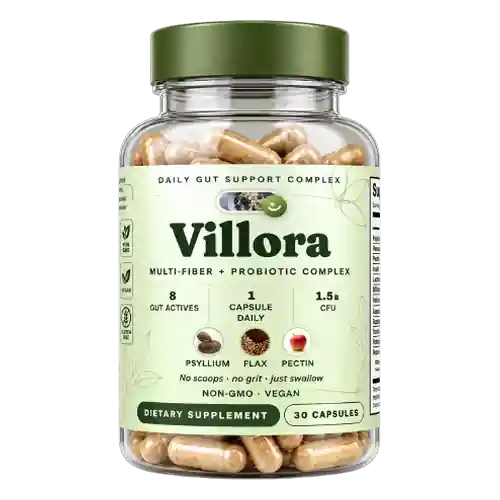 Villora is a dietary supplement marketed as a daily digestive-support complex. It combines plant-based fibers, a botanical ingredient, and a probiotic in a single vegetable capsule.
The formula contains a total proprietary blend of 695 mg. Its eight listed components are:
- Oat bran powder
- Flaxseed powder
- Psyllium husk powder
- Apple pectin powder
- Konjac root powder
- Green black walnut hull
- Plum powder
- *Lactobacillus acidophilus* – 1.5 billion CFU
The manufacturer organizes these ingredients into three categories. The fibers are intended to support bowel regularity, black walnut hull is included as a traditional botanical, and the probiotic is intended to complement the digestive-support formula.
Villora comes in a bottle containing 30 capsules. The recommended routine is one capsule daily with a meal and a full glass of water.
The product is marketed as vegan and non-GMO. Its label also identifies tree nuts (walnut) as an allergen.
Pros and Cons
Pros
- Combines six dietary fibers with a probiotic.
- Contains psyllium, an ingredient supported by clinical research for constipation management.
- Convenient one-capsule daily routine.
- Does not require mixing powders or preparing drinks.
- Offers multiple package sizes and free shipping on larger packages.
- Advertises a 60-day money-back guarantee.
Cons
- No clinical trials have tested the finished Villora formula.
- The individual quantities of the proprietary blend ingredients are undisclosed.
- The probiotic strain identification is not provided.
- The 695 mg total blend makes it difficult to compare individual fiber doses with clinical studies.
- Contains black walnut hull and carries a tree-nut allergen warning.
- Return instructions should be checked carefully because the brand’s product and returns pages describe different procedures.
About the Manufacturer
Villora is a brand of Gold Angels Agency LLC, according to the legal information on its official website. The product is distributed by the company, with BuyGoods identified as the retailer and order-support provider.
The manufacturer states that Villora is made in the United States in a GMP-certified facility using domestic and imported ingredients. It also describes the capsules as vegan and non-GMO.
These are manufacturer-provided statements. They should not be interpreted as independent verification of the facility’s certification or proof of the product’s clinical effectiveness.
The company’s website includes scientific references but explicitly explains that they concern individual ingredients or general research topics, not clinical trials of the finished Villora formula.
Potential Benefits of Villora
Villora is primarily designed to support digestive regularity and everyday gut comfort. Its potential benefits are linked to the properties of its fiber ingredients and probiotic.
1. Supports Bowel Regularity
The formula contains psyllium husk, oat bran, flaxseed, apple pectin, konjac root, and plum powder. These ingredients provide different types of dietary fiber.
Psyllium is particularly relevant because it absorbs water and forms a gel-like substance in the digestive tract. This can help support stool consistency and regular bowel movements.
However, Villora does not disclose how much psyllium each capsule provides, so its effectiveness cannot be directly compared with research doses.
2. Provides Multiple Sources of Dietary Fiber
The combination of oat bran, flaxseed, pectin, konjac, and psyllium provides several sources of plant-based fiber.
Dietary fiber supports normal digestive function and can contribute to stool bulk and intestinal transit. Some fibers also serve as substrates for gut bacteria.
The actual contribution of each ingredient depends on its quantity, which is not individually disclosed in Villora’s proprietary blend.
3. Adds a Probiotic to the Formula
Villora contains 1.5 billion CFU of *Lactobacillus acidophilus* at the time of manufacture, according to the product label.
Probiotics are live microorganisms that may provide health benefits when consumed in adequate amounts. Research has examined different probiotic species and strains for digestive outcomes.
However, probiotic effects are strain-specific. Villora does not identify a specific strain number on the label, making it difficult to compare its probiotic with particular clinical studies.
4. Offers a Convenient Daily Routine
Villora uses one capsule daily rather than requiring separate fiber powders, probiotic products, or herbal preparations.
This may appeal to adults who prefer a simple supplement routine. The manufacturer recommends taking the capsule with a meal and a full glass of water.
How Does Villora Work?
The manufacturer describes Villora’s approach as three complementary steps.
Sweep: Six plant-based fibers provide soluble and other dietary fiber sources. Psyllium, apple pectin, and konjac can absorb water and form gel-like substances, while oat bran, flaxseed, and plum contribute additional fiber.
Cleanse: Green black walnut hull is included as a traditional botanical ingredient. The manufacturer describes it as supporting a clean digestive environment. However, this traditional-use positioning does not establish that the ingredient removes toxins or treats intestinal infections.
Repair: The formula adds 1.5 billion CFU of *Lactobacillus acidophilus* to provide a probiotic component.
This is the manufacturer’s proposed formulation strategy. It should not be interpreted as a proven sequence in which the fibers cleanse the intestine and the probiotic repairs it.
Key Ingredients in Villora
1. Psyllium Husk
Psyllium husk is a soluble fiber obtained from the seeds of *Plantago ovata*. It absorbs water and forms a viscous gel that can help support bowel regularity.
Clinical guidelines from the American Gastroenterological Association and American College of Gastroenterology suggest fiber supplementation for adults with chronic idiopathic constipation, particularly when dietary fiber intake is low. Among the fiber supplements evaluated, psyllium has the strongest supporting evidence.
Reference: AGA-ACG Clinical Practice Guideline for Chronic Idiopathic Constipation.
2. Oat Bran
Oat bran is a source of dietary fiber, including beta-glucan. It contributes to overall fiber intake and can support normal digestive function.
However, the amount of oat bran in Villora is not disclosed. Therefore, its contribution to daily fiber intake cannot be calculated.
3. Flaxseed
Flaxseed contains soluble and insoluble fiber, along with plant compounds and alpha-linolenic acid, an omega-3 fatty acid.
Some clinical studies have investigated flaxseed supplementation for constipation and digestive health. These findings depend on the amount and preparation used, so they cannot establish the effect of the quantity included in Villora.
4. Apple Pectin
Apple pectin is a soluble fiber found naturally in apples. It can form a gel when mixed with water and may serve as a fermentable substrate for intestinal bacteria.
Its inclusion adds another type of soluble fiber to Villora’s blend. However, the product does not disclose the amount supplied per capsule.
5. Konjac Root
Konjac root contains glucomannan, a highly viscous soluble fiber that absorbs water.
Researchers have investigated glucomannan for bowel function and other metabolic outcomes. Its effect depends on the dose and formulation, and the amount in Villora is not specified.
6. Green Black Walnut Hull
Black walnut hull is a traditional botanical ingredient. It contains naturally occurring plant compounds, including tannins and juglone.
Villora includes the green hull rather than the edible walnut kernel. The manufacturer positions it as part of its traditional digestive-support approach.
However, strong human clinical evidence supporting black walnut hull for routine digestive regularity is lacking. Its presence should not be interpreted as proof of an intestinal cleanse or parasite treatment.
7. Plum Powder
Plums contain dietary fiber and naturally occurring compounds that may contribute to digestive function.
Prunes, which are dried plums, have been studied for constipation management. However, evidence involving whole prunes or particular prune preparations cannot automatically be applied to an unspecified amount of plum powder in a proprietary blend.
8. Lactobacillus Acidophilus
*Lactobacillus acidophilus* is a bacterial species used in probiotic supplements and fermented foods.
Villora lists 1.5 billion CFU, with the count guaranteed at the time of manufacture. However, the label does not provide a specific strain identifier.
That matters because probiotic research often evaluates individual strains rather than treating all members of a species as interchangeable.
What Does the Scientific Research Say?
The strongest research connection in Villora’s formula is its use of psyllium.
Psyllium and Constipation: The AGA-ACG clinical practice guideline suggests fiber supplementation for adults with chronic idiopathic constipation, particularly those with low dietary fiber intake. The guideline notes that psyllium appears to be the most effective of the fiber supplements evaluated, although the overall certainty of evidence is low.
The guideline also emphasizes adequate hydration and identifies flatulence as a common side effect of fiber supplementation.
Dietary Fiber and Bowel Function: A systematic review and meta-analysis of randomized controlled trials found that fiber supplementation can improve certain constipation outcomes, including bowel movement frequency and stool consistency. However, results varied by fiber type and dose.
Study: The Effect of Fiber Supplementation on Chronic Constipation in Adults.
Probiotics and Digestive Health: Research on probiotics for constipation has produced mixed results. A 2025 British Dietetic Association guideline found that some probiotic supplements may improve certain outcomes, but it remained unclear which species or strains are consistently effective.
Reference: British Dietetic Association Guidelines for the Dietary Management of Chronic Constipation in Adults.
What Does This Mean for Villora?
The ingredient research provides a reasonable scientific basis for including fiber in a digestive-support supplement. Psyllium has the clearest connection to constipation management, while the probiotic component has more uncertain, strain-dependent evidence.
However, the finished Villora formula has not been tested in clinical trials, according to its own website. The proprietary blend also prevents a direct comparison between the product’s individual ingredient doses and those used in research.
My assessment is that Villora contains ingredients with some relevant digestive-health evidence, but the product’s actual effectiveness remains unproven.
Villora Dosage and Directions
According to the official product page, the suggested routine is:
- Take one capsule daily with a meal, preferably breakfast.
- Drink a full glass of water with the capsule.
- Take it at approximately the same time each day.
- Do not exceed the recommended serving.
The water instruction is particularly important because the formula contains several fibers that absorb liquid.
The manufacturer also advises people taking medication to consult a doctor or pharmacist before use. It specifically recommends taking fiber at least two hours apart from other oral medications.
People using GLP-1 medications should speak with their prescriber before starting Villora. The company states that the product has not been studied in people taking these medications and is not intended to treat medication-related digestive side effects.
Is Villora Safe?
Villora is a dietary supplement, not a medication. Its safety depends on the ingredients, individual health conditions, allergies, and concurrent medications.
A few considerations deserve attention:
- Walnut allergy: The label states that Villora contains tree nuts (walnut). People with walnut or relevant tree-nut allergies should avoid the product.
- Fluid intake: Fiber supplements should be taken with sufficient water. The product label includes a choking warning for people who have difficulty swallowing.
- Digestive discomfort: Increasing fiber intake can cause gas, bloating, or changes in bowel habits, especially when the body is not accustomed to it.
- Medication absorption: Fiber may affect the absorption of some oral medicines. Follow the manufacturer’s spacing advice and consult a pharmacist.
- Pregnancy and breastfeeding: The manufacturer advises pregnant or nursing women to consult a healthcare professional before use.
- Medical conditions: Anyone with a digestive disorder, swallowing difficulty, or another medical condition should seek professional advice before starting the supplement.
The label also states that Villora is not intended for individuals under 18.
Persistent constipation, severe abdominal pain, vomiting, blood in the stool, or an inability to pass gas should not be managed with a supplement alone. These symptoms require medical assessment.
Villora Pricing and Packages
The official product page currently advertises three package options:
| Package | Supply | Price per Bottle | Total Price |
|---|---|---|---|
| Starter | 2 bottles / 2 months | $69 | $138 + $9.99 shipping |
| Four-Bottle Package | 4 bottles / 4 months | $59 | $236 with free shipping |
| Best Value | 6 bottles / 6 months | $49 | $294 with free shipping |
The four- and six-bottle packages also include two digital guides:
- How to Pick the Perfect Sushi at an All-You-Can-Eat: A guide to choosing and enjoying sushi meals.
- Eating Well, Living Better: A general guide to balanced eating and sustainable nutrition habits.
The company advertises a 60-day money-back guarantee. Its product page says customers can request a refund by contacting support and returning the bottles, including empty ones. Return shipping is the customer’s responsibility.
However, the product page and the separate Returns and Refunds page describe different steps for initiating a return. I recommend confirming the current return authorization process with BuyGoods or customer support before ordering.
The seller describes purchases as one-time payments with no automatic subscription. Prices and promotional terms can change, so confirm the final checkout amount and retailer details before completing an order.
Frequently Asked Questions
What is Villora used for?
Villora is a daily digestive-support supplement marketed to support bowel regularity and gut comfort. It combines six dietary fibers, green black walnut hull, and a probiotic.
Does Villora help with constipation?
Villora contains psyllium, a fiber with clinical evidence supporting constipation management. However, the product’s individual psyllium quantity is undisclosed, and the complete formula has not been clinically tested. Its effectiveness as a finished product is therefore unknown.
What are the main ingredients in Villora?
The formula contains oat bran, flaxseed, psyllium husk, apple pectin, konjac root, green black walnut hull, plum powder, and *Lactobacillus acidophilus*.
How many capsules should be taken daily?
The manufacturer recommends one capsule daily with a meal and a full glass of water. Follow the directions on the current product label.
Does Villora contain probiotics?
Yes. Villora lists 1.5 billion CFU of *Lactobacillus acidophilus*, guaranteed at the time of manufacture. The label does not identify a specific strain.
Is Villora suitable for people with walnut allergies?
No. The product label states that Villora contains tree nuts (walnut). Anyone with a walnut or relevant tree-nut allergy should avoid it.
Can Villora be taken with medication?
The manufacturer recommends consulting a healthcare professional before combining Villora with medication. It also advises taking fiber at least two hours apart from other oral medicines. A pharmacist can help assess possible interactions.
Is Villora a laxative or parasite cleanse?
No. The manufacturer describes Villora as a dietary supplement, not a laxative. Although it includes black walnut hull, there is no established clinical evidence that the finished product treats intestinal parasites or infections.
Does Villora have clinical trials?
The company’s website states that clinical trials have not been conducted on the finished Villora product. Its cited research concerns individual ingredients or broader digestive-health topics.
Does Villora offer a money-back guarantee?
Yes. The company advertises a 60-day money-back guarantee. Return shipping is the customer’s responsibility, and customers should confirm the current return authorization process before ordering.
Where can I buy Villora?
Villora is sold through its official website and associated checkout provider. The company currently advertises two-, four-, and six-bottle packages.
Final Verdict: Is Villora Worth Considering?
Villora combines six dietary fibers, black walnut hull, and *Lactobacillus acidophilus* in a convenient once-daily capsule. Its strongest ingredient-level research connection is psyllium, which has clinical evidence supporting bowel regularity in adults with constipation.
The product’s main advantage is convenience. It combines several digestive-support ingredients without requiring separate powders or capsules.
However, important limitations remain. The total proprietary blend is only 695 mg, individual ingredient quantities are not disclosed, and the probiotic strain is not identified. These details make it difficult to assess whether the formula supplies meaningful amounts comparable to those used in clinical research.
The company also confirms that the finished product has not undergone clinical trials. Therefore, claims about improved regularity, reduced bloating, or a complete digestive cleanse should be treated as marketing claims rather than established product outcomes.
My assessment is that Villora may appeal to adults looking for a simple fiber-and-probiotic supplement, but its limited dose transparency makes it difficult to evaluate its value and likely effectiveness. Anyone considering it should review the complete label, check the walnut allergen warning, maintain adequate fluid intake, and confirm medication compatibility with a healthcare professional.
Our Top Weight Loss Products
We evaluated these products based on key factors relevant to their intended use. Our editorial ratings consider ingredient transparency, available scientific evidence, formulation quality, safety considerations, value, and other product-specific factors.

Emma Relief
Product Type: Dietary Supplement
Primary Use: Supports Digestive Comfort
Overall Rating: 4.9/5
Price: $50.00
Key Benefits
- Supports Digestive Comfort
- Promotes Bowel Regularity
- Supports Gut Microbiome Balance
- Supports Healthy Digestion
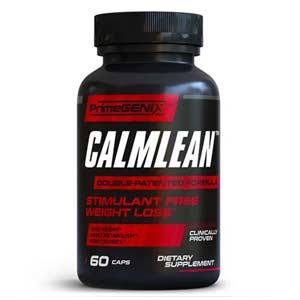
PrimeGENIX CalmLean
Product Type: Dietary Supplement
Primary Use: Weight Management Support
Overall Rating: 4.8/5
Price: $59.00
Key Benefits
- Supports Healthy Weight Management
- Supports Metabolic and Thermogenic Activity
- Supports Appetite and Hunger Management
- Stimulant-free and Caffeine-free Formula
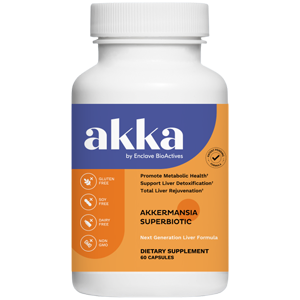
Akka
Product Type: Dietary Supplement
Primary Use: Supports Metabolic Wellness
Overall Rating: 4.8/5
Price: $50.15
Key Benefits
- Supports Gut Health
- Supports Gut Health
- Helps Support Healthy Appetite
- Supports Metabolic Wellness